

The air in houses built by PanaHome Corp, a subsidiary of Matsushita Electric Industrial Co and Matsushita Electric Works Ltd in Japan, is filtered to be pollen-free, keeping residents from ordinary allergens. Its walls are made out of diatomaceous earth, which works as a natural desiccant or humidifier to keep the house moist, but not too damp. Its wooden floors are tested to be sound-proof. Along with broadband equipment and high-tech electronic appliances, PanaHome houses are not only technologically smart, but also eco-friendly.
“[PanaHome’s] wooden floors are made of 100 percent recycled wood pellets. But with the company’s own glue formula and compressing techniques, they are as solid as teak wood,” said Shih Da-chien (施大千), a manager at Farglory Group’s (遠雄集團) digital research and development division.
Recycled wood pellets help preserve the environment by reducing the use of lumber, he said.

PHOTO COURTESY OF CHEN KUAN-CHOU/THE FARGLORY GROUP
“It is estimated that we may help save forests equivalent to the size of 135 Tokyo Dome stadiums each year,” Shih said.
PanaHome houses are also famous for their functionality, Shih said.
“I am most impressed by the deco and design within bedrooms to help people sleep well because most people nowadays suffer from sleeping disorders,” said Dai Chia-yu (戴家玉), a home designer with Champion Interior Design & Layout (沁品室內設計).
Dai said that after the on-job training, she would like to bring these new residential concepts back to her clients in Taiwan to improve their quality of living.
Shih and Dai were two of 17 corporate members that Farglory sent to receive three-day training seminars at Matsushita in the middle of last month to learn about the concept behind PahaHome, or so-called EU houses, which stress the importance of being environmentally friendly with a universal design to suit all ages.
“This is a home that is suitable for a newborn to a centenarian,” said Farglory chairman Chao Teng-hsiung (趙藤雄) during his inspection tour at Panahome in Osaka late last month.
“It is also a home to stay in for as long as 50 days or 100 years,” he said.
Farglory, which has teamed up with Matsushita Electric to supply Panasonic electronic appliances to its Taiwanese home buyers in the past two years, has decided to introduce Panahome’s EU homes to Taiwan, Chao said.
“Our housing projects in Linkou Township (林口) and Sansia Township (三峽), Taipei County, will begin selling EU houses soon,” Chao told reporters in Japan.
Farglory will single out 100 PanaHome items and begin sales to Taipei housing projects while providing tailor-made advice on decorations and spaces to home buyers.
As Taiwan has a lower GDP per capita than Japan, Chao, in particular, asked Matsushita Electric to adjust its pricing in Taiwan by knocking off a minimum of 20 percent of Japanese selling prices to Taiwanese Farglory home buyers. The request, in principle, won approval from Yoichi Yokoyama, managing director of Matsushita Electric, although the discount is subject to a revision before the final calculation, Yokoyama said.
Yokoyama added that he believes the strategic alliance between Farglory and Matsushita will bring a win-win situation.
“Since the Japanese market is pretty mature, we are looking to expand to overseas markets. Farglory will not only assist us in promoting our products in Taiwan, but also help us understand Taiwanese customers better,” he said.
Farglory, which considers the launch of PanaHome options in Taiwan a value-added service to its home buyers, has also promised not to make any profit out of the re-sales distribution, Chao said.
The Taiwanese real-estate tycoon said that he admires the entrepreneurship of company founder Konosuke Matsushita as well as his business philosophy.
PanaHome houses in Taiwan will not be cheap, but Chao said that he believes that such residential concepts have a bright future.

E.Sun Financial Holding Co (玉山金控) is to formally merge with Mercuries Life Insurance Co (三商美邦人壽) on Sept. 1, creating Taiwan’s fifth-largest listed financial holding company by assets and paving the way for capital injections totaling NT$22 billion (US$683.91 million) to shore up the insurer’s finances, top executives said yesterday. “The first priority after the merger will be to bring the insurer back to health through capital injections,” E.Sun Financial chairman Joseph Huang (黃男州) told a news conference in Taipei ahead of a company earnings call. E.Sun would inject NT$16 billion into Mercuries Life next month, followed by another NT$6 billion next year,
WELL MATCHED: The joint venture would lower Sony’s spending burden to stay relevant in chips, while TSMC secures steady revenue, said an analyst, calling it ‘virtually risk-free’ Taiwan Semiconductor Manufacturing Co (TSMC, 台積電) and Sony Group Corp are in talks to spend a combined ¥1 trillion (US$6.3 billion) on their planned image sensor factory in Japan, a person familiar with the matter said. The companies are seeking to begin production in 2029, the person said, asking not to be named because the talks are private. No time frame was given for the investment under discussion, they said. TSMC and the Japanese company’s chip arm, Sony Semiconductor Solutions Corp, are eyeing demand for artificial intelligence (AI)-wielding robots and self-driving vehicles, which are expected to require more sensors to
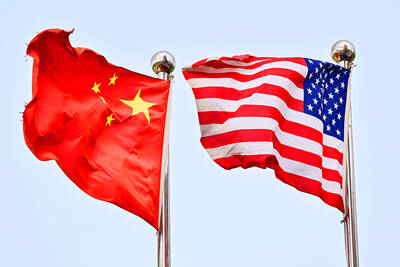
RIVAL BLOCS: Kazakhstan has signed on to the US’ and China’s AI frameworks; a US official said it was difficult to see how a country can be trusted while in a competing pact The US is preparing to tell dozens of countries they must pick sides in the artificial intelligence (AI) race with China, warning they would be excluded from a US-led AI coalition if they also sign up for Beijing’s competing framework, according to a US official and an internal draft reviewed by Reuters. Washington last year launched the Pax Silica initiative aimed at securing supply chains for AI models, semiconductors and critical minerals, amid a fierce technology rivalry with Beijing. About two dozen countries have joined, including Kazakhstan, a key potential source of critical minerals that has also joined China’s coalition,

Taiwan Semiconductor Manufacturing Co (TSMC, 台積電) yesterday said its board of directors has approved investment of ¥282 billion (US$1.77 billion) to form a joint venture with Sony Semiconductor Solutions Corp to develop and manufacture next-generation image sensors for smartphones in Japan. The joint venture, Advanced Vision Semiconductor Manufacturing Corp, would be sited in Koshi City, Kumamoto Prefecture, TSMC said in a statement. It should commence volume production in 2029, TSMC said. Sony Semiconductor would invest ¥465 billion in the joint venture through a combination of cash and assets, the statement said. These capital contributions are expected to be made in phases based


 RSS
RSS