


The nation’s manufacturing and service industries expressed mixed sentiment on the business climate for the second half of this year when overseas demand for electronic products is expected to peak, while surging energy and raw material costs are set to trim profits, a local research body said yesterday.
The Taiwan Institute of Economic Research (TIER, 台經院), which surveys the manufacturers and service providers each month, said that more respondents turned cautious about the outlook for the remainder of the year in last month’s poll.
“The number of manufacturers bullish about their business prospects stood at 33.5 percent last month, down from 35.5 percent surveyed in April,” TIER president David Hong (洪德生) told a media briefing.
RISING COSTS
Respondents that were neutral increased from 44 percent to 46.7 percent during the same period, while the number of pessimists hardly changed, 19.8 percent last month, down from 20 percent a month earlier, the TIER report showed.
Hong attributed the cautious sentiment to the fact that some manufacturers were hesitating transferring their rising costs to consumers, even though fuel and raw material prices are continuing to rise.
As exports comprise a large slice of the nation’s GDP, the Taipei-based research institute put its business climate index for the manufacturing sector at 110.02 points last month, up 3.18 points from April.
Chen Miao (陳淼), a research fellow at TIER, said he was cautiously optimistic that exports would continue to bolster the nation’s economy in the third and fourth quarters, as they had in the first quarter, despite the US economic slowdown.
MORE UPBEAT
The service sector appeared slightly more upbeat on prospects, with the business climate index for this sector reaching 122.31 points last month, compared to 121.84 points in April, the TIER survey showed.
Chen said retailers and restaurants had reaped a noticeable increase in turnover from their Mother’s Day sales and believed that they would benefit from the arrival of Chinese tourists later in the year.
Hong and Chen shied away from commenting on the government’s cross-strait policies and economic stimulus package, saying they needed more time to gauge the impact on the economy.

In Italy’s storied gold-making hubs, jewelers are reworking their designs to trim gold content as they race to blunt the effect of record prices and appeal to shoppers watching their budgets. Gold prices hit a record high on Thursday, surging near US$5,600 an ounce, more than double a year ago as geopolitical concerns and jitters over trade pushed investors toward the safe-haven asset. The rally is putting undue pressure on small artisans as they face mounting demands from customers, including international brands, to produce cheaper items, from signature pieces to wedding rings, according to interviews with four independent jewelers in Italy’s main

Japanese Prime Minister Sanae Takaichi has talked up the benefits of a weaker yen in a campaign speech, adopting a tone at odds with her finance ministry, which has refused to rule out any options to counter excessive foreign exchange volatility. Takaichi later softened her stance, saying she did not have a preference for the yen’s direction. “People say the weak yen is bad right now, but for export industries, it’s a major opportunity,” Takaichi said on Saturday at a rally for Liberal Democratic Party candidate Daishiro Yamagiwa in Kanagawa Prefecture ahead of a snap election on Sunday. “Whether it’s selling food or

CONCERNS: Tech companies investing in AI businesses that purchase their products have raised questions among investors that they are artificially propping up demand Nvidia Corp chief executive officer Jensen Huang (黃仁勳) on Saturday said that the company would be participating in OpenAI’s latest funding round, describing it as potentially “the largest investment we’ve ever made.” “We will invest a great deal of money,” Huang told reporters while visiting Taipei. “I believe in OpenAI. The work that they do is incredible. They’re one of the most consequential companies of our time.” Huang did not say exactly how much Nvidia might contribute, but described the investment as “huge.” “Let Sam announce how much he’s going to raise — it’s for him to decide,” Huang said, referring to OpenAI
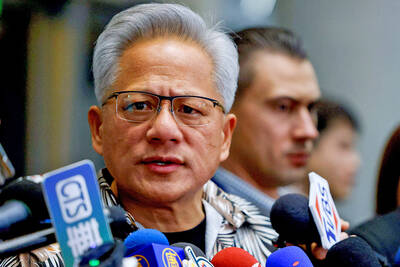
Nvidia Corp’s negotiations to invest as much as US$100 billion in OpenAI have broken down, the Wall Street Journal (WSJ) reported, exposing a potential rift between two of the most powerful companies in the artificial intelligence (AI) industry. The discussions stalled after some inside Nvidia expressed concerns about the transaction, the WSJ reported, citing unidentified people familiar with the deliberations. OpenAI makes the popular chatbot ChatGPT, while Nvidia dominates the market for AI processors that help develop such software. The companies announced the agreement in September last year, saying at the time that they had signed a letter of intent for a strategic


 RSS
RSS