


For 24 years, toymaker Yoshiritsu has resisted the pull to move to lower-cost China, sticking it out in more costly Japan to meet the exacting demands of its customers.
But that strategy may be starting to pay off in a new market: China itself.
"We came to see what the market is like," said Hideyuki Noguchi, sales manager for Yoshiritsu, while demonstrating his LaQ brand blocks at the Shanghai Toy Fair.
"So far, the reaction is good," he said, citing a number of inquiries.
It was the company's first time to participate in the annual fair.
"Our products are 100 percent made by us in Japan," Noguchi said. "We have to use top quality materials ... And still customers are pushing us to improve quality."
China's reputation as the world's toy workshop -- it handles 60 percent of global toy manufacturing -- has taken a battering over recalls of Chinese-made toys with lead paint or magnets that can be swallowed.
So far, the uproar has had little impact on China's toy exports, which are up 28 percent in the first eight months of the year compared with the same period last year.
And while brands like LaQ can't compete with Chinese factories on price, Noguchi admits, the greater focus on improving standards is giving toy importers greater hope of making inroads into this still undeveloped market.
"The potential for the toy market here is huge," said Alice Tang (
Chinese families still tend to spend less on toys for children than parents elsewhere, but with increasing household wealth, demand is growing.
"In China, with the one-child system, they really care. They do care about quality," Tang said.
Given the controversies over toy exports from China and the potential they see in China, she says foreign toy companies are turning their attention to the local market.
"There's a big market on their doorsteps," she said.
Kwon You Kook, vice president of Kidswell Co, a Shanghai-based exporter of tot-sized trampolines and other exercise equipment, says that after years of selling to South Korea, Japan and Europe, he's looking for a dealer in China.
Until recently Kwon didn't really consider the local market because his prices are too high, he said.
"Our costs are rather high because we have been using plastics, foams and other materials that conform with overseas safety and environmental standards," Kwon says. "Maybe now there will be more of a market for such better quality here."
Chinese officials have defended the quality of the country's toy exports, blaming much of the media uproar on unfair coverage by Western journalists, and some on flaws in designs from Western toy firms.
"There are more orders instead of less. This proves that most of the toys exported by China are qualified," Li Changjiang (李長江), head of China's General Administration of Quality Supervision, Inspection and Quarantine, told reporters in Beijing on Wednesday.
Li said that, as usual, factory workers were putting in lots of overtime to meet Christmas orders.
The renewed focus on quality has been a mixed blessing for some companies.
Tomy Co, a Japanese maker of toy cars and Barbie-lookalike Licca-chan dolls, had its own China episode: In August, it announced it was recalling Chinese-made toy cars it markets and sells for Mattel in Japan after excess lead was found in the paint.
But after years of contending with rivals that undercut its business by selling counterfeit, inferior versions of its toys, the company is finally seeing stricter enforcement of standards its own manufacturers have been meeting all along, said John Zhu, a senior sales manager for Shanghai Kaleeto Industrial Co, which represents Tomy and other brands in China.
Many toys locally produced and sold in China may have failed to meet safety and other quality standards, but regulations governing imported products have always been rigidly enforced, Zhu said, while standing in his company's lavish exhibit at the Shanghai Toy Fair.
The controls are getting tighter: To meet Chinese trade regulations, as of June 1 companies that import toys or export made-in-China toys for reimport have to acquire so-called "3C," or "China Compulsory Certification."
Companies that already meet such standards stand at an advantage, Zhu said.
"This has been great news for us," he said. "Consumers are paying attention and demanding higher quality products."
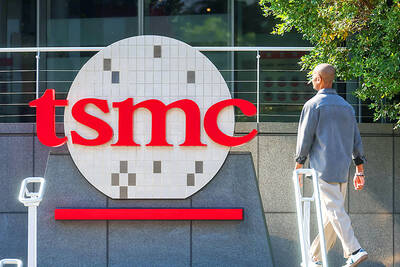
Shares of contract chipmaker Taiwan Semiconductor Manufacturing Co (TSMC, 台積電) came under pressure yesterday after a report that Apple Inc is looking to shift some orders from the Taiwanese company to Intel Corp. TSMC shares fell NT$55, or 2.4 percent, to close at NT$2,235 on the local main board, Taiwan Stock Exchange data showed. Despite the losses, TSMC is expected to continue to benefit from sound fundamentals, as it maintains a lead over its peers in high-end process development, analysts said. “The selling was a knee-jerk reaction to an Intel-Apple report over the weekend,” Mega International Investment Services Corp (兆豐國際投顧) analyst Alex Huang
Taiwan Semiconductor Manufacturing Co (TSMC, 台積電) is expected to remain Apple Inc’s primary chip manufacturing partner despite reports that Apple could shift some orders to Intel Corp, industry experts said yesterday. The comments came after The Wall Street Journal reported on Friday that Apple and Intel had reached a preliminary agreement following more than a year of negotiations for Intel to manufacture some chips for Apple devices. Taiwan Institute of Economic Research (台灣經濟研究院) economist Arisa Liu (劉佩真) said TSMC’s advanced packaging technologies, including integrated fan-out and chip-on-wafer-on-substrate, remain critical to the performance of Apple’s A-series and M-series chips. She said Intel and Samsung
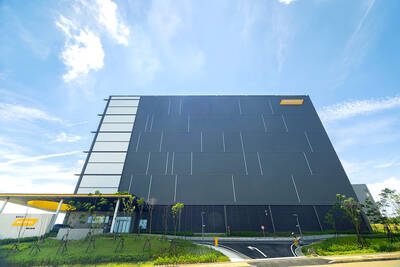
POWER BUILDUP: Powered by Nvidia’s B200 Blackwell chips, the data center would support MediaTek’s computing power demand and business growth, the company said Smartphone chip designer MediaTek Inc (聯發科) yesterday launched a new artificial intelligence (AI) data center with a maximum capacity of 45 megawatts to meet its rising demand for computing power required to develop new advanced chips for AI applications. The company has completed the first-phase computing power buildup at the data center in Miaoli County’s Tongluo Township (銅鑼), providing 15 megawatts of capacity to support its research and development (R&D) capabilities, despite an industrywide shortage of key components, MediaTek said. Supply constraints have plagued a wide range of key components, including memory chips, solid-state drives, power supply units and central
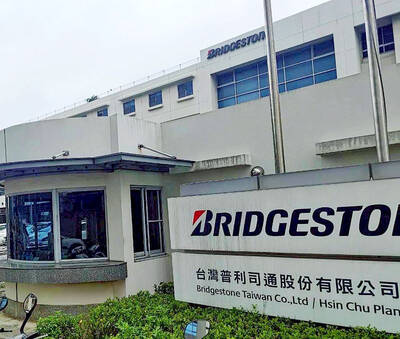
TRANSITION: With the closure, the company would reorganize its Taiwanese unit to a sales and service-focused model, Bridgestone said Bridgestone Corp yesterday announced it would cease manufacturing operations at its tire plant in Hsinchu County’s Hukou Township (湖口), affecting more than 500 workers. Bridgestone Taiwan Co (台灣普利司通) said in a statement that the decision was based on the Tokyo-based tire maker’s adjustments to its global operational strategy and long-term market development considerations. The Taiwanese unit would be reorganized as part of the closure, effective yesterday, and all related production activities would be concluded, the statement said. Under the plan, Bridgestone would continue to deepen its presence in the Taiwanese market, while transitioning to a sales and service-focused business model, it added. The Hsinchu


 RSS
RSS