


Tucked away amid a mass of gleaming European and US vessels at a boat show on the French Riviera stands a lone but significant new arrival -- a powerboat made in distant Dongguan, China.
For its makers, and for a delegation of Chinese manufacturers visiting the annual "Festival de la Plaisance" pleasure boating jamboree in the chic southern resort of Cannes, this is just the beginning.
The "trawler yacht," as it is known for its similarity to a fishing trawler, is made by Selene Yachts, a Chinese manufacturer that has operated a sales outlet on the southern French coast since 2003.
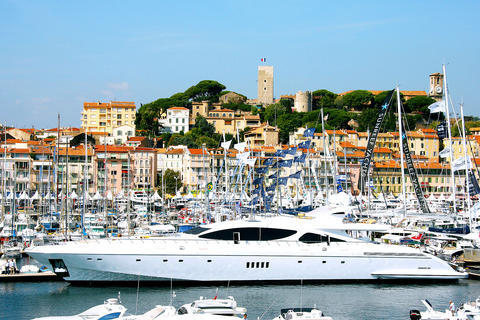
PHOTO: AFP
STROLLING CANNES
As a stroll around Cannes will prove, European and US firms have the market sewn up now. French sailboat manufacturers are No. 1 in the world, while Italy dominates the market for powerboats and yachts more than 24m long.
But Chinese firms are knocking at the door.
"The quality [of Chinese boats] is identical to European and American boats but for half the price or even less," said Mark Seaton, managing director in France for Selene, who says the company sells around 20 units a year in Europe.
Alan Zhao, vice-president of Chinese yacht and motor boat maker Sunbird Yacht Co (
"Building a yacht, it's not magic, not even high-tech. It's no harder than a car," Zhao said. "We are not yet selling abroad. Our objective is to have at least one boat next year at Cannes."
NEWLY WELL-HEELED
Back home, China's newly well-heeled are only just beginning to discover pleasure boating. There are just 400 private boats registered in China, 95 percent of which are motorized.
"The development is recent because the Chinese elite only began to discover pleasure boating three of four years ago," said Delphine Lignieres, director of a marketing agency in Shanghai.
"The image of the Chinese as people who can't swim and who don't like the sun is changing progressively. Since 2004 three magazines dedicated to pleasure boating have launched in China, around 20 marinas have been created and there is at least the same amount in the works," Lignieres said.
Over the past three years, Shanghai's boat show, one of Asia's biggest, has grown sixfold in terms of area and the number of exhibitors has tripled.
And now, having stolen a march in just about every other industry, Chinese companies are setting their sights on one area where European and US firms still predominate.
"At the moment there are around 30 Chinese manufacturers that could export," Lignieres said.
But Tibor Sillinger, director of France's Federation des Industries Nautiques, is putting a brave face on the new threat and remains confident that the Europeans can stand their ground.
"The brand is a very strong idea in the water sports sector and is a strong asset for the European and French industry," he said.
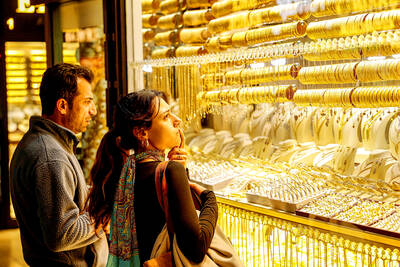
In Italy’s storied gold-making hubs, jewelers are reworking their designs to trim gold content as they race to blunt the effect of record prices and appeal to shoppers watching their budgets. Gold prices hit a record high on Thursday, surging near US$5,600 an ounce, more than double a year ago as geopolitical concerns and jitters over trade pushed investors toward the safe-haven asset. The rally is putting undue pressure on small artisans as they face mounting demands from customers, including international brands, to produce cheaper items, from signature pieces to wedding rings, according to interviews with four independent jewelers in Italy’s main

Japanese Prime Minister Sanae Takaichi has talked up the benefits of a weaker yen in a campaign speech, adopting a tone at odds with her finance ministry, which has refused to rule out any options to counter excessive foreign exchange volatility. Takaichi later softened her stance, saying she did not have a preference for the yen’s direction. “People say the weak yen is bad right now, but for export industries, it’s a major opportunity,” Takaichi said on Saturday at a rally for Liberal Democratic Party candidate Daishiro Yamagiwa in Kanagawa Prefecture ahead of a snap election on Sunday. “Whether it’s selling food or
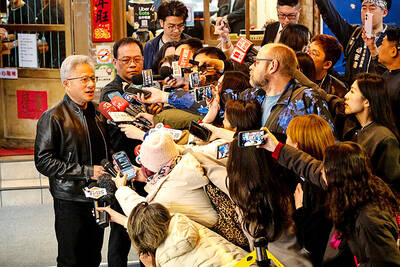
CONCERNS: Tech companies investing in AI businesses that purchase their products have raised questions among investors that they are artificially propping up demand Nvidia Corp chief executive officer Jensen Huang (黃仁勳) on Saturday said that the company would be participating in OpenAI’s latest funding round, describing it as potentially “the largest investment we’ve ever made.” “We will invest a great deal of money,” Huang told reporters while visiting Taipei. “I believe in OpenAI. The work that they do is incredible. They’re one of the most consequential companies of our time.” Huang did not say exactly how much Nvidia might contribute, but described the investment as “huge.” “Let Sam announce how much he’s going to raise — it’s for him to decide,” Huang said, referring to OpenAI
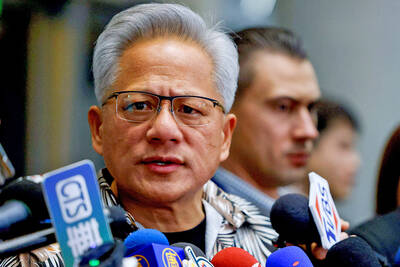
Nvidia Corp’s negotiations to invest as much as US$100 billion in OpenAI have broken down, the Wall Street Journal (WSJ) reported, exposing a potential rift between two of the most powerful companies in the artificial intelligence (AI) industry. The discussions stalled after some inside Nvidia expressed concerns about the transaction, the WSJ reported, citing unidentified people familiar with the deliberations. OpenAI makes the popular chatbot ChatGPT, while Nvidia dominates the market for AI processors that help develop such software. The companies announced the agreement in September last year, saying at the time that they had signed a letter of intent for a strategic


 RSS
RSS