


The 150-member WTO has three weeks to get multilateral talks back on track in the wake of failed talks by four key powers in Germany, trade sources said on Friday.
WTO director general Pascal Lamy brought all members together to discuss the way forward for the stalled Doha round of trade talks, which remain mired in an impasse over agricultural subsidies and trade tariffs among other issues.
Multilateral talks would continue at the WTO headquarters in Geneva until the middle of next month, at which point a decision would be taken on whether to hold a ministerial meeting, the sources said.
The talks in Potsdam between the so-called "G4" -- the EU, the US, Brazil and India -- broke down on Thursday, amid recrimination over who was to blame.
Nevertheless, Lamy told the WTO's Trade Negotiations Committee that he had spoken to all the G4 ministers separately, "and that all four have told me they want the process to continue here in Geneva."
"I have repeatedly stressed that the core of the negotiation is the Geneva process -- the only place where decisions can and should be taken," he said.
Trade sources said the chairs of the WTO's key agriculture and non-agriculture market access committees should present fresh papers to the members at the beginning of next month.
"The need now is for urgent action to restore confidence that these negotiations can and will be finished successfully," Lamy said.
Brazil's top negotiator at the talks, Foreign Minister Celso Amorim, blamed the EU and the US for the collapse of the G4 talks, saying the two developed powers had arrived at Potsdam with their minds made up on how much they were prepared to offer, and what they expected from the other two parties.
"What they agreed, they considered to be the agreement," he said.
This was denied by US officials, with Agriculture Secretary Mike Johanns telling reporters that there was no pre-summit stitch-up between Washington and Brussels.
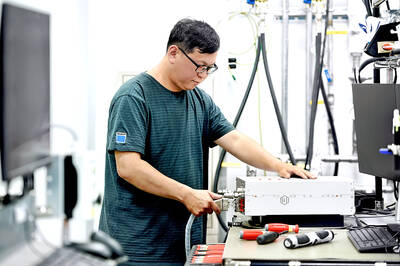
SEMICONDUCTORS: The German laser and plasma generator company will expand its local services as its specialized offerings support Taiwan’s semiconductor industries Trumpf SE + Co KG, a global leader in supplying laser technology and plasma generators used in chip production, is expanding its investments in Taiwan in an effort to deeply integrate into the global semiconductor supply chain in the pursuit of growth. The company, headquartered in Ditzingen, Germany, has invested significantly in a newly inaugurated regional technical center for plasma generators in Taoyuan, its latest expansion in Taiwan after being engaged in various industries for more than 25 years. The center, the first of its kind Trumpf built outside Germany, aims to serve customers from Taiwan, Japan, Southeast Asia and South Korea,
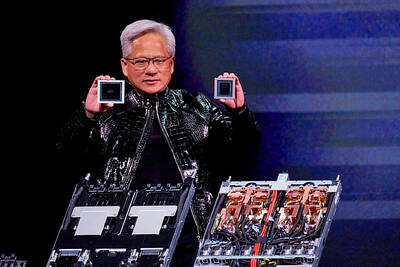
Nvidia Corp chief executive officer Jensen Huang (黃仁勳) on Monday introduced the company’s latest supercomputer platform, featuring six new chips made by Taiwan Semiconductor Manufacturing Co (TSMC, 台積電), saying that it is now “in full production.” “If Vera Rubin is going to be in time for this year, it must be in production by now, and so, today I can tell you that Vera Rubin is in full production,” Huang said during his keynote speech at CES in Las Vegas. The rollout of six concurrent chips for Vera Rubin — the company’s next-generation artificial intelligence (AI) computing platform — marks a strategic

Gasoline and diesel prices at domestic fuel stations are to fall NT$0.2 per liter this week, down for a second consecutive week, CPC Corp, Taiwan (台灣中油) and Formosa Petrochemical Corp (台塑石化) announced yesterday. Effective today, gasoline prices at CPC and Formosa stations are to drop to NT$26.4, NT$27.9 and NT$29.9 per liter for 92, 95 and 98-octane unleaded gasoline respectively, the companies said in separate statements. The price of premium diesel is to fall to NT$24.8 per liter at CPC stations and NT$24.6 at Formosa pumps, they said. The price adjustments came even as international crude oil prices rose last week, as traders
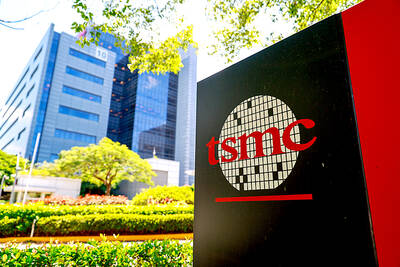
Taiwan Semiconductor Manufacturing Co (TSMC, 台積電), which supplies advanced chips to Nvidia Corp and Apple Inc, yesterday reported NT$1.046 trillion (US$33.1 billion) in revenue for last quarter, driven by constantly strong demand for artificial intelligence (AI) chips, falling in the upper end of its forecast. Based on TSMC’s financial guidance, revenue would expand about 22 percent sequentially to the range from US$32.2 billion to US$33.4 billion during the final quarter of 2024, it told investors in October last year. Last year in total, revenue jumped 31.61 percent to NT$3.81 trillion, compared with NT$2.89 trillion generated in the year before, according to


 RSS
RSS