


Global computer memory chipmakers are expected to swing into losses this quarter as prices plunge on a supply glut, and they may not see a significant pickup in business until the fourth quarter, a Taipei-based market researcher said yesterday.
A 15 percent surplus has driven the price of computer memory chips, or dynamic random access memory (DRAM), down by more than 50 percent to less than US$2 per unit yesterday, DRAMeXchange said.
The price decline impact on annual revenues will range from 17 percent to 34 percent for the nation's three major DRAM companies, led by Powerchip Semiconductor Corp (
"We think most DRAM makers are in losses now as the price has dropped to below the average cost of US$2.5 apiece," DRAMeXchange analyst Joyce Yang (楊雅欣) told reporters on the sidelines of a forum being held at the Computex show trade in Taipei.
Nanya Technology Corp (南亞科技), the nation's second-biggest DRAM supplier, said on Wednesday that Inotera Memories Inc (華亞 科技), its DRAM joint venture with Infineon Technologies AG, could be the only DRAM chipmaker to post profits for the current quarter.
News that South Korean suppliers plan to reduce their DRAM output by allocating equipment to the manufacture of flash memory chips, which are used in consumer electronics and laptop computers, could lead to a rebound next month, Yang said.
"We believe DRAM prices are hitting bottom, but the initial recovery in the third quarter may not be strong enough for DRAM suppliers to break even," she said. "We haven't seen real demand from end-users coming back yet."
Yang's comments underscore market concern that Microsoft Corp's Vista operating system has failed to spur enough demand for memory chips to overcome a glut.
Nathan Su, a product manager at memory-chip module maker Kingston Technology Co, told Bloomberg Newswire at Computex on Wednesday that prices might fall as much as 20 percent in the "next few weeks."
"Microsoft says sales are strong, but that has yet to be proven" to the computer memory market, Su said. "Vista is the key."
Yang said DRAM prices might recover -- by a "lukewarm" 17 percent next quarter and by another 12 percent by the end of the fourth quarter to bring the price to US$2.60.
"This should be the worst year for DRAM companies. In the next three years, oversupply may ease. Output growth will slow down as chipmakers undergo a transition to next-generation chips," Yang said.
Global DRAM makers are expected to increase output by 85 percent annually this year and the growth rate may decelerate to a healthy 53 percent, she said.
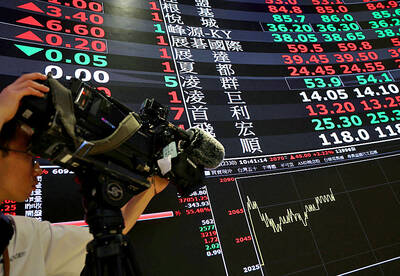
After several years flying high as Asia’s best Nvidia Corp proxy, Taiwan Semiconductor Manufacturing Co (TSMC, 台積電) is increasingly vying with other artificial intelligence (AI) stocks for investor attention. Stock traders are chasing a wider array of beneficiaries as mainstream usage of AI creates demand for hardware beyond the most-advanced chips TSMC makes for Nvidia. Subthemes from the deepening memory crunch to advances in robotics are also luring bids. At the same time, investment caps on single stocks are pushing funds to diversify, while retail investors long familiar with TSMC through its US depositary receipts are being offered a broader set of
UNDER MICROSCOPE: Taiwan detained three people who allegedly conspired to buy servers in Taiwan and export them using fraudulent documentation, prosecutors said Nvidia Corp chief executive officer Jensen Huang (黃仁勳) on Saturday urged Super Micro Computer Inc to tighten up on compliance after Taiwan detained three people this week for allegedly making fraudulent declarations about artificial intelligence (AI) servers made by its US partner. The development marked the nation’s first crackdown on semiconductor smuggling, which grew after the US slapped restrictions on exports of high-end chips such as Nvidia AI accelerators to China. Nvidia is “rigorous” in explaining regulations to all of its partners, Huang told reporters after arriving in Taipei. “Ultimately Super Micro has to run their own company,” he said in response to

TECH RELIANCE: Growth is increasingly reflecting an unequal K-shaped distribution, where technology sectors outperform and other industries struggle, an expert said Standard Chartered Bank has significantly raised its forecast for Taiwan’s economic growth to 9.5 percent this year, up from 7.6 percent previously, citing surging artificial intelligence (AI) demand driving exports, semiconductor production and investment. The upgrade reflects a sustained AI supercycle that continues to fuel demand for advanced chips and technology infrastructure, which form the backbone of Taiwan’s exports, the bank said in a report this week. “We raise our 2026 growth forecast to reflect a much stronger-than-expected first-quarter GDP figure,” Standard Chartered senior economist for greater China and Asia Tommy Wu (胡東安) said in the report. Driven largely by a 35.3 percent
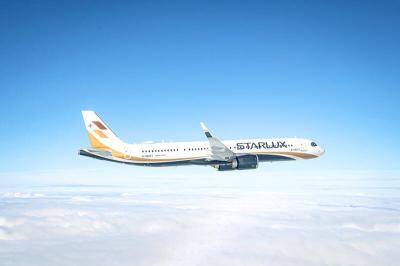
Two of Taiwan’s international carriers, Starlux Airlines Co (星宇航空) and EVA Airways Corp (長榮航空), have retained the five-star airline rating awarded by international airline review organization Skytrax. Starlux was awarded the distinction for a second consecutive year, while EVA Air received it for the 11th straight year, Skytrax said in statements released yesterday and on Thursday last week, respectively. The five-star rating is considered one of the airline industry's highest honors and is awarded following professional audits of airline product and frontline service standards, Skytrax said. The ratings are based on in-depth assessments using unified global quality standards rather than customer review scores


 RSS
RSS