


BenQ Corp (明基) yesterday confirmed that two of its senior executives were questioned by prosecutors on Wednesday and named as defendants in a case of suspected insider trading.
Investors reacted negatively to the news, pushing the company's shares down.
Shares of BenQ dropped 0.76 percent to NT$12.9 yesterday on the Taiwan Stock Exchange, after chairman Lee Kun-yao (
Company president Sheaffer Lee (李錫華) was released on bail of NT$10 million, the company said in a filing to the Taiwan Stock Exchange.
BenQ, the nation's biggest maker of branded mobile phones, had its headquarters raided by Taoyuan prosecutors on March 13. The company's spokesman and senior financial executive Eric Yu (
On Wednesday, prosecutors in Taoyuan summoned Lee Kun-yao and Sheaffer Lee for questioning that lasted approximately eight hours, before the prosecutors decided to release both executives on bail.
"We discovered new evidence through the questioning and the Lees seemed to be a lot more involved in the case than we had originally expected, so we decided on bail deals for them," John Chang (張進豐), spokesman for the Taoyuan District Prosecutors' Office, told the Taipei Times in a phone interview.
The Lees left the Taoyuan District Prosecutors' Office at around 11:30pm on Wednesday night. They declined all requests for comment. But in an e-mailed statement released yesterday, Lee Kun-yao denied the company was involved in insider trading.
Lee Kun-yao said the company was not involved in any irregularities and denied speculation that stock which should have been given to the company's overseas employees as bonuses had been stolen and traded.
He also defended Yu's innocence following his detention on allegations of illegally selling stock options via four companies registered overseas ahead of the release of the company's 2005 fourth-quarter losses in March last year.
Lee Kun-yao was viewed as key in orchestrating the merger with Siemens AG's unprofitable mobile-phone unit in 2005, which BenQ announced it would stop funding last September to halt further losses.
"The company's chairman and president went to the Taoyuan Prosecutors' Office for questioning about the trading of employees' bonus shares on April 11, with the aim of helping the investigators discover the truth as soon as possible," BenQ said in a filing to the Taiwan Stock Exchange.
The company's executives will be required to apply for permission from prosecutors before making any future business trips overseas, the company said.
Shares of contract chipmaker Taiwan Semiconductor Manufacturing Co (TSMC, 台積電) came under pressure yesterday after a report that Apple Inc is looking to shift some orders from the Taiwanese company to Intel Corp. TSMC shares fell NT$55, or 2.4 percent, to close at NT$2,235 on the local main board, Taiwan Stock Exchange data showed. Despite the losses, TSMC is expected to continue to benefit from sound fundamentals, as it maintains a lead over its peers in high-end process development, analysts said. “The selling was a knee-jerk reaction to an Intel-Apple report over the weekend,” Mega International Investment Services Corp (兆豐國際投顧) analyst Alex Huang
Taiwan Semiconductor Manufacturing Co (TSMC, 台積電) is expected to remain Apple Inc’s primary chip manufacturing partner despite reports that Apple could shift some orders to Intel Corp, industry experts said yesterday. The comments came after The Wall Street Journal reported on Friday that Apple and Intel had reached a preliminary agreement following more than a year of negotiations for Intel to manufacture some chips for Apple devices. Taiwan Institute of Economic Research (台灣經濟研究院) economist Arisa Liu (劉佩真) said TSMC’s advanced packaging technologies, including integrated fan-out and chip-on-wafer-on-substrate, remain critical to the performance of Apple’s A-series and M-series chips. She said Intel and Samsung
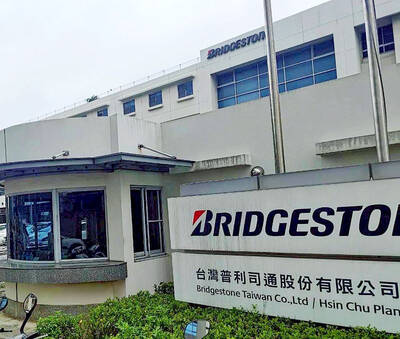
TRANSITION: With the closure, the company would reorganize its Taiwanese unit to a sales and service-focused model, Bridgestone said Bridgestone Corp yesterday announced it would cease manufacturing operations at its tire plant in Hsinchu County’s Hukou Township (湖口), affecting more than 500 workers. Bridgestone Taiwan Co (台灣普利司通) said in a statement that the decision was based on the Tokyo-based tire maker’s adjustments to its global operational strategy and long-term market development considerations. The Taiwanese unit would be reorganized as part of the closure, effective yesterday, and all related production activities would be concluded, the statement said. Under the plan, Bridgestone would continue to deepen its presence in the Taiwanese market, while transitioning to a sales and service-focused business model, it added. The Hsinchu
Taiwan Semiconductor Manufacturing Co (TSMC, 台積電) has approved a capital budget of US$31.28 billion for production expansion to meet long-term development needs during the artificial intelligence (AI) boom. The company’s board meeting yesterday approved the capital appropriation plan for purposes such as the installation of advanced technology capacity and fab construction, the world’s largest contract chipmaker said in a statement. At an earnings conference last month, TSMC forecast that its capital expenditure for this year would be at the higher end of the US$52 billion to US$56 billion range it forecast in January in response to robust demand for 5G, AI and


 RSS
RSS