


Taiwanese electronics manufacturers that supply components to Apple Inc for the iPhone saw their shares soar yesterday after Apple Inc demonstrated the widely anticipated handset at its MacWorld conference and expo in San Francisco on Tuesday.
Shares of both Entery Industrial Co (恩得利工業), which supplies connectors and cables to iPhone, and frequency control maker TXC Corp (台灣晶技), rose to the daily limit to close at NT$39.4 and NT$58.8, respectively, on the Taiwan Stock Exchange.
Optimism over the upcoming launch of the iPhone also raised shares of Catcher Technology Co (可成企業), which makes stainless casings and mechanical parts, by 5.2 percent to NT$362.5, while Cheng Uei Precision Industry Co (正崴精密), a provider of connectors and Bluetooth modules, closed up 0.75 percent to NT$134.
"We believe the iPhone launch is positive for certain component makers in Taiwan," Macquarie Research Equities said in a report released yesterday.
Hon Hai Precision Industry Co (鴻海精密), the world's largest contract electronics manufacturer, and its handset-making unit Foxconn International Holdings Ltd (富士康控股), will make the phone, according to Macquarie Securities. It also said that Cheng Uei, Catcher and Entery should benefit the most because of their larger component exposure to iPhone.
Shares of Hon Hai rose 0.4 percent to close at NT$234 on the local bourse yesterday.
According to Ann Liang (梁嘉鈴), principal analyst at Gartner Inc's Taiwan branch, the makers are expected to continue to enjoy an upswing for the next six months, before the iPhone is formally introduced in the US in June.
Macquarie suggested that investors continue to accumulate shares especially of Cheng Uei and Catcher.
"We have been consistently positive on Cheng Uei due to its excellent profitability, its margin strength and its anticipated iPhone component order," the report said.
It was also upbeat on Catcher not only because of its exposure to iPhone, but also its high growth from both notebook and handset casings.
Apple CEO Steve Jobs said he expected the company to sell 10 million iPhones by the end of next year, accounting for 1 percent of the 1 billion handsets sold globally per year.
Targeting at the wide user base of the successful iPod music players, the new iPhone has a built-in camera and touch screen, is Bluetooth-enabled and can play 15 hours of music.
Though iPhone received rave reviews in the US, Liang said that its performance in Taiwan's market remained to be seen.
Sony Ericsson Mobile Communications has garnered a loyal fan base in Taiwan with its Walkman series, she said.
"As iPhone will only be launched in Asia next year, Apple will have a lot of catching up to do," she said.
But Macquarie believes that iPhone will be able to eat into the music phone market share, and "it is worth watching Sony Ericsson's market share."
If Apple manages to get a slice of the pie, it will impact Sony Ericsson's local component suppliers, such as keypad maker Ichia Technology Inc (毅嘉科技), the report said.
also see story:
Apple unleashes iPhone
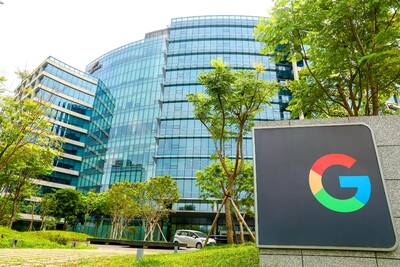
The government yesterday approved applications by Alphabet Inc’s Google to invest NT$27.08 billion (US$859.98 million) in Taiwan, the Ministry of Economic Affairs said in a statement. The Department of Investment Review approved two investments proposed by Google, with much of the funds to be used for data processing and electronic information supply services, as well as inventory procurement businesses in the semiconductor field, the ministry said. It marks the second consecutive year that Google has applied to increase its investment in Taiwan. Google plans to infuse NT$25.34 billion into Charter Investments Ltd (特許投資顧問) through its Singapore-based subsidiary Fructan Holdings Singapore Pte Ltd, and

Micron Technology Inc is a driving force pushing the US Congress to pass legislation that would put new export restrictions on equipment its Chinese competitors use to make their chips, according to people familiar with the matter. A US House of Representatives panel yesterday was to vote on the “MATCH Act,” a bill designed to close gaps in restrictions on chipmaking equipment. It would also pressure foreign companies that sell equipment to Chinese chipmaking facilities to align with export curbs on US companies like Lam Research Corp and Applied Materials Inc. The bill targets facilities operated by China’s ChangXin Memory Technologies Inc

SECOND-RATE: Models distilled from US products do not perform the same as the original and undo measures that ensure the systems are neutral, the US’ cable said The US Department of State has ordered a global push to bring attention to what it said are widespread efforts by Chinese companies, including artificial intelligence (AI) start-up DeepSeek (深度求索), to steal intellectual property from US AI labs, according to a diplomatic cable. The cable, dated Friday and sent to diplomatic and consular posts around the world, instructs diplomatic staff to speak to their foreign counterparts about “concerns over adversaries’ extraction and distillation of US AI models.” Distillation is the process of training smaller AI models using output from larger, more expensive ones to lower the costs of training a powerful new

Singapore-based ride-hailing and delivery giant Grab Holdings’ planned acquisition of Foodpanda’s Taiwan operations has yet to enter the formal review stage, as regulators await supplementary documents, the Fair Trade Commission (FTC) said yesterday. Acting FTC Chairman Chen Chih-min (陳志民) told the legislature’s Economics Committee that although Grab submitted its application on March 27, the case has not been officially accepted because required materials remain incomplete. Once the filing is finalized, the FTC would launch a formal probe into the deal, focusing on issues such as cross-shareholding and potential restrictions on market competition, Chen told lawmakers. Grab last month announced that it would acquire


 RSS
RSS