


Shares of Wistron Corp (
Compal's stock closed up 6.3 percent to NT$110.50 (US$3.4) on the Taiwan Stock Exchange yesterday, while Wistron gained 6.9 percent to NT$46.5. The benchmark TAIEX fell 0.3 percent.
Wistron and Compal are the most likely buyout targets of GS Capital Partners V, a private equity fund led by Goldman Sachs Group Inc, the Chinese-language Commercial Times said yesterday.
Both Wistron and Compal denied the report.
GS Capital Partners aims to buy a Taiwanese electronics manufacturer for up to US$2 billion, and other possible targets include keypad maker Ichia Technology Inc (毅嘉科技) and Merry Electronics Co (美律實業), a radio transceiver microphone maker, the report said.
The buyout speculation came after Washington-based Carlyle Group said on Nov. 24 it was considering spending more than US$5.4 billion to take over Advanced Semiconductor Engineering Inc (ASE,
ASE denied allegations that the buyout was aimed at moving the company out of Taiwan to avoid legal restrictions on investing in China.
Wistron reported record highs in sales and monthly shipments last month.
It posted NT$21.9 billion in sales last month, up 14 percent month on month and 8 percent from last year, with notebook shipment hitting 1.03 million units.
The company's fourth quarter shipments should hit 2.7 million units, a growth of 4 percent from the third quarter, Macquarie Research Equities said in a report on Dec. 6.
The report said Wistron's momentum would slow from this month through the first quarter next year as the firm enters the industry's low season and as one mainstream notebook from Dell Inc is phased out.
First quarter sales should decline by about 15 percent quarter on quarter to around NT$50 billion on smaller notebook and XBox 360 console shipments, Macquarie said.
Meanwhile, Compal Communications, whose major client is Motorola Inc, posted sales of NT$5.7 billion last month, down 2.7 percent from October because of lower selling prices.
It has cut its shipment forecast for this year from 75 million to 68 million units, citing unfavorable market changes.
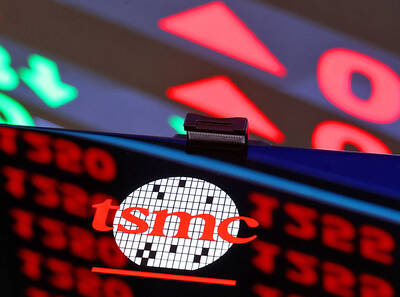
SEMICONDUCTOR SERVICES: A company executive said that Taiwanese firms must think about how to participate in global supply chains and lift their competitiveness Taiwan Semiconductor Manufacturing Co (TSMC, 台積電) yesterday said it expects to launch its first multifunctional service center in Pingtung County in the middle of 2027, in a bid to foster a resilient high-tech facility construction ecosystem. TSMC broached the idea of creating a center two or three years ago when it started building new manufacturing capacity in the US and Japan, the company said. The center, dubbed an “ecosystem park,” would assist local manufacturing facility construction partners to upgrade their capabilities and secure more deals from other global chipmakers such as Intel Corp, Micron Technology Inc and Infineon Technologies AG, TSMC said. It
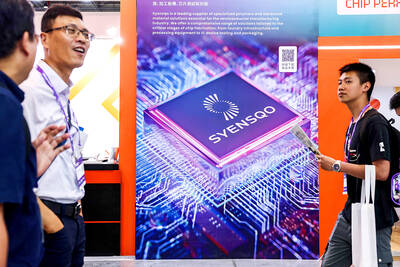
People walk past advertising for a Syensqo chip at the Semicon Taiwan exhibition in Taipei yesterday.
NO BREAKTHROUGH? More substantial ‘deliverables,’ such as tariff reductions, would likely be saved for a meeting between Trump and Xi later this year, a trade expert said China launched two probes targeting the US semiconductor sector on Saturday ahead of talks between the two nations in Spain this week on trade, national security and the ownership of social media platform TikTok. China’s Ministry of Commerce announced an anti-dumping investigation into certain analog integrated circuits (ICs) imported from the US. The investigation is to target some commodity interface ICs and gate driver ICs, which are commonly made by US companies such as Texas Instruments Inc and ON Semiconductor Corp. The ministry also announced an anti-discrimination probe into US measures against China’s chip sector. US measures such as export curbs and tariffs
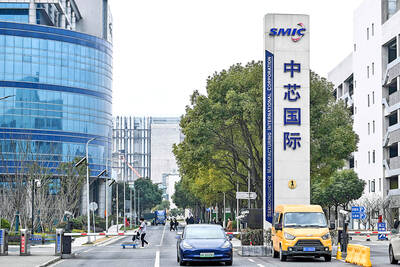
The US on Friday penalized two Chinese firms that acquired US chipmaking equipment for China’s top chipmaker, Semiconductor Manufacturing International Corp (SMIC, 中芯國際), including them among 32 entities that were added to the US Department of Commerce’s restricted trade list, a US government posting showed. Twenty-three of the 32 are in China. GMC Semiconductor Technology (Wuxi) Co (吉姆西半導體科技) and Jicun Semiconductor Technology (Shanghai) Co (吉存半導體科技) were placed on the list, formally known as the Entity List, for acquiring equipment for SMIC Northern Integrated Circuit Manufacturing (Beijing) Corp (中芯北方積體電路) and Semiconductor Manufacturing International (Beijing) Corp (中芯北京), the US Federal Register posting said. The


 RSS
RSS