


Chinese consumers will be the big winners from banking reforms that are expected to deliver higher-quality foreign financial services and force Chinese banks to modernize in order to compete.
Foreign banks, however, may have to wait before their entry into China pays off because of lingering restrictions and the dominance of domestic financial institutions, analysts said.
The long-awaited reforms, which were announced on Thursday and will take effect on Dec. 11, will allow foreign banks unprecedented access in the Chinese market just as the increasing ranks of the wealthy look for a safe location to put their excess cash to work.
With sophisticated products and services, foreign banks should find willing clients among savvy Chinese consumers who are tired of the stodgy array of domestic banking choices and indifferent service, industry analysts said.
"[Foreign banks] tend to be more oriented around customer service than domestic banks," said Charlene Chu of Fitch Ratings-China. "That will certainly be a major feature Chinese customers will be interested in."
Currently, foreign banks can only conduct business with Chinese companies, not individuals, and only in 25 cities. They can also offer foreign currency loans.
Following the reforms, which were required as part of China's ascension to the WTO, foreign banks will offer yuan deposits and loans and issue bank cards, placing them on the same regulatory playing field as domestic banks.
Standard Chartered, HSBC, Hang Seng and the Bank of East Asia, already experienced players in China, last week confirmed plans to plunge into the market.
Their presence will further benefit consumers by forcing improved management of domestic banks, long plagued by inefficient administration, corruption and a lack of transparency.
"Future competition will force Chinese banks to improve management and increase crisis awareness," said Wu Yonggang (
"But for the time being, the most urgent thing for Chinese banks will be how to fight foreign banks to get more customers," he said, adding that Chinese banks could be forced to bring in managers with international experience.
However, despite the reforms, foreign banks still face hurdles.
Unless they incorporate locally -- which brings its own set of tax and operational implications -- foreign banks can only offer fixed-term deposits to Chinese residents who can deposit one million yuan (US$127,033).
Even those that do incorporate locally will have trouble prying customers from the familiar grip of the entrenched domestic banks.
"Despite their increased presence, competition from foreign banks will remain limited, at least over the short term," Moody's Ratings Agency said in an analysis of the new rules.
"Because of their still-small market share, foreign banks' local operations will not present major challenges to Chinese banks," it said.
Analysts said the key to the success of the foreign banks will be whether they choose to set up as local corporations.
HSBC, among others, has said it would incorporate in China.
"Depending on whether foreign banks incorporate locally or maintain their current structure, that will determine how much choice Chinese customers have," Chu of Fitch Ratings said.
Either way, the impact on the market will be gradual, but that would ensure stability in the banking sector, Moody's said.
Shares of contract chipmaker Taiwan Semiconductor Manufacturing Co (TSMC, 台積電) came under pressure yesterday after a report that Apple Inc is looking to shift some orders from the Taiwanese company to Intel Corp. TSMC shares fell NT$55, or 2.4 percent, to close at NT$2,235 on the local main board, Taiwan Stock Exchange data showed. Despite the losses, TSMC is expected to continue to benefit from sound fundamentals, as it maintains a lead over its peers in high-end process development, analysts said. “The selling was a knee-jerk reaction to an Intel-Apple report over the weekend,” Mega International Investment Services Corp (兆豐國際投顧) analyst Alex Huang
Taiwan Semiconductor Manufacturing Co (TSMC, 台積電) is expected to remain Apple Inc’s primary chip manufacturing partner despite reports that Apple could shift some orders to Intel Corp, industry experts said yesterday. The comments came after The Wall Street Journal reported on Friday that Apple and Intel had reached a preliminary agreement following more than a year of negotiations for Intel to manufacture some chips for Apple devices. Taiwan Institute of Economic Research (台灣經濟研究院) economist Arisa Liu (劉佩真) said TSMC’s advanced packaging technologies, including integrated fan-out and chip-on-wafer-on-substrate, remain critical to the performance of Apple’s A-series and M-series chips. She said Intel and Samsung
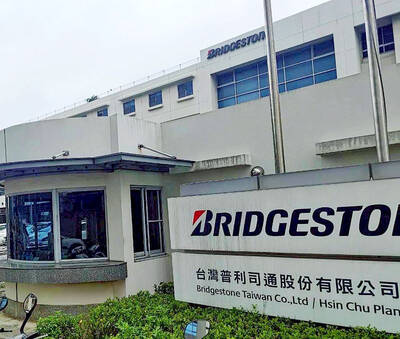
TRANSITION: With the closure, the company would reorganize its Taiwanese unit to a sales and service-focused model, Bridgestone said Bridgestone Corp yesterday announced it would cease manufacturing operations at its tire plant in Hsinchu County’s Hukou Township (湖口), affecting more than 500 workers. Bridgestone Taiwan Co (台灣普利司通) said in a statement that the decision was based on the Tokyo-based tire maker’s adjustments to its global operational strategy and long-term market development considerations. The Taiwanese unit would be reorganized as part of the closure, effective yesterday, and all related production activities would be concluded, the statement said. Under the plan, Bridgestone would continue to deepen its presence in the Taiwanese market, while transitioning to a sales and service-focused business model, it added. The Hsinchu
Taiwan Semiconductor Manufacturing Co (TSMC, 台積電) has approved a capital budget of US$31.28 billion for production expansion to meet long-term development needs during the artificial intelligence (AI) boom. The company’s board meeting yesterday approved the capital appropriation plan for purposes such as the installation of advanced technology capacity and fab construction, the world’s largest contract chipmaker said in a statement. At an earnings conference last month, TSMC forecast that its capital expenditure for this year would be at the higher end of the US$52 billion to US$56 billion range it forecast in January in response to robust demand for 5G, AI and


 RSS
RSS