


Concerns were growing on Friday that gas supplies to western Europe could be disrupted after Russia and Ukraine failed to end a dispute over gas prices.
The EU said on Friday it would hold a meeting of energy ministers this week to discuss the crisis.
"The idea is to be ready for all eventualities and to have a common approach," said Amadeu Altafaj Tardio, a spokesman for the European Commission.
European officials insisted that fuel supplies to a winter-bound Europe were not likely to be badly affected by the dispute, which followed an announcement by the Russian state controlled gas monopoly Gazprom that it was increasing the price of Siberian gas to Ukraine by 360 percent. The company has given Kiev until today to comply with the terms.
Ukraine urged Russia to suspend the increase, a demand that Gazprom dismissed as unacceptable. The EU currently relies on Gazprom for 25 percent of its gas supplies. Most of this is transported via Ukraine.
If Russia makes good its threat to cut off Ukraine's supply, it will reduce the amount of gas sent through the pipeline -- which also carries Europe's share.
"The commission is still optimistic that a deal can be reached," Tardio said. "We have concerns because some member states are more dependent on Russian gas than others."
Ukrainian President Viktor Yushchenko promised not to impede transit supplies to Europe. But Gazprom warned that Kiev might divert exports destined for Germany, Italy and France.
Earlier this week, Ukrainian Prime Minister Yuri Yekhanurov said that Kiev would take 15 percent of the Russian gas crossing its territory if Moscow cut delivery for Ukrainian domestic use. A Gazprom spokesman, Sergei Kupriyanov, told reporters it could not prevent Ukraine siphoning from transit pipelines.
"Technically speaking, they could take all the gas," he said.
Germany, the company's biggest client, urged Moscow and Kiev to strike a deal as soon as possible to guarantee uninterrupted delivery.
If necessary, Gazprom will offset decreased exports to western Europe by pumping more through its pipeline across Belarus, or using underground storage reservoirs, it said yesterday.
The UK does not receive direct supplies from Russia, but a drop in supply to Europe would mean less gas being pumped through the interconnector, the pipeline that links the UK with the continent.
Moscow wants to increase the price Kiev pays for gas from US$50 per 1,000 cubic meters to US$230, which it says is in line with market prices. The move is widely interpreted as punishment for Ukraine seeking rapid integration into the EU and NATO. Russia argues it cannot sustain the lower price.

Taiwanese firms have increased investment in the Philippines in recent years as Manila’s ties with Washington deepen and global supply chains continue to shift away from China, an expert at the Chung-Hua Institution for Economic Research (CIER, 中華經濟研究院) said yesterday. The Philippines had not been among Taiwanese investors’ top choices in Southeast Asia, CIER Taiwan ASEAN Studies Center director Kristy Hsu (徐遵慈) said at a seminar in Taipei. However, Taiwan’s investment in the country has grown significantly since the COVID-19 pandemic, reaching US $257 million last year, a high in recent years, she said. Although Taiwan’s total investment in the Philippines still lags
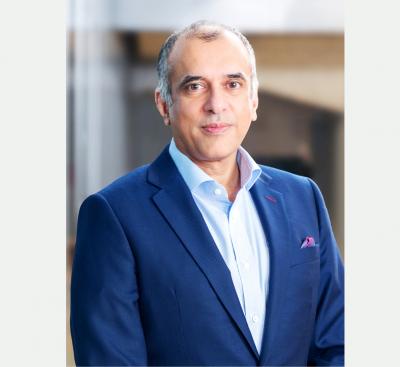
HSBC Holdings PLC is deepening its commitment to Taiwan as the economy emerges as one of the bank’s fastest-growing markets globally, driven by an artificial intelligence (AI) investment boom, expanding cross-border trade, and rising wealth creation. “The advantage that Taiwan has is a growth story linked to the semiconductor and broader AI industries, strong underlying corporate performance, and wealth creation,” said Surendra Rosha, HSBC’s co-chief executive for Asia and the Middle East, in an exclusive interview with the Taipei Times on June 2, during this year’s HSBC Taiwan Conference. That combination has helped HSBC cement its position as the most profitable international
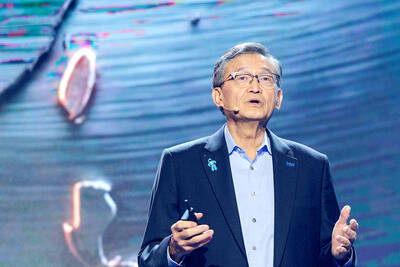
Intel Corp regards Taiwan Semiconductor Manufacturing Co (TSMC, 台積電) as a longstanding partner, as the US chipmaker would continue outsourcing production of advanced chips to TSMC, Intel chief executive officer Lip-Bu Tan (陳立武) said yesterday. “I don’t look at people as competitors. I look at the collaboration... Nvidia is also, you know, a good friend,” Tan told a news conference following his keynote speech at the Computex trade show in Taipei. “It’s a very trusted partnership for us... We are a big, top customer for them, and we’re going to continue doing that,” he said, referring to TSMC, the world’s largest foundry

Hon Hai Precision Industry Co (鴻海精密) yesterday said it would work with US chipmaker Intel Corp to jointly develop and deploy next-generation artificial intelligence (AI) infrastructure and intelligent computing platforms in a move to capture booming demand for AI computing systems. Hon Hai, also known as Foxconn Technology Group (富士康), said in a statement that the partnership would combine its global manufacturing scale, system integration expertise and AI data center deployment capabilities with Intel’s strengths in processor architecture, silicon technologies and software ecosystem. The companies said they plan to work on equipment used in AI data centers, including server racks powered by


 RSS
RSS