


With the top two mobile service providers aiming to launch their long-anticipated third-generation (3G) service this month and another one by the year-end, the upcoming four-day telecommunications exposition starting this Friday in Taipei is poised to become a hard-fought battle to secure subscribers.
State-run Chunghwa Telecom Co (中華電信), Taiwan's largest phone company, announced on Monday that it will launch its new high-speed 3G operations on July 26, squashing market rumors that it might have been forced to postpone its adoption of the new technology to September, as the company's focus has shifted to privatization and luring foreign investors.
But the preferential deals it offers to subscribers have dropped a depth-charge in the heavily invested market. During the two weeks before its formal launch, Chunghwa Telecom is offering pre-paid 3G-compliant handsets for only NT$1 while they are generally priced at up to NT$14,000 (US$440) each.
This strategy has stimulated Far EasTone Telecommunications Co (
Whether it will present killer pricing policies to secure its subscriber base remains to be seen in the press briefing today.
The data-oriented 3G service allows mobile users to download music or streaming video clips from the Internet onto a handset. Mobile phone applications will be focused more on "watching" than "hearing."
The industry front-runner, Asia Pacific Broadband Wireless Communications Inc (
The market appears to have matured this year, prompting Taiwan Mobile Co (
"Now with all the operators planning to unveil this service [by the year's end], it will certainly boost the popularity of 3G applications and make it more affordable," said Chen Chang-rong (陳長榮), managing director of Chunghwa Telecom's marketing department.
Vibo Telecom Inc (威寶電信), a latecomer in the domestic telecommunications market, plans to establish 3,600 base stations nationwide by September before launching its service early in the fourth quarter.
"By the end of next year, new developments in 3G-service applications will enter a more stable phase. We'll also secure around 800,000 subscribers," or 16 percent of a projected total of 5 million 3G users nationwide, said David Wang (
For those curious about the magic of the much-hyped 3G service, the upcoming Taipei International Telecommunications and Networking Show from Friday through next Monday offers a good opportunity to experience and compare various services and packages provided by the five market players.
The trade show, held at Taipei World Trade Center Exhibition Hall I, features 106 exhibitors showcasing 3G and Internet-phone applications -- two future trends in the telecom world.
While visitor numbers are expected to rise by 5 percent to 10 percent from 70,000 people last year, organizers are optimistic about the munificent orders placed by overseas buyers.
"A total of 10 foreign telecom companies from Brazil, India, South Korea and others will place orders estimated at US$200,000 to purchase Internet-phone, networking and communications facilities during the four-day show," according to a press release issued by the co-organizer, Taiwan External Trade Development Council (TAITRA,
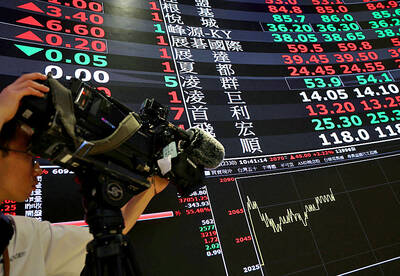
After several years flying high as Asia’s best Nvidia Corp proxy, Taiwan Semiconductor Manufacturing Co (TSMC, 台積電) is increasingly vying with other artificial intelligence (AI) stocks for investor attention. Stock traders are chasing a wider array of beneficiaries as mainstream usage of AI creates demand for hardware beyond the most-advanced chips TSMC makes for Nvidia. Subthemes from the deepening memory crunch to advances in robotics are also luring bids. At the same time, investment caps on single stocks are pushing funds to diversify, while retail investors long familiar with TSMC through its US depositary receipts are being offered a broader set of
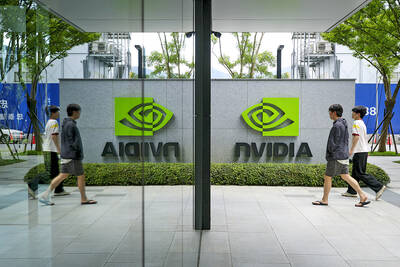
UNDER MICROSCOPE: Taiwan detained three people who allegedly conspired to buy servers in Taiwan and export them using fraudulent documentation, prosecutors said Nvidia Corp chief executive officer Jensen Huang (黃仁勳) on Saturday urged Super Micro Computer Inc to tighten up on compliance after Taiwan detained three people this week for allegedly making fraudulent declarations about artificial intelligence (AI) servers made by its US partner. The development marked the nation’s first crackdown on semiconductor smuggling, which grew after the US slapped restrictions on exports of high-end chips such as Nvidia AI accelerators to China. Nvidia is “rigorous” in explaining regulations to all of its partners, Huang told reporters after arriving in Taipei. “Ultimately Super Micro has to run their own company,” he said in response to

TECH RELIANCE: Growth is increasingly reflecting an unequal K-shaped distribution, where technology sectors outperform and other industries struggle, an expert said Standard Chartered Bank has significantly raised its forecast for Taiwan’s economic growth to 9.5 percent this year, up from 7.6 percent previously, citing surging artificial intelligence (AI) demand driving exports, semiconductor production and investment. The upgrade reflects a sustained AI supercycle that continues to fuel demand for advanced chips and technology infrastructure, which form the backbone of Taiwan’s exports, the bank said in a report this week. “We raise our 2026 growth forecast to reflect a much stronger-than-expected first-quarter GDP figure,” Standard Chartered senior economist for greater China and Asia Tommy Wu (胡東安) said in the report. Driven largely by a 35.3 percent
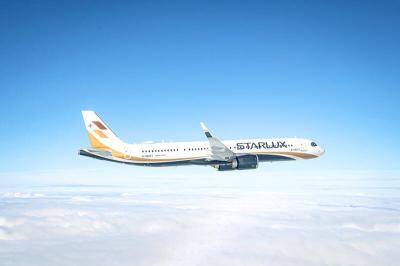
Two of Taiwan’s international carriers, Starlux Airlines Co (星宇航空) and EVA Airways Corp (長榮航空), have retained the five-star airline rating awarded by international airline review organization Skytrax. Starlux was awarded the distinction for a second consecutive year, while EVA Air received it for the 11th straight year, Skytrax said in statements released yesterday and on Thursday last week, respectively. The five-star rating is considered one of the airline industry's highest honors and is awarded following professional audits of airline product and frontline service standards, Skytrax said. The ratings are based on in-depth assessments using unified global quality standards rather than customer review scores


 RSS
RSS