


Amid rising awareness of environmental protection, manufacturers that are incapable or resistant to adopting "green manufacturing" will find themselves gradually losing markets, starting with Europe this year.
From Aug. 13, under the Waste Electronic and Electrical Equipment (WEEE) Directive passed by the EU in late 2002, Europeans will no longer be able to throw out old electronic equipment with the rest of the trash. Instead, brand-name electronics and electrical equipment producers will be required to take back products that users are finished with -- including items such as computers, cellphones, televisions and washing machines -- and pay for them to be recycled or disposed of.
Then, just as electronics makers are adapting to the extra expenses and responsibilities under the WEEE, another EU regulation -- the Restriction on Hazardous Substances (RoHS) Directive -- will go into effect on July 1 next year. This regulation bans six substances, including lead and mercury, from electronics products.
Six months after that, the US state of California plans to enact its own version of RoHS, and China also has similar laws in the works.
For Taiwan, the new EU policies are expected to affect the more than 30,000 manufacturers that export 44 types of electronic and electrical products to Europe every year, according to a study conducted by the Ministry of Economic Affairs.
Last year, Taiwan exported about NT$250 billion (US$8 billion) in goods to the EU that are subject to the rules, accounting for 2.45 percent of the nation's GDP, the ministry said.
The new requirements bring added costs, but industry watchers also note an opportunity -- the green rules offer a new area where a company can gain a competitive advantage. Likewise, firms that aren't prepared for the new rules will pay a price. Suppliers without compliant products risk losing customers, and brands found selling products that violate the rules will face fines -- even prison time in some EU countries. But despite the approaching compliance deadlines, surveys indicate a lack of awareness of the directives, especially among smaller companies.
Unprepared?
A survey conducted by the Taiwan Electrical and Electronic Manufacturers Association (電電公會), early this year showed that only 5 percent of electronic and electric makers conform to the WEEE regulations, while only 3 percent have come up with products that are in accordance with the RoHS standard.
Another survey released by the Ministry of Economic Affairs' Industrial Development Bureau in March showed that 63 percent of domestic manufacturers have started to prepare for the WEEE regulations, while 87 percent said they have begun to comply with RoHS.
"Few local manufacturers, especially small and medium ones, are ready for the new policies due to concern over the costs," said Lin Hung-tuan
Part of the lack of preparation for the directives originates in Europe itself, at least for the WEEE. The WEEE directive sets minimum standards and each EU country must pass their own laws to meet these requirements, in contrast to the RoHS requirements, which will be universally implemented in all EU member states.
As many countries have not yet passed their own set of laws to meet the WEEE requirements, the compliance deadline is being pushed back in some places. Britain, for example, earlier this year postponed the deadline for WEEE compliance until January 2006, saying it needs more time to set up the necessary infrastructure. The EU's biggest market, Germany, has announced a similar schedule.
In Taiwan, awareness of the directives varies, said Martin Charter, of the UK Center for Sustainable Design. During a March interview with the Taipei Times, Charter said that since many Taiwanese companies are major suppliers of EU markets, there's a much higher level of preparedness for RoHS than for the WEEE requirements.
While there's very a deep level of awareness of WEEE in larger companies, smaller companies are largely unaware, he said, adding that this is a global problem.
According to Charter, part of the problem is that Taiwanese companies are addressing WEEE as a technical issue to be solved by engineers, whereas the WEEE rules require management decisions.
"It's an issue of levels. I don't think it has penetrated the senior management levels, he said.
Additionally, many companies have no clear management structure to support environmental policy and corporate social responsibility issues, he said.
The semi-official Industrial Technology Research Institute (ITRI, 工研院) located in Hsinchu, has for many years been involved in projects to assist local manufacturers in complying with the two directives, and began promoting a "green supply chain" initiative when the WEEE directive was first announced in 2003.
Despite this initiative, awareness and preparedness among local electrical and electronic makers is still insufficient, which will cost them dearly in the near future, said Nick Liu (
"Now the majority realize the impact of the directives, but they have little time to react, Liu said.
In contrast, larger multinational companies are already adapting to the rules. Hewlett-Packard Co, Sony Europe, Braun Corp and Electrolux last year launched the European Recycling Platform (ERP), to which they will contract out all their WEEE responsibilities in several EU countries.
Impact of WEEE
The major reason most companies have been reluctant to adjust to the new rules is the extra costs that come with compliance.
According to the ITRI, the WEEE and RoHS directives could increase costs by as much as 3 percent and 5 percent for brand name electrical and electronics product vendors, and raise manufacturing costs by 5 percent to 10 percent.
The WEEE requires that companies selling goods into the EU pay for the recovery, recycling and disposal of the products at the end of their lives, but they can also outsource these responsibilities.
Costs from the WEEE will start to be seen as soon as next year, and are likely to peak in the first year or two, said Chris Robertson of ERA Technology Ltd, a British company that provides advice on the two directives, and is part of a committee advising the EU on technical adaptation of the rules.
"You can be relatively sophisticated" in figuring out precisely what costs will arise in what products and in what year, he said, by taking into account a company's market share, how many products are put on the market and the volume of products disposed of each year.
Additionally, the cost of recycling goods that were put on the market before the Aug. 13 deadline -- or historical waste -- will have to be dealt with for the next 10 years, he said.
The cost of disposing of historical waste will be split between all companies, with the share of the cost based on a company's market share. Producers will also need to be able to provide information on sales in a given country and the weight of products sold, he said. This data will be used to check compliance with the EU's recycling and recovery targets.
The Industrial Development Bureau director Lin suggested that local brand name electronics producers contract out their WEEE responsibilities to recycling companies to save costs.
"But companies need to act fast [to find an outsourcing partner]," Lin said.
This kind of model is currently working well at Acer Inc, the world's fifth-largest personal-computer (PC) vendor and the top notebook PC brand in Europe. The company shipped more than 4 million PCs to Europe last year, accounting for 67 percent of its total shipment worldwide, according to statistics released by International Data Corp in January.
"At Acer, it may cost US$5 to recycle a PC," the company's senior vice president Jim Wong (翁建仁) said.
As Acer is planning to ship 14 million PCs worldwide next year, with around 70 percent of that figure going to European countries, the company may need to earmark US$49 million for recycling in compliance with EU environmental regulations.
Acer's US$5 estimate appears comparable to costs under recycling schemes in Europe. A study by France's environment agency, which used 2001 and 2002 figures, indicated that the cost of recycling a PC ranged between 3 euros (US$3.70) and 9 euros in countries such as the Netherlands, Belgium and Switzerland, all of which have national recycling programs.
Costs of compliance
Though the August deadline for WEEE compliance is being pushed back in some of the EU's largest markets, this is not the case with RoHS, and the July 1, 2006 deadline is not likely to change.
RoHS bans heavy metals such as cadmium, mercury, hexavalent chromium and lead from being used as components in electronics goods, as well as two flame retardants, polybrominated biphenyls and polybrominated diphenyl ethers.
RoHS will significantly increase costs for manufacturers, requiring them to buy alternative substances, develop new technology to be able to produce goods using the new materials, as well as renewing their existing equipment, Lin said.
So far, the biggest challenge for manufacturers has been to find feasible and affordable replacement substances for lead, which is widely used in electronic products, Lin said.
The problem is especially prevalent in small and medium manufacturers, which have fewer financial and research resources, he noted.
On the upside, replacement substances and new production technology are available now, but they are controlled by major multinationals, ITRI division manager Liu said. In other words, local manufacturers will need to buy the technology from these companies until they are capable of developing their own, he said.
But even those companies with access to the new substances will not necessarily find the transition smooth, as the replacement materials add uncertainty to the manufacturing stage and for product performance.
"We have 50 years of experience and knowledge of tin-lead solder [which is banned under RoHS], [but] the new alloys that are being proposed ... we don't understand nearly as well. We cannot just globally and easily predict reliability of these new products," said Michael Kirschner, president of the San Francisco-based Design Chain Associates, a company that advises electronics original equipment manufacturers (OEMs).
Kirschner was speaking at an online seminar on compliance with the EU directives in April.
Another challenge is keeping track of materials used in all components all the way through the supply chain so that a company can prove the product is compliant to the regulations.
"A lot of OEMs are eliminating suppliers, or replacing suppliers [that can't supply data on the composition of their products]. This is a wake-up call to suppliers. If they're not focusing on this they may go out of business," Kirschner said.
firms leading the way
To help small and medium-sized companies weather the transition, Liu said the government and the ITRI will provide assistance, but large manufacturers are playing a more important role in leading the way.
Acer, for example, will ensure that its suppliers meet the RoHS requirements by January next year, by cooperating with research sectors and leveraging knowledge and resources from their first-tier suppliers, Acer spokesman Henry Wang (
Asustek Computer Inc (華碩電腦), Taiwan's largest exporter of IT products to the EU in terms of output value, is also helping more than 4,000 of its suppliers conform to the new rules.
Asustek exported NT$188.3 billion worth of goods, or 8.34 percent of its total exports, to the EU last year. It was followed by High Tech Computer Corp (宏達電子) with NT$180.8 billion and Quanta Computer Inc (廣達電腦) with NT$175.2 billion, according to ITRI statistics.
James Huang (黃雍明), Asustek's corporate quality officer, said the company gained a greater awareness of environmental issues when it became a manufacturer of Sony Corp's PlayStation2 game console in 2002. At the time, the Japanese consumer electronics giant set up the "Sony Green Partner Standards" which required its partners to use environmentally friendly materials in its products.
After Sony, other renowned brands such as Motorola Inc, Nokia Oyj, Apple Computer Inc, and Dell Inc began requiring their suppliers meet requirements similar to those stipulated in the RoHS directive, which further raised Asustek's emphasis on the issue, Huang said.
A Green opportunity
Anticipating the trend, Asustek embarked on a "GreenASUS" plan last year that devotes resources to green technology research, procurement and production, according to Huang.
The trend toward more environmentally friendly policies is also extending into China, which is accelerating legislation to regulate electronics waste and hazardous substances. California and several other US states are also preparing to pass similar laws.
"We tell our suppliers they have no other way to go but to transform themselves into `green suppliers,' or they can't survive," Huang said.
The growing trend is also an opportunity for companies to develop new technologies, ITRI director Liu said, since manufacturers need to come up with across-the-board solutions for the long run, rather than just hastily coping with the two EU directives in the short-term.
"We still have a chance to gain a leading position as key green suppliers if we start to work now, but we have to do more," Liu said. "By setting higher standards, we'll have an edge to react when stricter environmental regulations are made in the future."
The government has also recognized the trend and wants to assure foreign buyers of the quality of Taiwanese-made goods when they place orders with local manufacturers, Minister of Economic Affairs Ho Mei-yueh (何美玥) said on May 23 while launching a government-backed RoHS service group.
When RoHS takes effect in July next year, "We hope we can say loudly that there's no problem for Taiwanese exports," Ho said at the launch ceremony.
What is WEEE ?
WEEE: Waste Electronics and Electrical equipment (WEEE) Directive
Purpose: Aims to prevent the creation of waste from the disposal of electronic equipment; makes producers responsible for paying for the recovery, recycling or disposal of their waste; encourages reuse and says producers cannot design a product to prevent its reuse.
Deadline: The official implementation deadline is Aug. 13, but many EU countries will miss this deadline (The UK and Germany have extended it to early 2006)
Implementation: Each EU country must pass its own laws to meet the standards set by the directive, so requirements will vary slightly in each country.
Details:
* Consumers will no longer be allowed to throw out ``e-waste'' with the regular trash. It must be collected separately.
* Governments must also set up community collection points to take back products from consumers at no charge.
* Producers are responsible for funding the pickup, recovery, recycling and disposal of items from the community collection points.
* Producers putting a product on the market must label it properly (crossed-out wheelie bin) and provide a guarantee to pay for its treatment/recycling at the end of its life.
* Producers must provide information on reuse and treatment of their products within a year of putting a product on the market.
* Retailers are obliged to take back products from customers who buy a similar item new.
* The directive applies to 10 categories of equipment, including household appliances, IT, telecom, consumer and medical equipment, as well as monitoring instruments (eg, smoke detectors, thermostats) and automatic dispensers for hot and cold drinks.
Exemptions:
* Military equipment
* Implantable medical devices
(See directive for complete list)
What is RoHS ?
RoHS: Restriction on Hazardous Substances (RoHS) Directive
Purpose: Aims to stop hazardous substances from getting into landfills.
Deadline: Comes into effect on July 1, 2006.
Implementation:
The directive will be universally implemented across the EU and supercedes national laws.
Details: Bans six substances from being used in electronic and electrical equipment, including the heavy metals cadmium, mercury, lead and hexavalent chromium, as well as two flame retardents, polybrominated diphenyl ethers (PBDE) and polybrominated biphenyls (PBB).
* Proposed maximum concentration values for the substances are 0.1 percent of weight for each of the substances except cadmium, which would have a more stringent restriction of 0.01 percent.
* The law applies to the same 10 categories of equipment as the WEEE directive.
Exemptions:*
* Lead in solders for servers, storage and storage array systems (until 2010)
* Lead in the glass of cathode ray tubes
* Lead in solders for some networking equipment
*See directive for a complete list. Note also that the EU is evaluating more exemptions
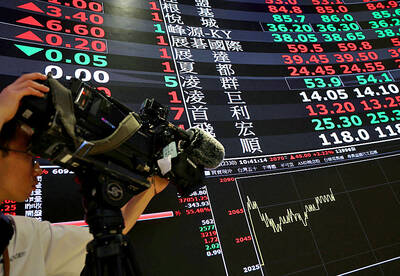
After several years flying high as Asia’s best Nvidia Corp proxy, Taiwan Semiconductor Manufacturing Co (TSMC, 台積電) is increasingly vying with other artificial intelligence (AI) stocks for investor attention. Stock traders are chasing a wider array of beneficiaries as mainstream usage of AI creates demand for hardware beyond the most-advanced chips TSMC makes for Nvidia. Subthemes from the deepening memory crunch to advances in robotics are also luring bids. At the same time, investment caps on single stocks are pushing funds to diversify, while retail investors long familiar with TSMC through its US depositary receipts are being offered a broader set of
UNDER MICROSCOPE: Taiwan detained three people who allegedly conspired to buy servers in Taiwan and export them using fraudulent documentation, prosecutors said Nvidia Corp chief executive officer Jensen Huang (黃仁勳) on Saturday urged Super Micro Computer Inc to tighten up on compliance after Taiwan detained three people this week for allegedly making fraudulent declarations about artificial intelligence (AI) servers made by its US partner. The development marked the nation’s first crackdown on semiconductor smuggling, which grew after the US slapped restrictions on exports of high-end chips such as Nvidia AI accelerators to China. Nvidia is “rigorous” in explaining regulations to all of its partners, Huang told reporters after arriving in Taipei. “Ultimately Super Micro has to run their own company,” he said in response to

TECH RELIANCE: Growth is increasingly reflecting an unequal K-shaped distribution, where technology sectors outperform and other industries struggle, an expert said Standard Chartered Bank has significantly raised its forecast for Taiwan’s economic growth to 9.5 percent this year, up from 7.6 percent previously, citing surging artificial intelligence (AI) demand driving exports, semiconductor production and investment. The upgrade reflects a sustained AI supercycle that continues to fuel demand for advanced chips and technology infrastructure, which form the backbone of Taiwan’s exports, the bank said in a report this week. “We raise our 2026 growth forecast to reflect a much stronger-than-expected first-quarter GDP figure,” Standard Chartered senior economist for greater China and Asia Tommy Wu (胡東安) said in the report. Driven largely by a 35.3 percent

Two of Taiwan’s international carriers, Starlux Airlines Co (星宇航空) and EVA Airways Corp (長榮航空), have retained the five-star airline rating awarded by international airline review organization Skytrax. Starlux was awarded the distinction for a second consecutive year, while EVA Air received it for the 11th straight year, Skytrax said in statements released yesterday and on Thursday last week, respectively. The five-star rating is considered one of the airline industry's highest honors and is awarded following professional audits of airline product and frontline service standards, Skytrax said. The ratings are based on in-depth assessments using unified global quality standards rather than customer review scores


 RSS
RSS