


Two people nominated by KGI Securities Co (
"Stressing the importance of professionalism, KGI plans to set up four sub-committees on the board including a corporate governance committee, an audit committee, a salary committee and an investment committee," David Chen (陳鑫), chief executive officer at Chinatrust Venture Capital Corp (中信創投), told reporters yesterday afternoon.
Each of the four committees would comprise five to seven members, Chen said.
Chen complained that the share price of China Development had declined during the past six years. With a total of NT$90 billion in domestic and overseas re-investments, China Development made NT$15 billion in annual capital gains, which he described under-performing.
"We hope to achieve a 15 percent return on equity this year," Chen said, adding that a re-evaluation of China Development's 400 re-investment projects would be conducted to determine their feasibility and prospects.
KGI, headed by Angelo Koo (
Asked if there would be a management reshuffle following the vote, Chen said KGI had no such plan. But he stressed that KGI didn't rule out the possibility of bringing in top-tier investment banking talent from Chinatrust to China Development.
KGI also plans to introduce new incentive measures including employee stock options and a new bonus system to boost employees' morale at China Development, Chen said.
He said China Development employees would be allowed to buy the company's stocks at reduced prices and to sell the shares in two years if they had risen.
"As far as I understand, employees at China Development are currently underpaid since most received no salary raise in the past three years," Chen said.
He refused to promise a raise if KGI took over China Development's board, but "a reasonable salary structure will be implemented," he said.
KGI's other candidate, Tung Chao-chin (童兆勤), CEO of Trace Storage Technology Corp (和喬科技),said he resented the faction culture at China Development,which he said might have seriously imperiled the company's management and performance.
He vowed to set up proper communication channels for employees to reflect opinions.
"However, KGI will be ruthless in getting rid of those who attempt to create small interest groups within the company," Tung added.
One week after KGI officially kick-started its campaign of proxy solicitation, Sherie Chiu (


Taiwanese firms have increased investment in the Philippines in recent years as Manila’s ties with Washington deepen and global supply chains continue to shift away from China, an expert at the Chung-Hua Institution for Economic Research (CIER, 中華經濟研究院) said yesterday. The Philippines had not been among Taiwanese investors’ top choices in Southeast Asia, CIER Taiwan ASEAN Studies Center director Kristy Hsu (徐遵慈) said at a seminar in Taipei. However, Taiwan’s investment in the country has grown significantly since the COVID-19 pandemic, reaching US $257 million last year, a high in recent years, she said. Although Taiwan’s total investment in the Philippines still lags
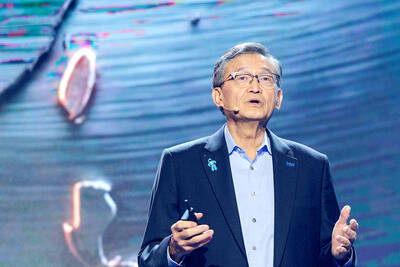
Intel Corp regards Taiwan Semiconductor Manufacturing Co (TSMC, 台積電) as a longstanding partner, as the US chipmaker would continue outsourcing production of advanced chips to TSMC, Intel chief executive officer Lip-Bu Tan (陳立武) said yesterday. “I don’t look at people as competitors. I look at the collaboration... Nvidia is also, you know, a good friend,” Tan told a news conference following his keynote speech at the Computex trade show in Taipei. “It’s a very trusted partnership for us... We are a big, top customer for them, and we’re going to continue doing that,” he said, referring to TSMC, the world’s largest foundry
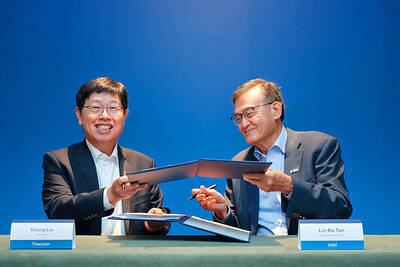
Hon Hai Precision Industry Co (鴻海精密) yesterday said it would work with US chipmaker Intel Corp to jointly develop and deploy next-generation artificial intelligence (AI) infrastructure and intelligent computing platforms in a move to capture booming demand for AI computing systems. Hon Hai, also known as Foxconn Technology Group (富士康), said in a statement that the partnership would combine its global manufacturing scale, system integration expertise and AI data center deployment capabilities with Intel’s strengths in processor architecture, silicon technologies and software ecosystem. The companies said they plan to work on equipment used in AI data centers, including server racks powered by
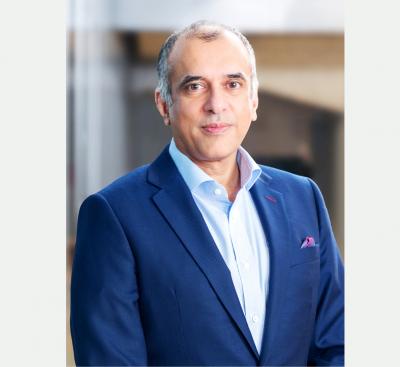
HSBC Holdings PLC is deepening its commitment to Taiwan as the economy emerges as one of the bank’s fastest-growing markets globally, driven by an artificial intelligence (AI) investment boom, expanding cross-border trade, and rising wealth creation. “The advantage that Taiwan has is a growth story linked to the semiconductor and broader AI industries, strong underlying corporate performance, and wealth creation,” said Surendra Rosha, HSBC’s co-chief executive for Asia and the Middle East, in an exclusive interview with the Taipei Times on June 2, during this year’s HSBC Taiwan Conference. That combination has helped HSBC cement its position as the most profitable international


 RSS
RSS