


The photos are grainy, blotchy and blurry, but for millions of people now toting cellphones with built-in digital cameras, it doesn't seem to be about the megapixels -- or at least not yet.
Tens of millions of these less-than perfect pictures were snap last year, the first full year such services were available.
News organizations are publishing cell photos from their readers to help cover stories. And an untold number of mobile phone snapshots are being posted daily to "moblogs," a visual form of the online journals better known as Web logs, or blogs.
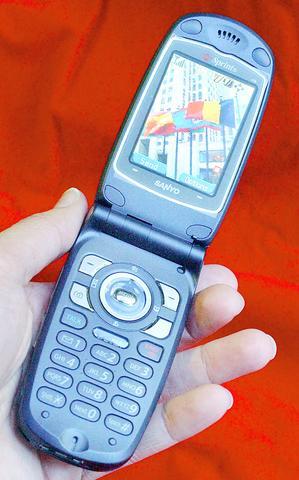
PHOTO: AP
In short, corny as it sounds, cellular photography seems to be about adding new immediacy to the old Kodak pitch, "share the moment."
But much as this country has lagged Asia and Europe in many facets of the mobile-phone revolution, cell photography is still a rather niche hobby in the US -- a major challenge for wireless companies desperate to generate new revenues from non-voice services.
Of the roughly 75 million camera phones shipped worldwide last year, only 6 million went to the US, compared with more than 35 million to Japan, according to Strategy Analytics Ltd, a British consulting firm. Likewise, North America accounted for just 1.7 million of the world's 24 million "active" users of camera phones, compared with a combined 21.6 million in Japan and South Korea.
Clearly, a growing number of cellphone users are charmed by the spontaneity of snapping a picture whenever and wherever the urge hits them, then immediately zipping it off to friends or family.
And precisely because such shots aren't destined for a photo album or frame, there's less need to fret over getting a picture just right, making the process a more casual affair like e-mail rather than taking a photo.
"My friend took a picture of himself in a cab and sent it to me. I sent a picture of a puppy," said Margarita Stofan, 25, a newcomer to cell photography who also shares pictures with three family members who have camera phones.
"I didn't plan on getting one because extra stuff in cellphones seems silly. But the salesman talked me into it, and I found it's a fun little feature to have. I take pictures of everyone around me -- just random photos," she said.
But much as that story may warm the hearts of wireless executives, it also illustrates the numerous hurdles that cellular companies face in driving subscribers to a premium service like picture messaging. These factors include cost, incompatibility among the different carriers and a limited pool of fellow camera-phone owners with whom to swap photos.
And, for those who can't fathom a camera that's not meant to produce physical prints, picture quality remains a turnoff. The pictures also aren't sharp enough yet to fulfill expectations that camera phones will be used as a business tool by real estate agents, insurance claims adjusters and other professionals.
Though one- and two-megapixel camera phones like those available overseas are expected here this year, none of the handsets now sold in the US offer better than 0.3 megapixels, less than a third of the resolution of the lowest-end standalone digital camera.
"We're seeing very healthy demand, but it's not realistic to think that the installed base will upgrade [to camera phones] overnight," said Glenice Maclellan, vice president for messaging services at AT&T Wireless.
To fuel sales, carriers have cut camera phone prices sharply since the first model was introduced by Sprint in late 2002 with a list price of US$400. Still, compared with the entry-level, camera-less phones that service providers sell for little or nothing, camera phones generally cost US$100 and up with rebates and a two-year contract.
While the photos taken on a camera phone can also be sent to a regular e-mail address on a computer, many users are drawn by the novelty of sharing photos with other cellular shutterbugs, sending pictures among their handsets. Since subscribers generally pay by the volume of messages sent or received -- Sprint offers unlimited service as part of a monthly Web package -- that's the type of usage wireless companies are anxious to promote.
However, to share picture messages successfully with other cellphone users, those people must all be signed up with the same wireless service. Rival carriers have not reached any deals to interconnect their services.
Until the carriers come to terms on how to pay one another for delivering this new form of communication, picture messaging will remain less like e-mail, and more like instant messaging, where users of services from AOL, Yahoo! and MSN still cannot directly chat.

Shares of contract chipmaker Taiwan Semiconductor Manufacturing Co (TSMC, 台積電) came under pressure yesterday after a report that Apple Inc is looking to shift some orders from the Taiwanese company to Intel Corp. TSMC shares fell NT$55, or 2.4 percent, to close at NT$2,235 on the local main board, Taiwan Stock Exchange data showed. Despite the losses, TSMC is expected to continue to benefit from sound fundamentals, as it maintains a lead over its peers in high-end process development, analysts said. “The selling was a knee-jerk reaction to an Intel-Apple report over the weekend,” Mega International Investment Services Corp (兆豐國際投顧) analyst Alex Huang

Taiwan Semiconductor Manufacturing Co (TSMC, 台積電) is expected to remain Apple Inc’s primary chip manufacturing partner despite reports that Apple could shift some orders to Intel Corp, industry experts said yesterday. The comments came after The Wall Street Journal reported on Friday that Apple and Intel had reached a preliminary agreement following more than a year of negotiations for Intel to manufacture some chips for Apple devices. Taiwan Institute of Economic Research (台灣經濟研究院) economist Arisa Liu (劉佩真) said TSMC’s advanced packaging technologies, including integrated fan-out and chip-on-wafer-on-substrate, remain critical to the performance of Apple’s A-series and M-series chips. She said Intel and Samsung
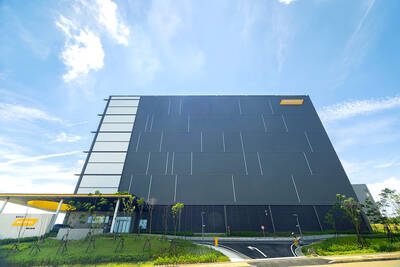
POWER BUILDUP: Powered by Nvidia’s B200 Blackwell chips, the data center would support MediaTek’s computing power demand and business growth, the company said Smartphone chip designer MediaTek Inc (聯發科) yesterday launched a new artificial intelligence (AI) data center with a maximum capacity of 45 megawatts to meet its rising demand for computing power required to develop new advanced chips for AI applications. The company has completed the first-phase computing power buildup at the data center in Miaoli County’s Tongluo Township (銅鑼), providing 15 megawatts of capacity to support its research and development (R&D) capabilities, despite an industrywide shortage of key components, MediaTek said. Supply constraints have plagued a wide range of key components, including memory chips, solid-state drives, power supply units and central
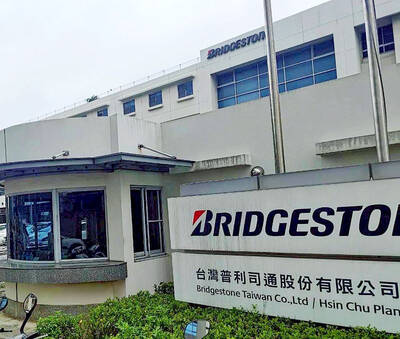
TRANSITION: With the closure, the company would reorganize its Taiwanese unit to a sales and service-focused model, Bridgestone said Bridgestone Corp yesterday announced it would cease manufacturing operations at its tire plant in Hsinchu County’s Hukou Township (湖口), affecting more than 500 workers. Bridgestone Taiwan Co (台灣普利司通) said in a statement that the decision was based on the Tokyo-based tire maker’s adjustments to its global operational strategy and long-term market development considerations. The Taiwanese unit would be reorganized as part of the closure, effective yesterday, and all related production activities would be concluded, the statement said. Under the plan, Bridgestone would continue to deepen its presence in the Taiwanese market, while transitioning to a sales and service-focused business model, it added. The Hsinchu


 RSS
RSS