


Taipei Times: Last week CETRA rescheduled this year's Computex Taipei for Sept. 22 to Sept. 26, just a day after Cebit Asia in Shanghai finishes. Is that the major reason CETRA chose that date?
Chao Yung-chuan
About two months ago, Taiwan Machinery Association officials asked us if it was possible to postpone the Taipei PLAS Show until March next year because machine makers said they needed more time to prepare samples and exhibits. CETRA will give a 10 percent rental discount for Taipei PLAS exhibitors.
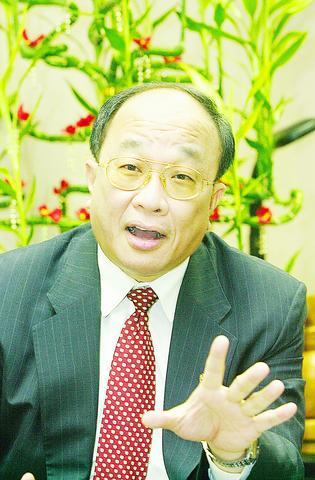
PHOTO: GEORGE TSORNG,TAIPEI TIMES
The organizer of Taipei PLAS initiated the plan and we think the slot is suitable for Computex. July and August are usually vacation months for international buyers, therefore September is the best time. The Taipei World Trade Center is fully booked in October and nearly full in November. And if we run the show in late November, that will be too late for the Christmas orders. So, September will be the best time and luckily Taipei PLAS is content to shift its show to March next year.
TT: Some exhibitors complained that these two major shows -- Computex Taipei and Cebit Asia -- are too close and they will have difficulty attending both?
Chao: This should not be a problem for them. Local workers or contractors can be in charge of setting up booths and decorations, while company officials can come from Cebit Asia and attend the show immediately. I believe that by that time SARS will be under control and no quarantine will be needed. For foreign buyers, coming to Computex right after Cebit Asia will be very convenient. But if we were to begin the show two days later, buyers may not know where to go. Therefore, I think starting Computex Taipei on Sept. 22 is a very good time for both buyers and exhibitors.
Originally 1,100 exhibitors were expected to set up 2,800 booths at Computex Taipei in June, however, as CETRA just announced its new schedule on Wednesday, we are not sure how many exhibitors will attend the show in September. Now we are working on recruiting exhibitors. We are not worried about that because there were over 100 companies on the waiting list interested in joining the show. We hope we can still maintain the same size show as in June.
TT: Will the number of foreign buyers decrease because of the date change?
Chao: Last year the Computex attracted some 23,000 foreign visitors and most first-tier hotels in Taipei and even Keelung or Taoyuan county were fully booked. Therefore the show brought in a lot of business for restaurants, hotels, as well as the transportation and entertainment sectors. Computex Taipei creates business opportunities not only for information technology industries but also related sectors. Therefore we can't afford to cancel Computex Taipei. CETRA will lose at least US$2.7 million in rental income due to the show cancellation.
This year we don't expect to attract as many foreign visitors as before, because we changed the date and many buyers may have already decided their schedules and finalized orders.
Nevertheless, we hope we can have more than 10,000 foreign buyers come to this year's Computex Taipei. Starting from today CETRA will try our best to attract foreign visitors.
TT: Do Cebit Asia and Computex Taipei target similar or overlapping markets?
Chao: Cebit Asia targets China's domestic market, not international buyers.
Most visitors to Cebit Asia are from local companies. Therefore these two shows are very different. Computex Taipei, from the very beginning, aims to do business and our main interest is foreign buyers. Last year we attracted more than 23,000 foreign visitors and every year due to the limited space, we have had a very long waiting list for companies wanting to be exhibitors.
TT: Due to the SARS outbreak, several shows in April and May had to be canceled. What are the total losses for CETRA?
Chao: Totally, we lost about NT$230 million in revenue due to the impact of SARS, with most of the losses being from rental fees. Of that amount about NT$53 million is from discounts we offered to exhibitors at the four shows in April -- TaiSPO, Taipei Opto, Taitronics Spring and Giftionery Taipei.
Most exhibitors at the four shows originally said they wanted to withdraw, while we persuaded them that if you withdraw and the buyers come, this will not be a responsible attitude as far as foreign buyers are concerned. So they agreed to stay and we decided to give them a 50 percent rent discount for next year's show.
We also canceled another five shows in May and June -- TIDEX, AMPA, Food Taipei, Food Tech Taipei and Taipei Pack -- with total rental losses at NT$97 million.
In addition to these international shows, six domestic shows were also canceled and resulted in NT$61 million in lost rent for CETRA.
TT: Will the show cancellation hurt this year's export order numbers?
Chao: Partly I think, since most of these shows have a 10- or 20-year history and Taiwanese exhibitors have built strong relationships with foreign buyers. While this year some buyers didn't come to the show, they still cut deals via the Internet, telephone and other communication tools. But, without a doubt, exhibiting is a very good opportunity to introduce new products and encourage people to place more orders. Besides, exhibiting is a good chance for buyers to compare prices and place orders immediately. Since they have spent lots of time traveling, buyers are very likely to spend at trade shows.
TT: What plans does CETRA have after SARS has been brought under control to revive participation?
Chao: Since most of our international shows are export-oriented events, during summer time, when most foreign buyers are on vacation, we don't run trade shows. So, most shows scheduled for that period are for the domestic market.
We are now trying to persuade local show organizers to re-start shows at the end of June. CETRA is also planning to run a fruit festival between July 11 and July 13.
We hope, during that event, to formally announce the end of SARS. It will be time for us to celebrate and we will do so by placing advertisements in newspapers to deliver the good news symbolizing the recovery of the exhibition business.
We will run that show at Taipei World Trade Center Exhibition Hall II.
Another reason to run the show is that this year's good weather has meant a boon for the fruit industry. We'll see quite a lot of fruit on display such as mangos, wax apples and so on.
CETRA will not charge exhibitors rent for the show. Taking the space, electricity and air conditioning costs into consideration, its worth about NT$4 million if CETRA were to rent out the hall.
Both the Council of Agriculture (COA) and the Board of Foreign Trade will financially support the show's marketing budget.
Currently 93 companies have already expressed an interest in attending the show.
CETRA will also offer encouragement like free advertising to local show organizers who rescheduled after they canceled their shows prior to the fruit festival.
We expect the Semiconductor Equipment show, between June 26 and June 29, will be the first show to resume.

SECOND-RATE: Models distilled from US products do not perform the same as the original and undo measures that ensure the systems are neutral, the US’ cable said The US Department of State has ordered a global push to bring attention to what it said are widespread efforts by Chinese companies, including artificial intelligence (AI) start-up DeepSeek (深度求索), to steal intellectual property from US AI labs, according to a diplomatic cable. The cable, dated Friday and sent to diplomatic and consular posts around the world, instructs diplomatic staff to speak to their foreign counterparts about “concerns over adversaries’ extraction and distillation of US AI models.” Distillation is the process of training smaller AI models using output from larger, more expensive ones to lower the costs of training a powerful new

Micron Technology Inc is a driving force pushing the US Congress to pass legislation that would put new export restrictions on equipment its Chinese competitors use to make their chips, according to people familiar with the matter. A US House of Representatives panel yesterday was to vote on the “MATCH Act,” a bill designed to close gaps in restrictions on chipmaking equipment. It would also pressure foreign companies that sell equipment to Chinese chipmaking facilities to align with export curbs on US companies like Lam Research Corp and Applied Materials Inc. The bill targets facilities operated by China’s ChangXin Memory Technologies Inc

Singapore-based ride-hailing and delivery giant Grab Holdings’ planned acquisition of Foodpanda’s Taiwan operations has yet to enter the formal review stage, as regulators await supplementary documents, the Fair Trade Commission (FTC) said yesterday. Acting FTC Chairman Chen Chih-min (陳志民) told the legislature’s Economics Committee that although Grab submitted its application on March 27, the case has not been officially accepted because required materials remain incomplete. Once the filing is finalized, the FTC would launch a formal probe into the deal, focusing on issues such as cross-shareholding and potential restrictions on market competition, Chen told lawmakers. Grab last month announced that it would acquire
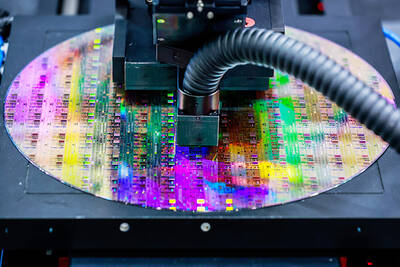
The artificial intelligence (AI) boom has triggered a seismic reshuffling of global equity markets, with Taiwan and South Korea muscling past European nations one by one. With its stock market now valued at nearly US$4.3 trillion, Taiwan surpassed the UK, Europe’s biggest market, earlier this month, data compiled by Bloomberg showed. South Korea is about US$140 billion away from doing the same. The tech-heavy Asian markets have shot past Germany and France in the past seven months. The shift is largely down to massive gains in shares of three companies that provide essential hardware for AI: Taiwan Semiconductor Manufacturing Co (TSMC, 台積電),


 RSS
RSS