

A doctor injects a cancer patient with microscopic gold spheres that hunt down and stick to tumors. She then shines a harmless invisible light through the body. The light warms the spheres, frying the tumors while allowing nearby tissue to thrive.
This is where the next big thing in science may occur -- on the ultra-small nanoscale, a physical netherworld where the laws of gravity begin to give way to the forces of quantum mechanics. It's a frontier where atoms and molecules behave in unexpected, sometimes almost magical ways.
The possibilities, some near and some distant, range from bullet-proof battle jackets weighing no more than a rain coat to self-repairing highway concrete.
Such innovations can no longer be considered far-fetched, scientists and tech entrepreneurs say, because the field of nanotechnology has matured to the point that the question may no longer be if but rather when the nano-revolution comes, be it five years or 50.
Yet if Houston, already a hotbed for nanotechnology research, wants to cash in on possibly the next great technology gold rush it must act now, said Conrad Masterson, a Houston entrepreneur and nanotech promoter.
"This could be as important to Houston as Spindletop," he said.
But wrenching profits from this potential gusher will require more than the patience the city's boom-and-bust mentality has historically afforded. Any investment made today in nanotechnology might not see a payoff for a decade or more.
For all its promise over the past 15 years, nanotechnology has delivered but a handful of innovations -- such as better sunscreen and wrinkle-free pants -- but that has done little to dampen the spirits of enthusiasts for the science of nanotechnology, so named for the nanometer, one-billionth of a meter.
More and more, government budget writers who hold the purse strings to research funding are joining the ranks of nanotech enthusiasts.
This year, spending under the National Nanotechnology Initiative will rise about 17 percent, to US$679 million, continuing an upward spiral. Japan will spend almost as much. Worldwide spending by governments will eclipse US$2 billion as nations don't want to miss a possible economic windfall.
The National Science Foundation estimates the market for nanotechnology-related products and services will reach US$1 trillion by 2015.
Seeing appllications
Neal Lane, the science adviser who convinced President Clinton to begin increasing nanotechnology funding in the 2001 budget, said he became a believer in the field when he saw the country's top scientists flocking to the discipline.
"While the science is interesting, we thought here was an opportunity to begin seeing applications really soon," Lane said. "The science is moving so rapidly."
Nanotechnology is also rapidly moving into the public conscience.
Once the province of edgy science fiction or technical magazines, it is now the subject Prey, a bestseller by popular novelist Michael Crichton, based on nanomachines run amok. Written like a movie script, undoubtedly it will soon be a blockbuster.
And in Houston's schools, because of a federal grant, Rice University is bringing nanotechnology education into classrooms.
Increasingly precise engineering opened the world of nanotechnology to scientists in the early 1980s.
In 1981, scientists built a microscope that took pictures on the atomic scale and soon were manipulating matter that is 70,000 times smaller than the width of a human hair. In some cases they were making objects only a few atoms wide.
To their surprise, they found that the materials they built at this scale behaved in odd ways.
On the human scale (where apples fall out of trees) and across much larger distances (where planets orbit stars), gravity controls the behavior of matter. Gravity reigns on smaller distance scales, too, down to about several hundred nanometers.
But across distances of less than a nanometer, another set of forces, discovered less than a century ago and known collectively as quantum mechanics, controls the interplay of atoms and their constituent electrons, protons and neutrons.
Overpowering gravity
Matter at the nanoscale, then, falls into this gap between gravity and the forces of quantum mechanics, the counter-intuitive realm that Albert Einstein and other 20th-century physicists helped to illuminate where nuclear and electromagnetic forces overpower the more familiar gravity.
Matter at the nanoscale tends to look and behave differently, in part, because it is being tugged at by both sets of forces.
"Nanotechnology is the art and science of building stuff at the nanometer scale," said Richard Smalley, a Rice University professor and probably the most widely respected nanotechnology researcher in the world.
Not only are the materials that scientists build at the nanoscale different from their larger counterparts -- they're better. In some cases much better.
Scientists have made nanomaterials that are 100 times stronger than steel at one-sixth the weight, and are more adept at transporting electricity than silicon or copper.
Versatile capabilities like these, and many others, have led speculators to suggest that nanotechnology will foster a gradual revolution that will creep into all corners of the world, from medicine to computer science and beyond for many years to come.
In its search for lighter, stronger materials to build new generations of manned space vehicles, NASA, too, has put research money into nano-technology.
Among the possibilities are multi-use materials, such as a protective layer around a launch vehicle that would not only protect astronauts from rigors of re-entry into Earth's atmosphere, but also have the ability to sense stress to instantly alert astronauts of a hull breach.
As demonstrated so dramatically by the recent Columbia disaster, there is currently no way for NASA to determine whether the shuttle's protective tiles are damaged once the craft is in space.
Perhaps the biggest obstacle to the nano-revolution right now is the difficulty of producing enough material. It's one thing to make a sample in a college lab, but quite another to build enough at a price that would justify a factory.
One of the most promising materials made so far is a carbon nanotube. A flak jacket with nanotube composites would look like a windbreaker but be virtually indestructible.
Yet because carbon nanotubes are so difficult to synthesize, requiring high pressure and extreme temperatures, fewer than 45kg have been produced to date. A single ounce still costs hundreds of dollars.
Hidden dangers
Silicon Valley may offer a cautionary tale. Once thought to be home to the "clean industry" of high-tech computer manufacturing, the region is now home to 29 EPA Superfund sites because of contaminated groundwater. Chemicals from computer manufacturing leaked into the water supply.
Had the dangers been known in advance, Colvin said, manufacturing methods could have been cleaned up, or more care could have gone into storing the chemicals.
Scientists are also worried that the public's first exposure to nanotechnology may come through popularizations such as Crichton's book, in which swarms of molecule-size, self-replicating nanobots threaten humanity.
A widely circulated article, written three years ago in Wired magazine by Sun Microsystems scientist Bill Joy, aroused concern by offering a scenario in which specially engineered nanomachines could selectively kill certain people or genetically distinct groups of people.
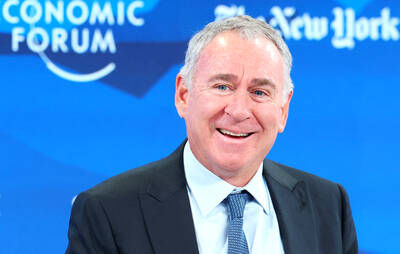
When rival hedge funds face catastrophic losses, billionaire investor Ken Griffin has a habit of identifying opportunities and showing up with a checkbook. Citadel’s founder last week reprised his role as one of Wall Street’s rescue buyers, stepping in to salvage California hedge fund Situational Awareness as it buckled under souring bets on artificial intelligence (AI) stocks. Amid market rumblings that at least one firm was in trouble, Griffin, 57, assembled his top lieutenants to investigate, five people with knowledge of the matter said. By Wednesday morning, Citadel executives had reached out to Situational Awareness, and Griffin spoke directly with Leopold Aschenbrenner,
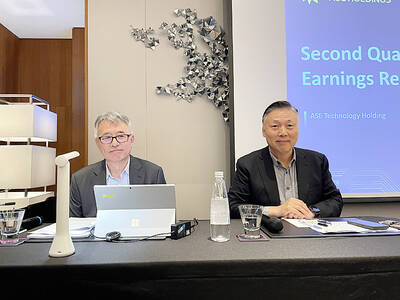
‘STRONGER DEMAND’ : Company executives said that a lot of new investments are needed, although there are capacity bottlenecks for automation and innovation ASE Technology Holding Co (日月光投控) yesterday increased its capital expenditure for this year to US$10.5 billion, up 23.5 percent from its previous budget of US$8.5 billion, amid robust demand for artificial intelligence (AI) applications. The world’s largest supplier of packaging and testing services plans to allocate about 70 percent of the increased spending to capacity expansion, mainly for leading-edge advanced packaging (LEAP) technology, with LEAP revenue forecast to exceed US$3.5 billion this year, ASE said. “Obviously we are seeing a stronger demand ... from not just customers, but also our foundry partner,” ASE chief financial officer Joseph Tung (董宏思) told an earnings
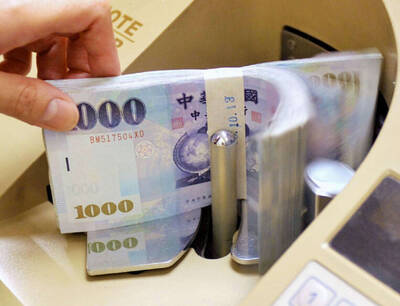
TURBULENCE: Many Taiwanese exporters took advantage of a weaker NT dollar to sell US dollars, while the central bank stepped in late to smooth volatility, dealers said The New Taiwan dollar fell sharply against the US dollar yesterday to move past NT$32.4 due to large fund outflows, dealers said. The NT dollar dropped NT$0.146 to close at NT$32.438 against the US dollar after reaching an intraday low of NT$32.490. Combined turnover on the Taiwan Foreign Exchange and the Cosmos Foreign Exchange totaled US$3.92 billion. The US dollar initially weakened against the NT dollar as the US dollar index, which tracks the greenback against the currencies of six major trading partners, declined, dealers said. However, after the US dollar dipped to the day’s low, the currency rebounded as
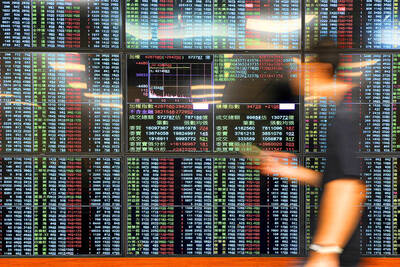
TURNOVER WATCH: While the benchmark jumped 3,186.45 points, a turnover fall indicated that investors are still wary of volatility in geopolitics in the Middle East Taiwan stocks rebounded yesterday, with the benchmark TAIEX surging nearly 8 percent in its largest-ever points gain as a global technology rally and renewed confidence in artificial intelligence (AI) demand lifted heavyweight electronics shares. The TAIEX jumped 3,186.45 points, or 7.98 percent, to close at 43,119.75, marking the biggest single-day points increase and its second-largest percentage gain. However, turnover fell to NT$833.713 billion (US$25.82 billion) from the previous session, suggesting that some investors remained cautious. The rally followed a broad rebound in global equities after gains in technology shares and better-than-expected corporate earnings in the US revived risk appetite. “Concerns over market fundamentals have


 RSS
RSS