


Broadening the inquiry into Enron's collapse, federal investigators who have been examining the esoteric details of off-the-books partnership schemes are now looking at such basics as whether the company misled investors about the value of hard assets like pipelines and power plants, according to people involved in the case.
The new inquiry represents a focus on the sort of run-of-the-mill accounting issues that have been raised in numerous corporate fraud cases in the past. Under examination, these people said, is whether Enron carried assets on its books for billions of dollars more than their actual worth.
One person involved in the case described this avenue of investigation as an effort by federal officials to determine whether Enron had "a WorldCom problem." Prosecutors have charged executives of WorldCom, the telecommunications giant that joined Enron in bankruptcy court earlier this year, with shifting expenses around on its books in an effort to mislead investors about the company's financial health.
A year after Enron's collapse, investigators are engaged in what has become a virtual post mortem of the company's business dealings and its possible transgressions of criminal law. Investigators are examining accusations of self-dealing and accounting fraud, securities fraud involving the company's broadband unit, energy market abuses and insider trading.
The investigation is now reaching what people involved in the case describe as an important turning point. In the next few weeks, they said, federal prosecutors plan to bring what is known as a superseding indictment against Andrew S. Fastow, the company's former chief financial officer, who was charged earlier this year in a 78-count indictment.
The superseding indictment will add charges, name new defendants, or both, according to these people. Prosecutors are expected to settle on a course of action soon, they said.
The investigation's new direction, if it proves fruitful, could offer prosecutors not only a case that is easier for a jury to understand, but also another means for pursuing evidence of possible criminal activities up the management ranks at Enron.
In indicting Fastow, prosecutors outlined the role they believe was played by the company's former chief accounting officer, Richard A. Causey, in improper activities involving one off-the-books partnership. Any evidence that they now develop of improper accounting decisions might allow prosecutors to exert greater pressure on Causey to strike a deal.
But people involved in the case said Causey had not signaled a willingness to plead guilty to any charges. Reid Weingarten, a lawyer for Causey, declined to comment.
Investigators have centered their attention on four areas: accounting and partnership issues like those involving Fastow; Enron's energy trading activities; possible insider trading by Enron's former chairman and chief executive, Kenneth Lay; and possible misrepresentations of the financial prospects of Enron's broadband division.
The first area has already resulted in two guilty pleas, as well as the filing of charges against Fastow. The trading investigation, involving charges that the company manipulated the California energy market during the state's power crisis, has also resulted in a guilty plea, from a former top trader.
The investigation of Lay, on the other hand, has run into complications that may make it difficult to bring charges, people involved in the case said.
Lay's lawyers have told the government that his stock sales were forced by the falling price of Enron shares he used to secure loans, leading to demands from financial institutions that he post more collateral. And because Lay sold his shares back to Enron, rather than into the open market, it becomes harder for prosecutors to demonstrate that he possessed information that the company lacked -- a key element of insider trading. No final decision has been reached, however, on whether charges will be brought, according to the people involved in the case. Investigators examining Enron's broadband division, touted by the company from 1999 to last year as being core to the company's future growth, have been moving aggressively.
In recent weeks, agents of the FBI arrived unannounced at the homes of some broadband executives, confronting them with what the agents said was potential evidence of fraud.
Some former executives have begun cooperating with the inquiry and have testified before a grand jury, people involved in the case said. They include Lawrence M. Lawyer, a former finance executive who pleaded guilty to tax violations, and Timothy N. Belden, a former senior trader who pleaded guilty to conspiring to manipulate the California energy market.
The broadband investigation began as an examination of a transaction known as Grayhawk. That deal allowed Enron to profit by taking a position in its own stock before the announcement of a big purchase of Sun Microsystems computers intended to form the backbone of the broadband unit's expansion.
Now, people involved in the case say, the investigation has broadened to look at whether Grayhawk was part of a wider effort to drive up Enron's stock price by issuing misleading statements about the broadband division's performance.
In particular, prosecutors are said to be examining statements made at meetings with Wall Street analysts in 2000 and 2001 about the prospects and performance of the division. In addition, they are looking at whether the division failed to promptly recognize reversals of income that had been booked on the basis of projections that proved to be inaccurate.
The simultaneous investigation into whether Enron was knowingly carrying assets on its books at inflated values developed as a result of actions taken by the new managers installed at the company after it filed for bankruptcy protection.
Last April, the new management filed a statement with the bankruptcy court saying that, by its estimates, the value of the assets on Enron's balance sheet would have to be written down by about US$14 billion.
Much of the reduction was the result of assets losing value in the wake of the bankruptcy filing, the new management team said. But the company's statement said there were also potential problems with "valuations of several assets the historical carrying value of which current management believes may have been overstated due to possible accounting errors or irregularities."
It did not identify those assets, but witnesses have told government investigators that primarily three Enron holdings are involved.
The largest of these assets, according to people involved in the case, is Enron's Houston Pipeline, which moves energy products throughout Texas.
The pipeline is worth about US$800 million, according to former executives, but was carried on Enron's books at a value of more than US$4 billion -- a sum unchanged since Enron was created through the purchase of Houston Natural Gas by InterNorth, another energy company.
In that acquisition, InterNorth paid several billion dollars more than the total book value of Houston Natural Gas and chose to write up the value of the gas company's assets, a so-called fair value adjustment under accounting rules.
At the time, the former executives said, Enron's accountants argued that Houston Pipeline would be extremely valuable in the future, when it could be used as a hub in a nationwide pipeline system.
But, as the years passed, Enron sold parts of Houston Pipeline. Since no acquirer was willing to pay the value that had been assigned to the system, accounting rules normally would have required Enron to record a loss on those sales. To avoid that outcome, Enron shifted billions of the fair value adjustment from the pipeline itself onto a storage area associated with it.
Though the assumptions that had allowed Enron to inflate the pipeline system's value were ultimately undermined, the company never restated the value of the assets, people who have examined the company's financial records said.
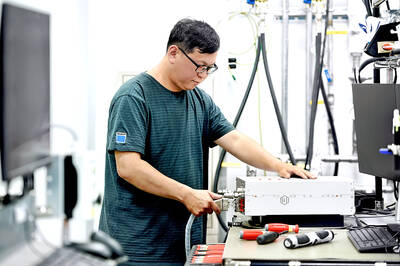
SEMICONDUCTORS: The German laser and plasma generator company will expand its local services as its specialized offerings support Taiwan’s semiconductor industries Trumpf SE + Co KG, a global leader in supplying laser technology and plasma generators used in chip production, is expanding its investments in Taiwan in an effort to deeply integrate into the global semiconductor supply chain in the pursuit of growth. The company, headquartered in Ditzingen, Germany, has invested significantly in a newly inaugurated regional technical center for plasma generators in Taoyuan, its latest expansion in Taiwan after being engaged in various industries for more than 25 years. The center, the first of its kind Trumpf built outside Germany, aims to serve customers from Taiwan, Japan, Southeast Asia and South Korea,
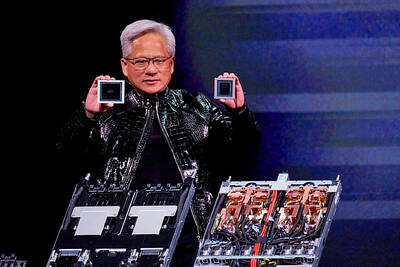
Nvidia Corp chief executive officer Jensen Huang (黃仁勳) on Monday introduced the company’s latest supercomputer platform, featuring six new chips made by Taiwan Semiconductor Manufacturing Co (TSMC, 台積電), saying that it is now “in full production.” “If Vera Rubin is going to be in time for this year, it must be in production by now, and so, today I can tell you that Vera Rubin is in full production,” Huang said during his keynote speech at CES in Las Vegas. The rollout of six concurrent chips for Vera Rubin — the company’s next-generation artificial intelligence (AI) computing platform — marks a strategic

Gasoline and diesel prices at domestic fuel stations are to fall NT$0.2 per liter this week, down for a second consecutive week, CPC Corp, Taiwan (台灣中油) and Formosa Petrochemical Corp (台塑石化) announced yesterday. Effective today, gasoline prices at CPC and Formosa stations are to drop to NT$26.4, NT$27.9 and NT$29.9 per liter for 92, 95 and 98-octane unleaded gasoline respectively, the companies said in separate statements. The price of premium diesel is to fall to NT$24.8 per liter at CPC stations and NT$24.6 at Formosa pumps, they said. The price adjustments came even as international crude oil prices rose last week, as traders
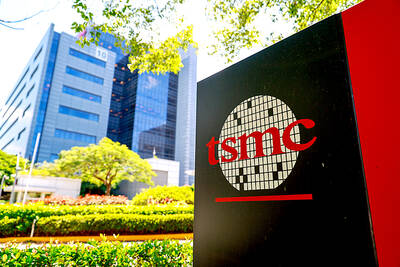
Taiwan Semiconductor Manufacturing Co (TSMC, 台積電), which supplies advanced chips to Nvidia Corp and Apple Inc, yesterday reported NT$1.046 trillion (US$33.1 billion) in revenue for last quarter, driven by constantly strong demand for artificial intelligence (AI) chips, falling in the upper end of its forecast. Based on TSMC’s financial guidance, revenue would expand about 22 percent sequentially to the range from US$32.2 billion to US$33.4 billion during the final quarter of 2024, it told investors in October last year. Last year in total, revenue jumped 31.61 percent to NT$3.81 trillion, compared with NT$2.89 trillion generated in the year before, according to


 RSS
RSS