


PetroChina (中石油) and BP have agreed to continue exploring for coal-bed methane in Xinjiang, the Chinese firm said yesterday, days after saying it would welcome closer ties with the troubled British group.
The comments were published after PetroChina told the Financial Times on Monday that it would “welcome cooperation opportunities” with BP, which is battling to contain a massive oil leak in the Gulf of Mexico.
PetroChina, the listed arm of the country’s top oil producer China National Petroleum Corp, and BP have completed a preliminary assessment of the Sha Erhu block in the Tuha basin in the remote northwestern region of China, the company said.
The two companies have reached a “new cooperation” agreement on the project, including the budget, drilling contracts and staff needed for the next stage, PetroChina said in an internal newsletter.
PetroChina is open to working with BP on coal-bed methane, oil and natural gas exploration, Mao Zefeng, a Hong Kong-based spokesman for PetroChina, said yesterday.
Mao declined to comment on whether the Chinese oil giant was interested in acquiring BP’s overseas assets, only saying existing deals with BP were “going smoothly.”
The two firms currently have a joint venture to operate petrol stations in the southern province of Guangdong.
Chinese energy companies have this year invested billions of US dollars on overseas acquisitions, including a deal by China’s top refiner Sinopec (中石化) in April to acquire a stake in a Canadian oil sands project for US$4.65 billion.
Meanwhile, China’s Shandong Iron and Steel Group (山東鋼鐵集團) has agreed to pay US$1.5 billion for a stake in London-listed African Minerals’ Sierra Leonean mine project, African Minerals said. The investment, which would give Shandong Iron and Steel a 25 percent stake in the Tonkolili iron ore mine, is the latest in a series of investments by resource-hungry China in West Africa’s rich mineral deposits.
Shandong’s funding would help build the Tonkolili mine and pay for related rail and port infrastructure, said a statement posted on Tuesday on African Minerals’ Web site.
“When completed, this strategic investment will enable us to accelerate the development of Tonkolili,” it said.
Shandong would also gain stakes in two other African Minerals subsidiaries and secure long-term supplies of 10 million tonnes of iron ore annually at prices discounted from the market.
Shandong Iron and Steel is China’s fifth-largest steel mill by output, according to the country’s state-run press.
China’s hunger for raw materials has soared in recent years along with the development of its economy and its firms have increasingly looked at West African countries for minerals.
Last month, African Minerals sold a 12.5 percent stake in the company to China Railway Material, a supplier of steel products to China’s rail industry, for US$280 million.
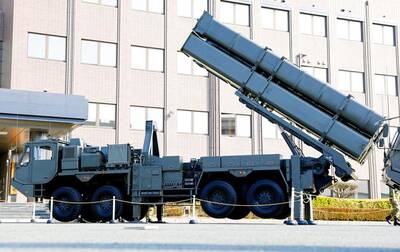
Japan has deployed long-range missiles in a southwestern region near China, the Japanese defense minister said yesterday, at a time when ties with Beijing are at their lowest in recent years. The missiles were installed in Kumamoto in the southern region of Kyushu, as Japan is attempting to shore up its military capacity as China steps up naval activity in the East China Sea. “Standoff defense capabilities enable us to counter the threat of enemy forces attempting to invade our country ... while ensuring the safety of our personnel,” Japanese Minister of Defense Shinjiro Koizumi said. “This is an extremely important initiative for
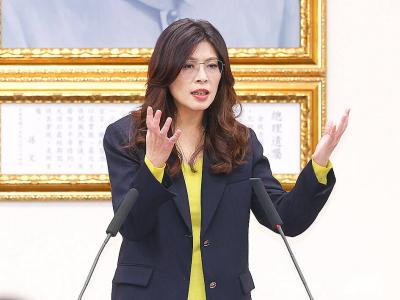
Chinese Nationalist Party (KMT) Chairwoman Cheng Li-wun (鄭麗文) today accepted an invitation from Chinese President Xi Jinping (習近平) to lead a delegation to China next month, saying she hopes to promote the peaceful development of cross-strait relations and bring stability to the Taiwan Strait. “I am grateful and happy to accept this invitation,” Cheng said in a statement from the KMT chairperson’s office. Cheng said she hopes both sides can work together to promote the peaceful development of cross-strait relations, enhance exchange and cooperation, bring stability to the Taiwan Strait and improve people’s livelihoods. At today's news conference, Cheng said any efforts to
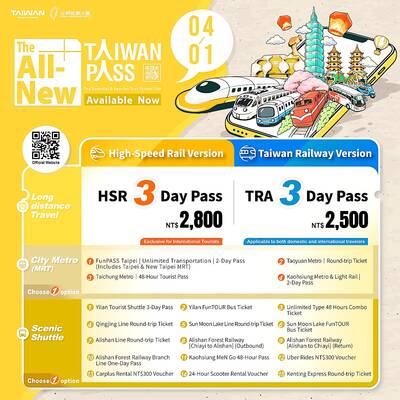
MORE POPULAR: Taiwan Pass sales increased by 59 percent during the first quarter compared with the same period last year, the Tourism Administration said The Tourism Administration yesterday said that it has streamlined the Taiwan Pass, with two versions available for purchase beginning today. The tourism agency has made the pass available to international tourists since 2024, allowing them to access the high-speed rail, Taiwan Railway Corp services, four MRT systems and four Taiwan Tourist Shuttles. Previously, five types of Taiwan Pass were available, but some tourists have said that the offerings were too complicated. The agency said only two types of Taiwan Pass would be available, starting from a three-day pass with the high-speed rail and a three-day pass with Taiwan Railway Corp. The former costs NT$2,800

The nation’s fastest supercomputer, Nano 4 (晶創26), is scheduled to be launched in the third quarter, and would be used to train large language models in finance and national defense sectors, the National Center for High-Performance Computing (NCHC) said. The supercomputer, which would operate at about 86.05 petaflops, is being tested at a new cloud computing center in the Southern Taiwan Science Park in Tainan. The exterior of the server cabinet features chip circuitry patterns overlaid with a map of Taiwan, highlighting the nation’s central position in the semiconductor industry. The center also houses Taiwania 2, Taiwania 3, Forerunner 1 and


 RSS
RSS