


Pfizer Inc agreed on Wednesday to plead guilty to a US criminal charge relating to promotion of its now-withdrawn Bextra pain medicine and will pay a record US$2.3 billion to settle allegations it improperly marketed 13 medicines.
The world’s biggest drugmaker was slapped with the huge fines by the US government after being deemed a repeat offender in pitching drugs to patients and doctors for unapproved uses.
Pfizer pleaded guilty in 2004 to an earlier criminal charge of improper sales tactics and its practices have been under US supervision since then.
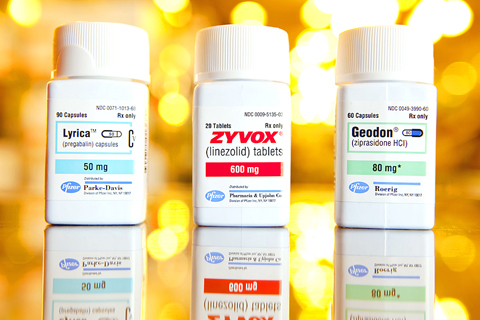
PHOTO: BLOOMBERG
“If another one of these charges crops up, it would raise questions whether Jeff Kindler is keeping everyone at Pfizer on a tight enough leash,” said Miller Tabak analyst Les Funtleyder, referring to Pfizer’s chief executive officer.
Kindler had been Pfizer’s general counsel from 2002 until taking the helm in 2006. Pfizer declined to comment when asked if he had negotiated the 2004 settlement, and whether he had recommended any safeguards at the time to prevent the kind of recurrent improprieties described on Wednesday.
The company in January said it took a US$2.3 billion charge late last year to resolve allegations involving Bextra and other drugs, but did not provide details at the time.
“The size and seriousness of this resolution, including the huge criminal fine of US$1.3 billion, reflect the seriousness and scope of Pfizer’s crimes,” said Mike Loucks, acting US attorney for the District of Massachusetts.
The settlement includes a US$1.3 billion criminal fine related to methods of selling Bextra, which was withdrawn from the market in 2005 on safety concerns. Pfizer acquired Bextra in its 2003 purchase of Pharmacia Corp.
Pfizer’s marketing team promoted Bextra for acute pain, surgical pain and other unapproved uses, while its sales force promoted the drug directly to doctors for those unapproved uses and dosages, The US Department of Justice said.
The company and Pharmacia also used advisory boards, consultant meetings and provided travel to lavish resorts to improperly promote Bextra to doctors and made misleading claims about the drug’s safety and efficacy, the government said.
The settlement also includes US$1 billion in civil payments related to so-called “off-label” sales of drugs — meaning for uses not authorized by the US Food and Drug Administration — and payments to healthcare professionals. Pfizer denied all of the civil allegations, except for acknowledging improper promotions of the antibiotic Zyvox.
“We regret certain actions taken in the past, but are proud of the action we’ve taken to strengthen our internal controls,” said Amy Schulman, Pfizer’s general counsel.
Justice Department officials said cracking down on fraud in the healthcare industry was a key priority and comes as US President Barack Obama is trying to push through reforms of the US$2.5 trillion healthcare system to clip soaring costs.
The settlement and guilty plea are not expected to significantly hurt Pfizer’s ability to sell drugs, Morningstar analyst Damien Conover said.
Sandra Jordan, a former federal prosecutor and professor at the Charlotte School of Law in North Carolina, said: “Pfizer can survive this and pay the money. If it had fought the government at trial and lost, and a judge imposed a criminal sentence, that could have resulted in a corporate death penalty. That would have put Pfizer out of business.”
The settlement is the largest to date for improper marketing of prescription drugs, topping the US$1.42 billion Eli Lilly and Co agreed to pay earlier this year for off-label sales of its Zyprexa schizophrenia drug.
Pfizer said it will pay US$503 million to resolve practices involving Bextra, US$301 million related to its schizophrenia drug Geodon, US$98 million for Zyvox and about US$50 million for Lyrica, used to treat nerve pain and seizures.

PROVOCATIVE: Chinese Deputy Ambassador to the UN Sun Lei accused Japan of sending military vessels to deliberately provoke tensions in the Taiwan Strait China denounced remarks by Japan and the EU about the South China Sea at a UN Security Council meeting on Monday, and accused Tokyo of provocative behavior in the Taiwan Strait and planning military expansion. Ayano Kunimitsu, a Japanese vice foreign minister, told the Council meeting on maritime security that Tokyo was seriously concerned about the situation in the East China and South China seas, and reiterated Japan’s opposition to any attempt to change the “status quo” by force, and obstruction of freedom of navigation and overflight. Stavros Lambrinidis, head of the EU delegation to the UN, also highlighted South China Sea

The final batch of 28 M1A2T Abrams tanks purchased from the US arrived at Taipei Port last night and were transported to the Armor Training Command in Hsinchu County’s Hukou Township (湖口), completing the military’s multi-year procurement of 108 of the tanks. Starting at 12:10am today, reporters observed more than a dozen civilian flatbed trailers departing from Taipei Port, each carrying an M1A2T tank covered with black waterproof tarps. Escorted by military vehicles, the convoy traveled via the West Coast Expressway to the Armor Training Command, with police implementing traffic control. The army operates about 1,000 tanks, including CM-11 Brave Tiger
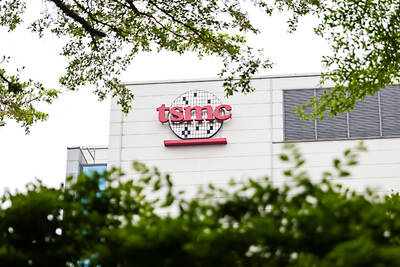
Taiwan Semiconductor Manufacturing Co (TSMC, 台積電), the world’s largest contract chipmaker, said it expects its 2-nanometer (2nm) chip capacity to grow at a compound annual rate of 70 percent from this year to 2028. The projection comes as five fabs begin volume production of 2-nanometer chips this year — two in Hsinchu and three in Kaohsiung — TSMC senior vice president and deputy cochief operating officer Cliff Hou (侯永清) said at the company’s annual technology symposium in Silicon Valley, California, last week. Output in the first year of 2-nanometer production, which began in the fourth quarter of last year, is expected to
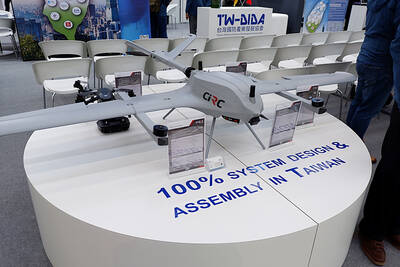
Taiwan’s drone exports surged past US$100 million in the first quarter, exceeding last year’s full-year total, with the Czech Republic emerging as the largest buyer, the Ministry of Economic Affairs said. Exports of complete drones reached US$115.85 million in the period, about 1.2 times the total recorded for all of last year, the ministry said in a report. Exports to the Czech Republic accounted for about US$100 million, far outpacing other markets. Poland, last year’s top destination, recorded about US$11.75 million in the first quarter. Taiwan’s drone exports have expanded rapidly in the past few years, with last year’s total


 RSS
RSS