


Japan’s strategic alliance with the US would collapse if Tokyo were to turn away from a conflict in Taiwan, Japanese Prime Minister Sanae Takaichi said yesterday, but distanced herself from previous comments that suggested a possible military response in such an event.
Takaichi expressed her latest views on a nationally broadcast TV program late on Monday, where an opposition party leader criticized her for igniting tensions with China with the earlier remarks.
Ties between Japan and China have sunk to the worst level in years after Takaichi said in November that a hypothetical Chinese attack on Taiwan could bring about a Japanese military response. Beijing has responded with export curbs, flight cancellations and vitriolic commentaries, repeatedly demanding a retraction.
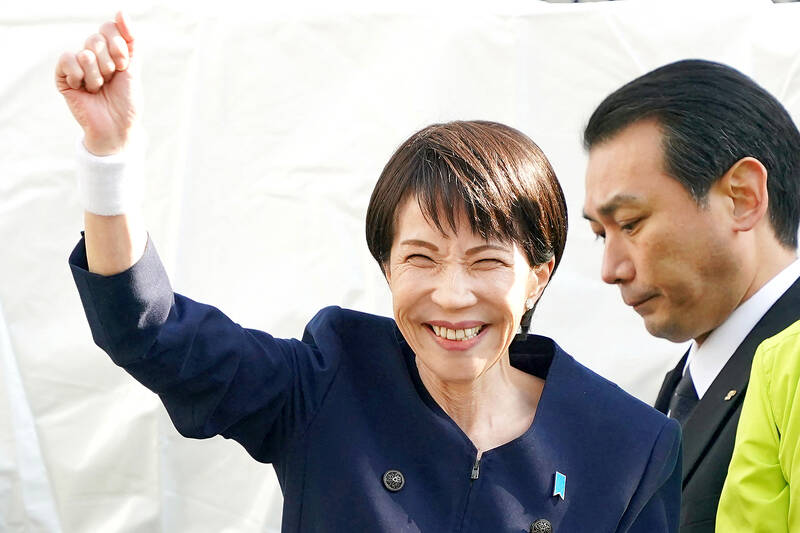
Photo: AFP
“I want to make it absolutely clear that this is not about Japan going out and taking military action if China and the United States come into conflict [over Taiwan],” Takaichi said on the live TV show, referring to the comments she made in parliament in November.
“If something serious happens there, we would have to go to rescue the Japanese and American citizens in Taiwan. In that situation, there may be cases where we take joint action,” she said.
“And if the US forces, acting jointly with us, come under attack and Japan does nothing and simply runs away, the Japan-US alliance would collapse. So we would respond strictly within the limits of the law — within the limits of the laws as they currently exist — while making a comprehensive judgement based on what is happening on the ground,” she said.
Takaichi did not elaborate.
With an eye on the electorate, Takaichi has stopped short of retracting the remarks from November, saying her stance was consistent with Japan’s long-standing policy.
She has also said that China’s characterization of her remarks was inconsistent with the facts.
The Chinese Ministry of Foreign Affairs yesterday urged Japan to “earnestly reflect and correct its mistakes, and to stop its manipulation and reckless actions on the Taiwan issue.”
Japan’s pacifist constitution prohibits direct military action, but allows it to exercise the right of collective self-defence, or defending the US or another friendly country that comes under attack, in cases where Japan faces a “threat to its survival.”
Takaichi has enjoyed high approval ratings since taking office in last year and has called a snap election on Feb. 8, hoping to capitalize on her popularity.
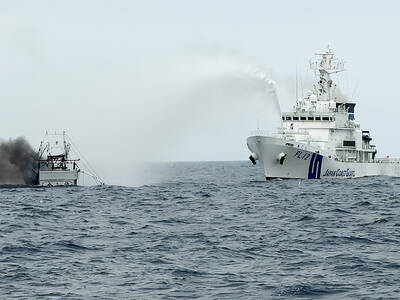
CREDIT-GRABBER: China said its coast guard rescued the crew of a fishing vessel that caught fire, who were actually rescued by a nearby Taiwanese boat and the CGA Maritime search and rescue operations do not have borders, and China should not use a shipwreck to infringe upon Taiwanese sovereignty, the Coast Guard Administration (CGA) said yesterday. The coast guard made the statement in response to the China Coast Guard (CCG) saying it saved a Taiwanese fishing boat. The Chuan Yu No. 6 (全漁6號), a fishing vessel registered in Keelung, on Thursday caught fire and sank in waters northeast of Diaoyutai Islands (釣魚台). The vessel left Keelung’s Badouzih Fishing Harbor (八斗子漁港) at 3:35pm on Sunday last week, with seven people on board — a 62-year-old Taiwanese captain surnamed Chang (張) and six
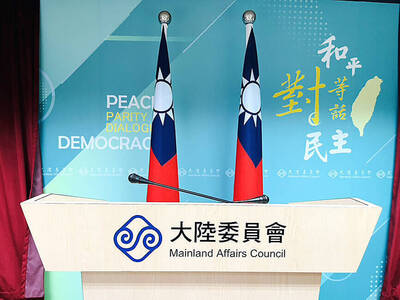
RISKY BUSINESS: The ‘incentives’ include initiatives that get suspended for no reason, creating uncertainty and resulting in considerable losses for Taiwanese, the MAC said China’s “incentives” failed to sway sentiment in Taiwan, as willingness to work in China hit a record low of 1.6 percent, a Ministry of Labor survey showed. The Directorate-General of Budget, Accounting and Statistics (DGBAS) also reported that the number of Taiwanese workers in China has nearly halved from a peak of 430,000 in 2012 to an estimated 231,000 in 2024. That marked a new low in the proportion of Taiwanese going abroad to work. The ministry’s annual survey on “Labor Life and Employment Status” includes questions respondents’ willingness to seek employment overseas. Willingness to work in China has steadily declined from

The Legislative Yuan’s Finance Committee yesterday approved proposed amendments to the Amusement Tax Act (娛樂稅法) that would abolish taxes on films, cultural activities and competitive sporting events, retaining the fee only for dance halls and golf courses. The proposed changes would set the maximum tax rate for dance halls and golf courses at 50 and 20 percent respectively, with local governments authorized to suspend the levies. Article 2 of the act says that “amusement tax shall be levied on tickets sold or fees charged by amusement places, facilities or activities” in six categories: “Cinema; professional singing, story-telling, dancing, circus, magic show, acrobatics
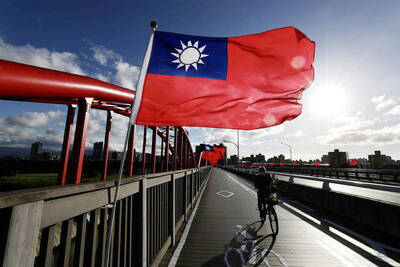
INFLATION UP? The IMF said CPI would increase to 1.5 percent this year, while the DGBAS projected it would rise to 1.68 percent, with GDP per capita of US$44,181 The IMF projected Taiwan’s real GDP would grow 5.2 percent this year, up from its 2.1 percent outlook in January, despite fears of global economic disruptions sparked by the US-Iran conflict. Taiwan’s consumer price index (CPI) is projected to increase to 1.5 percent, while unemployment would be 3.4 percent, roughly in line with estimates for Asia as a whole, the international body wrote in its Global Economic Outlook Report published in the US on Monday. The figures are comparatively better than the IMF outlook for the rest of the world, which pegged real GDP growth at 3.1 percent, down from 3.3 percent


 RSS
RSS