


The world economy is likely to shrink this year despite growth in Asian powerhouses China and India, Organization for Economic Cooperation and Development (OECD) head Angel Gurria said yesterday, warning of a first global contraction in 60 years.
“Now we are probably seeing a world which will go negative because even the positive growth of India and China is not going to be enough to offset the negative growth in [developed countries],” he told reporters.
He was replying to a question about his expectations for growth this year.
Gurria’s remark came after the IMF said it also believed the global economy could contract this year.
“The IMF expects global growth to slow below zero this year, the worst performance in most of our lifetimes,” IMF managing director Dominique Strauss-Kahn said in Tanzania earlier this month.
Gurria, secretary-general of the OECD, also said in yesterday’s briefing that Chinese economic growth this year was likely to reach 6 percent to 7 percent.
In November, the estimate was 8 percent. The revised forecast will be issued on March 31, Gurria said at a briefing in Beijing yesterday.
“We do see growth in China of between 6 percent and 7 percent and the stimulus package is a very important element,” he said, referring to Chinese government’s 4 trillion yuan (US$585 billion) stimulus plan announced late last year.
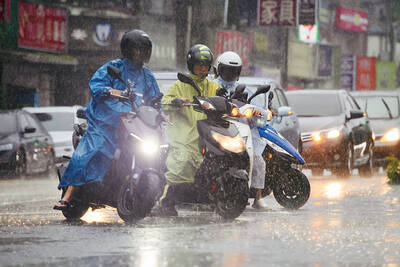
The combined effect of the monsoon, the outer rim of Typhoon Fengshen and a low-pressure system is expected to bring significant rainfall this week to various parts of the nation, the Central Weather Administration (CWA) said. The heaviest rain is expected to occur today and tomorrow, with torrential rain expected in Keelung’s north coast, Yilan and the mountainous regions of Taipei and New Taipei City, the CWA said. Rivers could rise rapidly, and residents should stay away from riverbanks and avoid going to the mountains or engaging in water activities, it said. Scattered showers are expected today in central and

People can preregister to receive their NT$10,000 (US$325) cash distributed from the central government on Nov. 5 after President William Lai (賴清德) yesterday signed the Special Budget for Strengthening Economic, Social and National Security Resilience, the Executive Yuan told a news conference last night. The special budget, passed by the Legislative Yuan on Friday last week with a cash handout budget of NT$236 billion, was officially submitted to the Executive Yuan and the Presidential Office yesterday afternoon. People can register through the official Web site at https://10000.gov.tw to have the funds deposited into their bank accounts, withdraw the funds at automated teller

COOPERATION: Taiwan is aligning closely with US strategic objectives on various matters, including China’s rare earths restrictions, the Ministry of Foreign Affairs said Taiwan could deal with China’s tightened export controls on rare earth metals by turning to “urban mining,” a researcher said yesterday. Rare earth metals, which are used in semiconductors and other electronic components, could be recovered from industrial or electronic waste to reduce reliance on imports, National Cheng Kung University Department of Resources Engineering professor Lee Cheng-han (李政翰) said. Despite their name, rare earth elements are not actually rare — their abundance in the Earth’s crust is relatively high, but they are dispersed, making extraction and refining energy-intensive and environmentally damaging, he said, adding that many countries have opted to
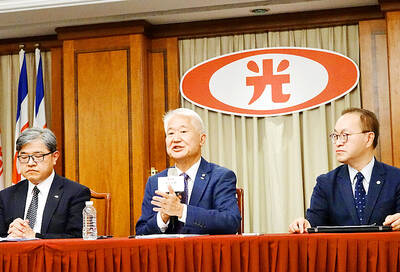
CONCESSION: A Shin Kong official said that the firm was ‘willing to contribute’ to the nation, as the move would enable Nvidia Crop to build its headquarters in Taiwan Shin Kong Life Insurance Co (新光人壽) yesterday said it would relinquish land-use rights, or known as surface rights, for two plots in Taipei’s Beitou District (北投), paving the way for Nvidia Corp to expand its office footprint in Taiwan. The insurer said it made the decision “in the interest of the nation’s greater good” and would not seek compensation from taxpayers for potential future losses, calling the move a gesture to resolve a months-long impasse among the insurer, the Taipei City Government and the US chip giant. “The decision was made on the condition that the Taipei City Government reimburses the related


 RSS
RSS