


■FINANCE
Thain resigns from BOA
John Thain, the former chief executive of the loss-ridden Merrill Lynch, which was taken over by Bank of America, resigned on Thursday from the bank, in which he has been head of global banking, securities and wealth management, an official said. Thain tendered his resignation to Bank of America chief executive Kenneth Lewis. “I can confirm that Ken Lewis flew to New York today to talk to John Thain and it was mutually agreed that his situation was not working out and he would resign,” bank spokesman Robert Stickler said in an e-mail. Thain was given the new post in Bank of America after it acquired Merrill Lynch on Jan. 1 amid financial turmoil that wreaked havoc on American financial institutions.
■TECHNOLOGY
Qimonda files for insolvency
Struggling chipmaker Qimonda has filed for insolvency at a court in Munich, a court spokeswoman said yesterday. The Infineon subsidiary received a US$422 million cash injection last month in a bid to keep it afloat. In addition to its main factory at Dresden in the east of Germany, Qimonda has a plant near Porto in Portugal. Qimonda has suffered from a dramatic fall in prices for computer chips. In November, the company warned it might face insolvency if support was not forthcoming.
■AUTOMOTIVE
Toyota mulls 1,000 job cuts
Japanese carmaker Toyota Motor Corp is considering shedding more than 1,000 regular workers in North America and in Britain, a report said yesterday. Toyota is examining how it could make the cuts at its seven plants in North America and one plant in Britain, and is aiming to finalize the plan by the end of the month, the Japanese business daily Nikkei reported, citing an unnamed senior Toyota official. The possible job cuts would be the first time Toyota has axed regular workers since 1950, when it laid off about 1,600 employees in Japan, the report said.
■STEEL
Nippon to cut crude output
Asia’s largest steelmaker Nippon Steel will cut crude steel output by 15 percent during the current financial year to March from a year earlier, a report said yesterday. The output reduction of 5 million tonnes would be achieved by temporarily suspending blast furnaces at plants in Japan, the Japanese daily Yomiuri Shimbun reported, citing unnamed sources. With the cut, the Japanese firm, the world’s largest steelmaker after behemoth Arcelor Mittal, is aiming to adjust its operation to match output reductions in a wide range of industries including the auto industry, the report said.
■TIRES
Bridgestone sheds 800 jobs
Japanese tiremaker Bridgestone Corp said yesterday that it was shedding about 800 jobs in the US to cope with weaker demand. Bridgestone said it would stop making tires for passenger cars and light trucks at its Tennessee factory with the loss of 543 jobs. It will also reduce production of tires for bigger trucks at the same plant, resulting in a further 259 layoffs. Bridgestone said it hoped to re-hire workers when the economy picks up, perhaps as early as the fourth quarter of this year. The company will continue to produce tires for larger trucks and buses at the plant with more than 700 workers.
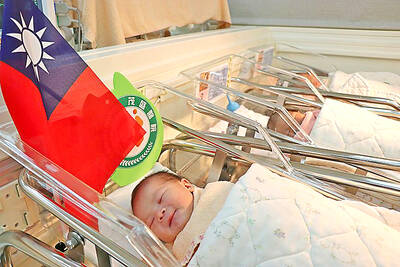
AGING: As of last month, people aged 65 or older accounted for 20.06 percent of the total population and the number of couples who got married fell by 18,685 from 2024 Taiwan has surpassed South Korea as the country least willing to have children, with an annual crude birthrate of 4.62 per 1,000 people, Ministry of the Interior data showed yesterday. The nation was previously ranked the second-lowest country in terms of total fertility rate, or the average number of children a woman has in her lifetime. However, South Korea’s fertility rate began to recover from 2023, with total fertility rate rising from 0.72 and estimated to reach 0.82 to 0.85 by last year, and the crude birthrate projected at 6.7 per 1,000 people. Japan’s crude birthrate was projected to fall below six,
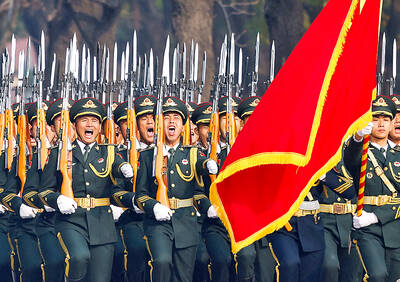
Conflict with Taiwan could leave China with “massive economic disruption, catastrophic military losses, significant social unrest, and devastating sanctions,” a US think tank said in a report released on Monday. The German Marshall Fund released a report titled If China Attacks Taiwan: The Consequences for China of “Minor Conflict” and “Major War” Scenarios. The report details the “massive” economic, military, social and international costs to China in the event of a minor conflict or major war with Taiwan, estimating that the Chinese People’s Liberation Army (PLA) could sustain losses of more than half of its active-duty ground forces, including 100,000 troops. Understanding Chinese
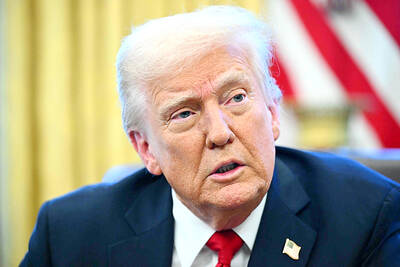
US President Donald Trump in an interview with the New York Times published on Thursday said that “it’s up to” Chinese President Xi Jinping (習近平) what China does on Taiwan, but that he would be “very unhappy” with a change in the “status quo.” “He [Xi] considers it to be a part of China, and that’s up to him what he’s going to be doing, but I’ve expressed to him that I would be very unhappy if he did that, and I don’t think he’ll do that. I hope he doesn’t do that,” Trump said. Trump made the comments in the context
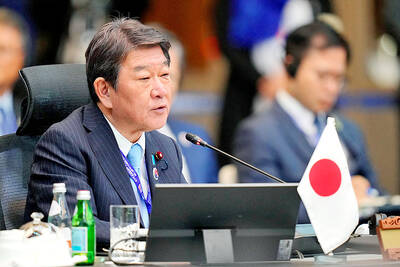
SELF-DEFENSE: Tokyo has accelerated its spending goal and its defense minister said the nation needs to discuss whether it should develop nuclear-powered submarines China is ramping up objections to what it sees as Japan’s desire to acquire nuclear weapons, despite Tokyo’s longstanding renunciation of such arms, deepening another fissure in the two neighbors’ increasingly tense ties. In what appears to be a concerted effort, China’s foreign and defense ministries issued statements on Thursday condemning alleged remilitarism efforts by Tokyo. The remarks came as two of the country’s top think tanks jointly issued a 29-page report framing actions by “right-wing forces” in Japan as posing a “serious threat” to world peace. While that report did not define “right-wing forces,” the Chinese Ministry of Foreign Affairs was


 RSS
RSS