


One of China's best-known food processors halted luncheon meat exports yesterday on reports of chemical contamination, while the government announced the closure of more than 1,000 slaughterhouses over poor sanitation.
Those steps come amid a campaign to uncover potentially unsafe foods and other products and tighten government supervision over production. Those came after Chinese exports of products such as pet food ingredients and toothpaste were found to be contaminated with dangerous chemicals this year.
In a statement, Shanghai-based Maling Food Co said it had sent top executives to Hong Kong to help investigate allegations a shipment of its meat was contaminated with the antibiotic nitrofurans, which is thought to cause cancer.
"We take this issue very seriously and immediately took relevant measures, asking the Hong Kong authorities to recall the affected products," Maling said in a statement on its Web site.
A Maling employee who was answeringcalls to the company said that for the moment it had no comment apart from the statement on its Web site.
Officials at the Shanghai Entry-Exit Inspection and Quarantine Bureau would not comment but referred callers to a brief notice about the investigation posted on its Web site.
The export suspension was extended to all of Maling's canned food products, which include meat, seafood, fruits and vegetables, the company said.
Begun more than 75 years ago, Maling is one of China's most famous brands and its luncheon meat is as well known to Chinese consumers as Spam is in the US. Shares of parent company, Shanghai Maling Aquarius Co, trade on the Shanghai Stock Exchange.
A huge jump in prices for pork, a staple of the Chinese diet, has prompted authorities to enact tough measures to cut down on illegal activities and ensure supplies.
As of late last month, 1,452 slaughterhouses responsible for processing pigs had been shuttered for failing to meet standards or violating regulations, the Commerce Ministry said on its Web site.
Another 6,396 private slaughterhouses operating without licenses had been closed and more than 864,000kg of unhealthy meat destroyed, the ministry said.
Details of the violations were not given, but officials have repeatedly sought to end illicit practices such as injecting live animals and their meat with filthy water to boost sale weight.
Unsafe storage, rot and adulteration with other foods or chemicals are also concerns.
Meanwhile, China halted the import of a batch of Procter & Gamble potato chips from the US for containing a banned additive, state media reported on Friday.
But a China-based P&G spokesman blamed the Chinese importer and said the shipment had nothing to do with the US firm.
Inspectors in July stopped a 95kg batch of BBQ-flavored Pringles for containing potassium bromate, a flour-enhancing additive, according to a notice posted on the Web site of the General Administration of Quality Supervision, Inspection and Quarantine.
Potassium bromate is banned as a food additive in China and Europe, but permitted in the US under prescribed conditions. It has been deemed potentially harmful by some studies if consumed in excessive amounts and may be carcinogenic.
The importer, Zhuhai Duty Free Enterprises Group, had already pulled the chips from shelves, the China Daily said, citing a company official. The chips had also been pulled from shelves in Hong Kong, media said this week.
The news comes ahead as economic talks between the US and China next week just outside of Beijing that will focus on safety of food exports, as well as drugs and medical devices. US Health and Human Services Secretary Mike Leavitt is expected to sign deals on helping Chinese exports of meet US quality and safety standards.

The nation’s fastest supercomputer, Nano 4 (晶創26), is scheduled to be launched in the third quarter, and would be used to train large language models in finance and national defense sectors, the National Center for High-Performance Computing (NCHC) said. The supercomputer, which would operate at about 86.05 petaflops, is being tested at a new cloud computing center in the Southern Taiwan Science Park in Tainan. The exterior of the server cabinet features chip circuitry patterns overlaid with a map of Taiwan, highlighting the nation’s central position in the semiconductor industry. The center also houses Taiwania 2, Taiwania 3, Forerunner 1 and

FIRST TRIAL: Ko’s lawyers sought reduced bail and other concessions, as did other defendants, but the bail judge denied their requests, citing the severity of the sentences Former Taipei mayor Ko Wen-je (柯文哲) was yesterday sentenced to 17 years in prison and had his civil rights suspended for six years over corruption, embezzlement and other charges. Taipei prosecutors in December last year asked the Taipei District Court for a combined 28-year, six-month sentence for the four cases against Ko, who founded the Taiwan People’s Party (TPP). The cases were linked to the Core Pacific City (京華城購物中心) redevelopment project and the mismanagement of political donations. Other defendants convicted on separate charges included Chinese Nationalist Party (KMT) Taipei City Councilor Angela Ying (應曉薇), who was handed a 15-year, six-month sentence; Core Pacific
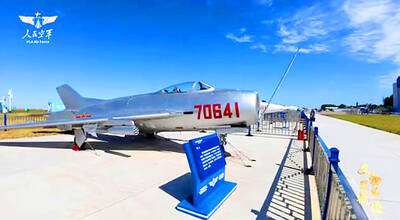
J-6 REMODEL: The converted drones are part of Beijing’s expanding mix of airpower weapons, including bombers with stand-off missiles and UAV swarms, the report said China has stationed obsolete supersonic fighters converted to attack drones at six air bases close to the Taiwan Strait, a report published this month by the Arlington, Virginia-based Mitchell Institute for Aerospace Studies said. Satellite imagery of the airfields from the institute’s “China Airpower Tracker” shows what appear to be lines of stubby, swept-winged aircraft matching the shape of J-6 fighters that first flew with the Chinese People’s Liberation Army (PLA) Air Force in the 1960s. Since their conversion to drones, the aircraft have been identified at five bases in China’s Fujian Province and one in Guangdong Province, the report said. J.
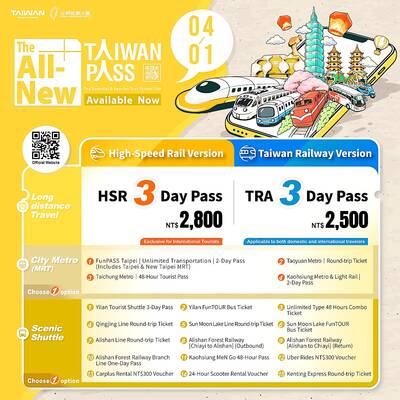
MORE POPULAR: Taiwan Pass sales increased by 59 percent during the first quarter compared with the same period last year, the Tourism Administration said The Tourism Administration yesterday said that it has streamlined the Taiwan Pass, with two versions available for purchase beginning today. The tourism agency has made the pass available to international tourists since 2024, allowing them to access the high-speed rail, Taiwan Railway Corp services, four MRT systems and four Taiwan Tourist Shuttles. Previously, five types of Taiwan Pass were available, but some tourists have said that the offerings were too complicated. The agency said only two types of Taiwan Pass would be available, starting from a three-day pass with the high-speed rail and a three-day pass with Taiwan Railway Corp. The former costs NT$2,800


 RSS
RSS