


The US suffered a final defeat on Thursday in its dispute with Brazil over cotton subsidies at the WTO.
The organization's appellate body upheld a ruling last year by trade judges who said US subsidies to cotton farmers broke international trade rules by depressing world prices and harming cotton farmers in Brazil and elsewhere.
The decision could force the US to lower the subsidies it pays farmers to grow cotton and, eventually, other crops.
Republican Representative Clay Shaw, who heads the trade subcommittee of the House Ways and Means Committee, said: "If we want to keep exporting American cotton, we're going to have to abide by the WTO ruling. It certainly gives you cover to make some of the corrections needed."
The administration was more cautious. Richard Mills, the spokesman for the US trade representative, said that "we will study the report carefully and work closely with Congress and our farm community on our next steps."
Brazil declared victory for itself and poor African nations that have complained about the subsidies.
Roberto Azevedo, the official who heads trade disputes at Brazil's Foreign Ministry, said on Thursday that "this decision ratifies what is just and what is legal."
As the first successful challenge of a wealthy nation's domestic agricultural subsidies, the cotton case could propel Europe and other industrialized nations to offer new compromises at global trade talks that are centered on this agriculture issue.
Brazilian officials used information from the US Department of Agriculture to argue that the US broke trade rules that limit to US$1.6 billion the subsidies it can pay cotton growers every year. The US defended the additional financing as domestic subsidies that do no harm to global markets.
But Brazil said the subsidies increased US cotton production, which, in turn, helped destroy Brazil's export markets and undermined the livelihood of its farmers. Argentina, Australia, Benin, Canada, Chad, China, the EU, India, New Zealand, Pakistan, Paraguay, Taiwan and Venezuela joined Brazil in the case.
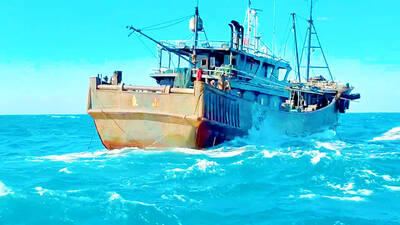
MAKING WAVES: China’s maritime militia could become a nontraditional threat in war, clogging up shipping lanes to prevent US or Japanese intervention, a report said About 1,900 Chinese ships flying flags of convenience and fishing vessels that participated in China’s military exercises around Taiwan last month and in January have been listed for monitoring, Coast Guard Administration (CGA) Deputy Director-General Hsieh Ching-chin (謝慶欽) said yesterday. Following amendments to the Commercial Port Act (商港法) and the Law of Ships (船舶法) last month, the CGA can designate possible berthing areas or deny ports of call for vessels suspected of loitering around areas where undersea cables can be accessed, Oceans Affairs Council Minister Kuan Bi-ling (管碧玲) said. The list of suspected ships, originally 300, had risen to about 1,900 as
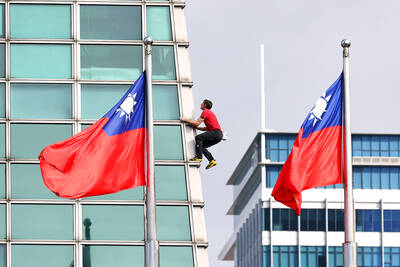
DAREDEVIL: Honnold said it had always been a dream of his to climb Taipei 101, while a Netflix producer said the skyscraper was ‘a real icon of this country’ US climber Alex Honnold yesterday took on Taiwan’s tallest building, becoming the first person to scale Taipei 101 without a rope, harness or safety net. Hundreds of spectators gathered at the base of the 101-story skyscraper to watch Honnold, 40, embark on his daredevil feat, which was also broadcast live on Netflix. Dressed in a red T-shirt and yellow custom-made climbing shoes, Honnold swiftly moved up the southeast face of the glass and steel building. At one point, he stepped onto a platform midway up to wave down at fans and onlookers who were taking photos. People watching from inside
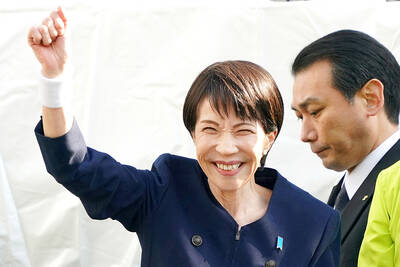
Japan’s strategic alliance with the US would collapse if Tokyo were to turn away from a conflict in Taiwan, Japanese Prime Minister Sanae Takaichi said yesterday, but distanced herself from previous comments that suggested a possible military response in such an event. Takaichi expressed her latest views on a nationally broadcast TV program late on Monday, where an opposition party leader criticized her for igniting tensions with China with the earlier remarks. Ties between Japan and China have sunk to the worst level in years after Takaichi said in November that a hypothetical Chinese attack on Taiwan could bring about a Japanese
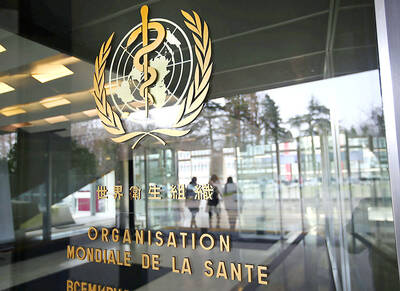
The WHO ignored early COVID-19 warnings from Taiwan, US Deputy Secretary of Health and Human Services Jim O’Neill said on Friday, as part of justification for Washington withdrawing from the global health body. US Secretary of State Marco Rubio on Thursday said that the US was pulling out of the UN agency, as it failed to fulfill its responsibilities during the COVID-19 pandemic. The WHO “ignored early COVID warnings from Taiwan in 2019 by pretending Taiwan did not exist, O’Neill wrote on X on Friday, Taiwan time. “It ignored rigorous science and promoted lockdowns.” The US will “continue international coordination on infectious


 RSS
RSS