


Singapore began a probe yesterday into a rare two-hour power failure that sparked panic, including fears that the city might have been the target of a terror attack.
Nearly half of Singapore went dark when a valve tripped late on Tuesday at a station that receives gas from West Natuna, Indonesia, power authorities said. Six gas-fired power generators suddenly shut at around 10:15pm.
The blackout triggered fears that ultra-efficient Singapore, which prides itself on first-class infrastructure, had suffered an attack. Police were called to rescue people trapped in elevators.
"It was pitch dark. No street lights. No traffic lights. It was alarming. Terrorism flashed across my mind," said Tan Min Yee, 28, a marketing executive.
About 30 percent of the island was affected, Singapore's Energy Market Authority said.
Mobile phone networks were jammed by residents seeking information on whether there had been a "terrorist-related disruption," the Straits Times newspaper said.
"I thought it was some sort of a big disaster because I thought only my block had the blackout. But when I looked at the other blocks, everything was dark," one resident told state broadcaster Channel News Asia.
It was the worst power failure since August 2002, when a similar disruption in Indonesian gas supplies caused seven of Singapore's 10 gas-fired generating plants to suddenly fail. A leak in a gas pipeline also caused a disruption in November.
SembCorp Industries Ltd, which operates the West Natuna gas pipeline, said a preliminary investigation showed that the disruption was caused by a technical failure at a Jurong Island facility run by ConocoPhilips.
Indonesia's oil and gas watchdog said Tuesday's unexpected gas supply interruption followed an emergency shutdown at the Jurong Island facility .
Singapore depends on natural gas from Malaysia and Indonesia for 60 percent of its power, using three pipelines.
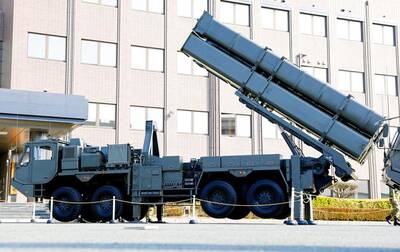
Japan has deployed long-range missiles in a southwestern region near China, the Japanese defense minister said yesterday, at a time when ties with Beijing are at their lowest in recent years. The missiles were installed in Kumamoto in the southern region of Kyushu, as Japan is attempting to shore up its military capacity as China steps up naval activity in the East China Sea. “Standoff defense capabilities enable us to counter the threat of enemy forces attempting to invade our country ... while ensuring the safety of our personnel,” Japanese Minister of Defense Shinjiro Koizumi said. “This is an extremely important initiative for
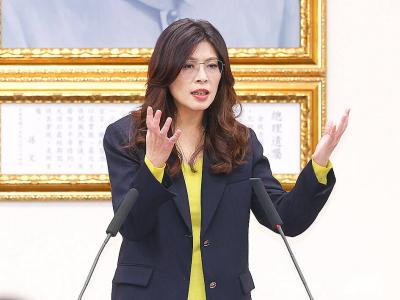
Chinese Nationalist Party (KMT) Chairwoman Cheng Li-wun (鄭麗文) today accepted an invitation from Chinese President Xi Jinping (習近平) to lead a delegation to China next month, saying she hopes to promote the peaceful development of cross-strait relations and bring stability to the Taiwan Strait. “I am grateful and happy to accept this invitation,” Cheng said in a statement from the KMT chairperson’s office. Cheng said she hopes both sides can work together to promote the peaceful development of cross-strait relations, enhance exchange and cooperation, bring stability to the Taiwan Strait and improve people’s livelihoods. At today's news conference, Cheng said any efforts to
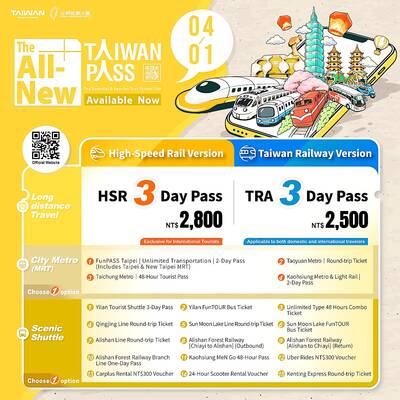
MORE POPULAR: Taiwan Pass sales increased by 59 percent during the first quarter compared with the same period last year, the Tourism Administration said The Tourism Administration yesterday said that it has streamlined the Taiwan Pass, with two versions available for purchase beginning today. The tourism agency has made the pass available to international tourists since 2024, allowing them to access the high-speed rail, Taiwan Railway Corp services, four MRT systems and four Taiwan Tourist Shuttles. Previously, five types of Taiwan Pass were available, but some tourists have said that the offerings were too complicated. The agency said only two types of Taiwan Pass would be available, starting from a three-day pass with the high-speed rail and a three-day pass with Taiwan Railway Corp. The former costs NT$2,800
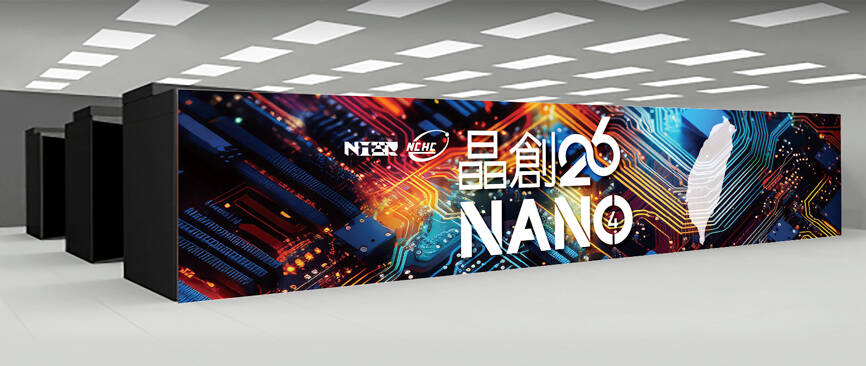
The nation’s fastest supercomputer, Nano 4 (晶創26), is scheduled to be launched in the third quarter, and would be used to train large language models in finance and national defense sectors, the National Center for High-Performance Computing (NCHC) said. The supercomputer, which would operate at about 86.05 petaflops, is being tested at a new cloud computing center in the Southern Taiwan Science Park in Tainan. The exterior of the server cabinet features chip circuitry patterns overlaid with a map of Taiwan, highlighting the nation’s central position in the semiconductor industry. The center also houses Taiwania 2, Taiwania 3, Forerunner 1 and


 RSS
RSS