


For Cadillac, the new-car smell, that ethereal scent of factory freshness, is no longer just a product of chance.
General Motors recently revealed that its Cadillac division has engineered a scent for its vehicles and been processing it into their leather seats. The scent -- sort of sweet, sort of subliminal -- was created in a lab, picked by focus groups and is now the aroma of every new Cadillac put on the road.
It even has a name. Nuance.
"You pay the extra money for leather, you don't want it to smell like lighter fluid," said James Embach, GM's advanced features manager. "You want it to smell like a Gucci bag."
Automakers like GM are recasting cars, and particularly luxury vehicles, so that the things that potential buyers smell, hear and touch are increasingly the result of engineering rather than chance.
Ford's Lincoln now uses light-emitting diodes to bathe its sport utilities in a white nighttime interior glow; Volkswagen uses bluish backlighting. General Motors is bringing an Australian sports car to America as a reborn Pontiac GTO muscle car, with a computer-designed roar for the previously quiet engine.
No sense can be taken for granted.
"For many years, we ignored the olfactory sense," said Embach, adding that GM has been expanding Nuance across the Cadillac line for several years and is now considering adding it to Buicks.
Certainly, there are different schools of thought about what stimulates customers the right way. Asian automakers tend to focus on eliminating sounds and smells, which has helped bolster their quality rankings: Consider that the most frequent gripe among car buyers is that they hear too much wind noise.
But even companies like Toyota engineer sounds they think people want to hear. It recently overhauled the tone of the Camry's horn from a bright and friendly pitch to a more macho bark for the American market.
Engineering the new car smell is at the industry's sensory frontier.
Such is the new car smell's mystique that it can be bought in aerosol form. But thus far, the focus inside the car has been on odor elimination, partly in an effort to remove some fumes that studies have shown can be toxic.
But some see signs of a much broader sensory manipulation ahead in Cadillac's efforts.
The auto supplier Collins & Aikman has a division that specializes in "aroma quality management" -- a picture of a big nose hangs in the lobby of the company's headquarters in the Detroit suburbs -- which makes its money reducing smells but is pitching carmakers on adding them.
During a recent visit to one of the company's labs, Siying Chen, a chemist whose skills would not have been needed in the industry a decade ago, opened a clear jar containing a rubber strip and waved her hand to sweep up the bouquet of what smelled like fine leather.
Could she make plastic smell more like leather than leather?
"Of course," she said, and offered up a swatch of plastic that both felt and smelled like leather.
Embach, of GM, said Cadillac's smell project began a decade ago, when the company experimented with various manufactured scents. Different luxury cars have long been characterized by the smell of their leathers, but changes were made "by the tanner based on his or her own nose."
"The new car smell was a smell by default," he said. "It wasn't designed or engineered."
Clotaire Rapaille, the founder of Archetype Discoveries Worldwide, a consumer research firm in Boca Raton, Florida, that advises both the Big Three and the scent industry, said smell would not be the first impression a potential car buyer would have, but it could be a dealbreaker nonetheless. He likened it to finding out that a beautiful date had bad breath.
"I'm not going to buy a car because of the smell only, I'll buy it because of the look, the identity and the message," he said. "But then I'll get in the car, and smell can be a turnoff."
Considering that the rise of Nuance has roughly coincided with the resuscitation of the Cadillac brand -- no SUV has more street credibility than the Cadillac Escalade -- there is a question here. Most analysts credit the brand's distinctive new designs, which feature hard edges and bold grills and a super-sized version of the old Cadillac wreath and crest emblem.
Then again, what if it was the smell?
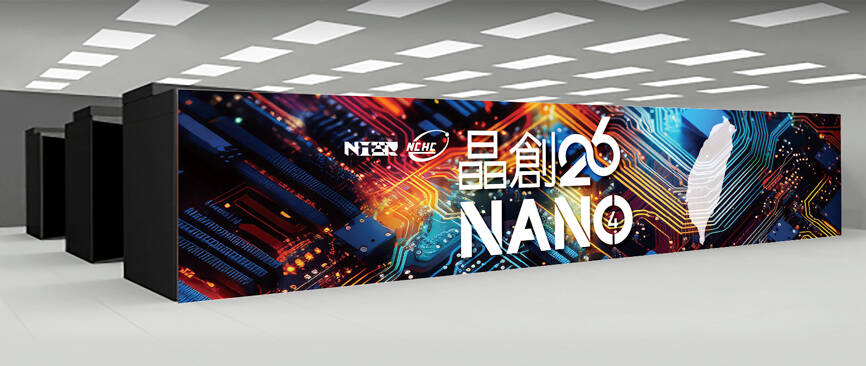
The nation’s fastest supercomputer, Nano 4 (晶創26), is scheduled to be launched in the third quarter, and would be used to train large language models in finance and national defense sectors, the National Center for High-Performance Computing (NCHC) said. The supercomputer, which would operate at about 86.05 petaflops, is being tested at a new cloud computing center in the Southern Taiwan Science Park in Tainan. The exterior of the server cabinet features chip circuitry patterns overlaid with a map of Taiwan, highlighting the nation’s central position in the semiconductor industry. The center also houses Taiwania 2, Taiwania 3, Forerunner 1 and
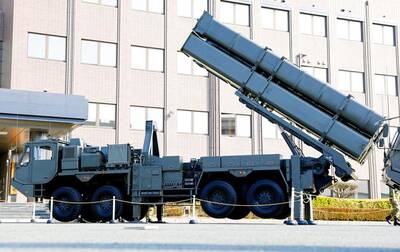
Japan has deployed long-range missiles in a southwestern region near China, the Japanese defense minister said yesterday, at a time when ties with Beijing are at their lowest in recent years. The missiles were installed in Kumamoto in the southern region of Kyushu, as Japan is attempting to shore up its military capacity as China steps up naval activity in the East China Sea. “Standoff defense capabilities enable us to counter the threat of enemy forces attempting to invade our country ... while ensuring the safety of our personnel,” Japanese Minister of Defense Shinjiro Koizumi said. “This is an extremely important initiative for
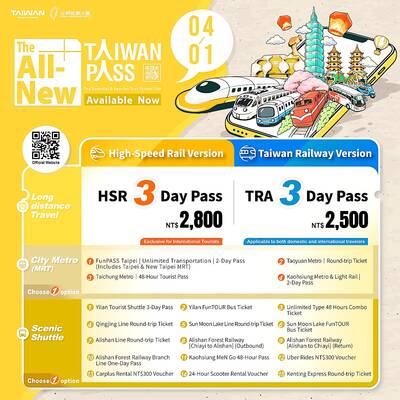
MORE POPULAR: Taiwan Pass sales increased by 59 percent during the first quarter compared with the same period last year, the Tourism Administration said The Tourism Administration yesterday said that it has streamlined the Taiwan Pass, with two versions available for purchase beginning today. The tourism agency has made the pass available to international tourists since 2024, allowing them to access the high-speed rail, Taiwan Railway Corp services, four MRT systems and four Taiwan Tourist Shuttles. Previously, five types of Taiwan Pass were available, but some tourists have said that the offerings were too complicated. The agency said only two types of Taiwan Pass would be available, starting from a three-day pass with the high-speed rail and a three-day pass with Taiwan Railway Corp. The former costs NT$2,800
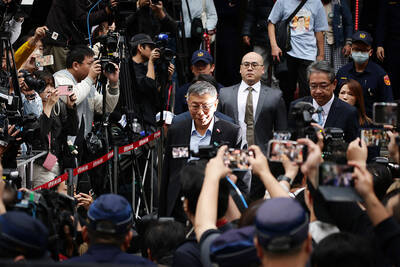
FIRST TRIAL: Ko’s lawyers sought reduced bail and other concessions, as did other defendants, but the bail judge denied their requests, citing the severity of the sentences Former Taipei mayor Ko Wen-je (柯文哲) was yesterday sentenced to 17 years in prison and had his civil rights suspended for six years over corruption, embezzlement and other charges. Taipei prosecutors in December last year asked the Taipei District Court for a combined 28-year, six-month sentence for the four cases against Ko, who founded the Taiwan People’s Party (TPP). The cases were linked to the Core Pacific City (京華城購物中心) redevelopment project and the mismanagement of political donations. Other defendants convicted on separate charges included Chinese Nationalist Party (KMT) Taipei City Councilor Angela Ying (應曉薇), who was handed a 15-year, six-month sentence; Core Pacific


 RSS
RSS