


Heineken NV, the world's third-largest brewer, agreed to buy Austria's biggest beer company for 1.9 billion euros (US$2.1 billion) in cash and assumed debt to become the No. 1 brewer in central Europe.
The purchase of BBAG and its Brau Union subsidiary will allow the Dutch company to leapfrog SABMiller Plc, which currently dominates the beer market in countries such as Hungary and Poland.
It's the biggest acquisition in Heineken's 130-year history.
Heineken chairman Anthony Ruys is betting that beer consumption in central Europe will continue to rise faster than in the EU, where demand has slowed in recent years. The Dutch maker of Amstel lager and Murphy's Irish stout is vying with SAB and Interbrew SA to increase its presence in the area.
The region "is the last crown jewel in Europe" for Heineken, said Gerard Rijk, an analyst at ING Barings who recommends investors buy the Dutch company's stock.
"It's a perfect fit because BBAG is important in markets where Heineken has little market share, such as Hungary," he said.
Heineken will pay 11.40 euros a share to family and other investors with about 69 percent of the Austrian company, whose full name is Oesterreichische Brau-Beteiligungs AG.
Once that stake is acquired, Heineken will offer minority BBAG shareholders 124 euros a share and Brau Union investors 127.27 euros a share, the company said in a Business Wire statement.
The Czechs drink the most beer per capita in the world. Beer consumption in central Europe will probably grow 3 percent annually over the next five years, compared with 2 percent for the rest of the world, according to Heineken's estimates. Beer drinking in the region has risen more than 60 percent since 1998.
"Heineken has to have acquisitions to keep double-digit earnings growth and where better to grow than in East European countries, which have heavy drinking populations," said Edwin Slaghekke, who helps manage about 2 billion euros, including Heineken shares, at Theodoor Gilissen Bankiers NV.
The Amsterdam-based brewer will finance the acquisition with debt.
"I rule out the option of share issues for this deal," Ruys told reporters in Vienna.
He declined to give details on how the purchase will be financed through debt, and said Heineken doesn't expect to make a first payment until October.
The purchase will make Heineken the biggest beermaker in Austria, Poland, Hungary, Romania, Bulgaria, Slovakia, Macedonia and Albania and No. 2 in Croatia.
Heineken is paying 10.2 times BBAG's earnings last year before interest, taxes, depreciation and amortization. The Dutch company estimates it will save about 40 million euros a year by 2007.
"We are always conservative" when giving such estimates, Ruys said.
The brewer spent 1.2 billion euros last year on buying smaller rivals. It bought a controlling stake in Croatian brewer Karlovacka Pivovara, gained a controlling stake in Kazakhstan's Dinal LLP brewery and purchased Russian brewer Bravo International.
BBAG has a 14 percent share of the central European beer market, owns five breweries there and sells brands such as Starobrno and Edelweiss in five of the central European 10 countries set to join the EU next year.
BBAG posted a 16 percent increase in operating profit to 79.5 million euros for last year, on sales of 1.1 billion euros, the Austrian company said today.
Credit Suisse First Boston managed Heineken's offer, while J.P. Morgan advised BBAG.

Japan has deployed long-range missiles in a southwestern region near China, the Japanese defense minister said yesterday, at a time when ties with Beijing are at their lowest in recent years. The missiles were installed in Kumamoto in the southern region of Kyushu, as Japan is attempting to shore up its military capacity as China steps up naval activity in the East China Sea. “Standoff defense capabilities enable us to counter the threat of enemy forces attempting to invade our country ... while ensuring the safety of our personnel,” Japanese Minister of Defense Shinjiro Koizumi said. “This is an extremely important initiative for

Chinese Nationalist Party (KMT) Chairwoman Cheng Li-wun (鄭麗文) today accepted an invitation from Chinese President Xi Jinping (習近平) to lead a delegation to China next month, saying she hopes to promote the peaceful development of cross-strait relations and bring stability to the Taiwan Strait. “I am grateful and happy to accept this invitation,” Cheng said in a statement from the KMT chairperson’s office. Cheng said she hopes both sides can work together to promote the peaceful development of cross-strait relations, enhance exchange and cooperation, bring stability to the Taiwan Strait and improve people’s livelihoods. At today's news conference, Cheng said any efforts to

MORE POPULAR: Taiwan Pass sales increased by 59 percent during the first quarter compared with the same period last year, the Tourism Administration said The Tourism Administration yesterday said that it has streamlined the Taiwan Pass, with two versions available for purchase beginning today. The tourism agency has made the pass available to international tourists since 2024, allowing them to access the high-speed rail, Taiwan Railway Corp services, four MRT systems and four Taiwan Tourist Shuttles. Previously, five types of Taiwan Pass were available, but some tourists have said that the offerings were too complicated. The agency said only two types of Taiwan Pass would be available, starting from a three-day pass with the high-speed rail and a three-day pass with Taiwan Railway Corp. The former costs NT$2,800
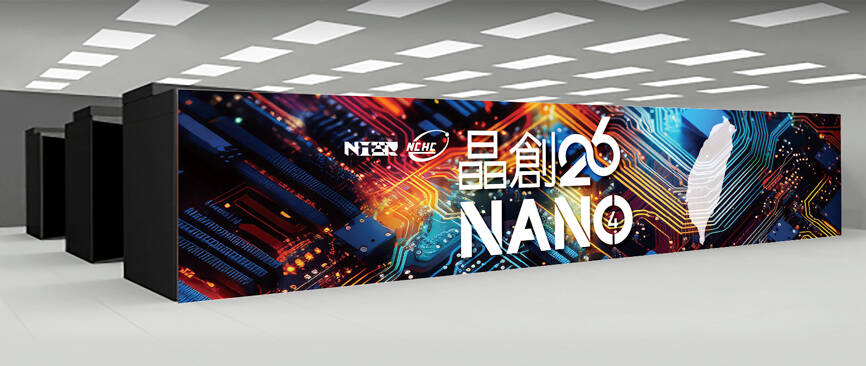
The nation’s fastest supercomputer, Nano 4 (晶創26), is scheduled to be launched in the third quarter, and would be used to train large language models in finance and national defense sectors, the National Center for High-Performance Computing (NCHC) said. The supercomputer, which would operate at about 86.05 petaflops, is being tested at a new cloud computing center in the Southern Taiwan Science Park in Tainan. The exterior of the server cabinet features chip circuitry patterns overlaid with a map of Taiwan, highlighting the nation’s central position in the semiconductor industry. The center also houses Taiwania 2, Taiwania 3, Forerunner 1 and


 RSS
RSS