


Campaigners in Ecuador say a Polish anti-corruption activist who investigated allegations against the family business of the country’s president was murdered to silence her.
Monika Silva Koniuszek, 41, was found dead in her home in Montanita, a coastal town in Ecuador’s Santa Elena Province. The single mother of daughters aged four and nine, was found on June 8 on the floor with a noose around her neck.
A day after her death, and before autopsy results had been released, Ecuadoran Minister of the Interior John Reimberg said that the initial hypothesis was that it was a suicide.
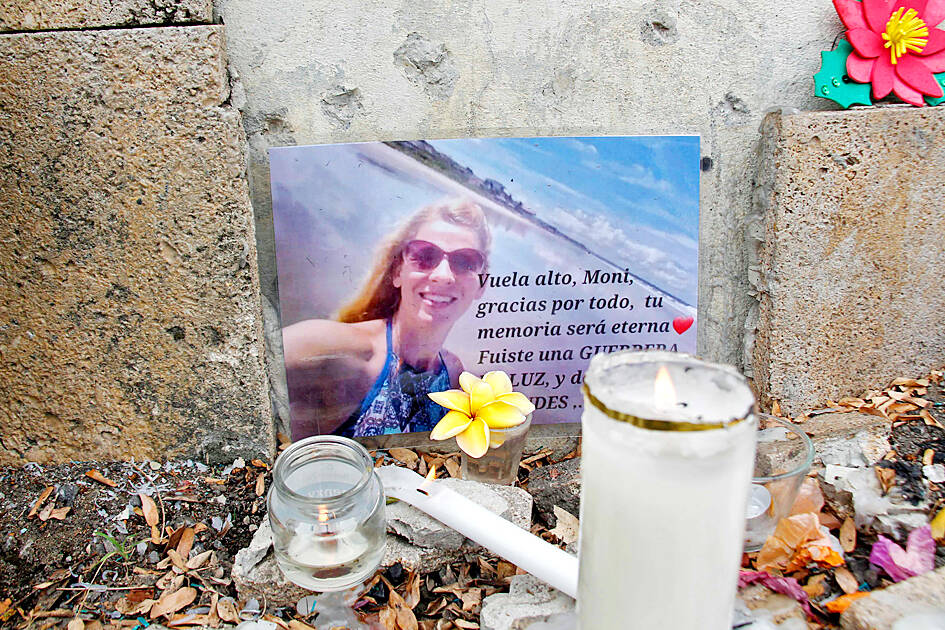
Photo: AFP
“The necessary evidence to reach that conclusion was found at the scene,” he told local media.
However, on Friday, a postmortem in Guayaquil found that the cause of death was a blow to the head and strangulation.
“Based on the forensic reports, we are certain that this was a violent death; therefore, the alleged suggestion that it was a suicide falls apart,” said attorney Lita Martinez, director of the Ecuadoran Center for the Promotion and Action of Women.
Silva Koniuszek had spent the last decade denouncing environmental crimes and corruption on social media, and working with local journalists.
“You don’t need to be born in Ecuador to love it and defend what is right,” she wrote on her social media profiles.
“Monika was the bravest person I have ever met,” said Beth Pitts, 47, a British author and fellow activist who collaborated with her in local campaigns.
“She was often a lone voice, publicly and vociferously denouncing corruption and environmental crimes when everyone else was too afraid to speak out,” said Pitts, who has lived in Ecuador for 13 years and lived near Silva Koniuszek in a neighboring village.
“Beyond her activism, she was a dedicated single mother and a wonderful friend. Even when she was receiving death threats, she would still take the time to ask how I was doing and offer her support,” she added.
Colleagues said Silva Koniuszek had begun to investigate Noboa Trading, the fruit conglomerate belonging to the family of Ecuadoran President Daniel Noboa.
They said she had been pursuing allegations that several tonnes of cocaine had been seized in Noboa Trading banana containers, but high-ranking Ecuadoran judicial officials were stalling the investigations.
Shortly before she was killed, she told friends that she had delivered a dossier of allegations to the US embassy in Quito.
She had also investigated allegations that politically connected figures in Santa Elena province were implicated in a massive land-trafficking ring.
Friends said that Silva Koniuszek was facing judicial harassment and explicit death threats, allegedly linked to the same crime networks that assassinated a fellow activist, local journalist Robinson del Pezo, in November last year.
Silva Koniuszek’s death made headlines in her native Poland, with skepticism over early reports suggesting she took her own life.
Her friend, Joanna Cuper, told the Polish broadcaster TVP Info that the activist had claimed she was “followed and observed.”
“None of us believe she killed herself,” she said.
“She said that the cartels had put a price on her head. Three years ago, her then husband took the children to Brazil because she was receiving threats that she and her children would be murdered,” Cuper added.
The Polish prosecutor’s office confirmed last week that it had requested mutual legal assistance from the Ecuadoran authorities probing her death, and suggested it would want to be closely involved in the investigation.
The Polish embassy in neighboring Peru said it hoped “the competent authorities will conduct a swift, thorough, independent and transparent investigation” to “clarify the circumstances of the case and ensure accountability.”
“The embassy of the Republic of Poland emphasizes the importance of protecting human rights defenders, journalists, social activists and all individuals engaging in civic life,” it added.
The community in Montanita created a shrine to Silva Koniuszek, with photographs and flowers, and kept candles burning for several days. Local street artists painted a mural, with neighbors renaming a street after her.
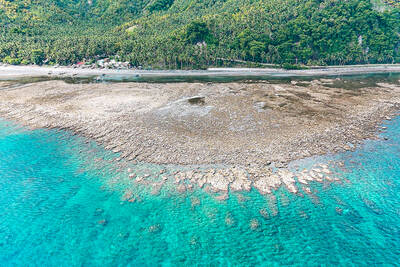
Arsenio Butil Jr fell to his knees and began to pray when last week’s deadly magnitude 7.8 earthquake began shaking his home on the coast of the southern Philippines. When he opened his eyes, he saw a once-familiar shoreline changing in real time, with swathes of previously submerged coral suddenly pushing above the waterline. The June 8 quake, driven by a shifting of the nearby Cotabato Trench, toppled buildings, triggered landslides and killed at least 76 people on the southern island of Mindanao. The tectonic forces at work also thrust chunks of the island’s coastline upward in a phenomenon known as “coastal uplift,”
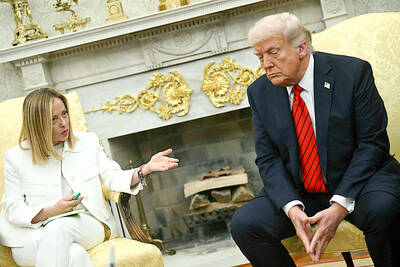
NATO ALLIES: The Italian PM accused Trump of ‘constant, unprovoked ... senseless’ attacks and said ‘my popularity is none of your concern. I suggest you focus on yours’ Italian Prime Minister Giorgia Meloni on Saturday fired back at US President Donald Trump, saying his “constant, unprovoked attacks are senseless” after he escalated a diplomatic row by accusing her of repeatedly seeking a photograph with him. The clash has opened an unusually personal rift between Trump and one of Europe’s most prominent right-wing leaders, who had sought to cast herself as a bridge between Washington and the continent during Trump’s return to power. Trump had initially told Italian broadcaster La7 that Meloni “begged” him for a picture at last week’s G7 summit in France, saying he agreed only because
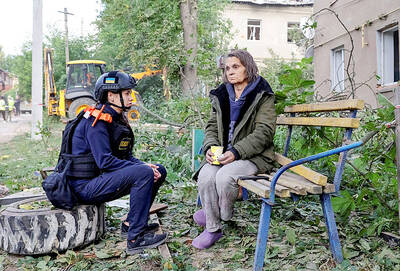
President Volodymyr Zelenskiy on Saturday said that Russian forces were preparing an impending massive attack on Ukraine and warned residents to take special care as Russian strikes in different regions killed at least six people. “Tonight and in the coming hours, it is especially important to pay close attention to air raid warnings,” Zelenskiy said in his nightly video address. “The Russians have prepared for a massive attack. Please take care of yourselves.” Russian forces have staged a series of heavy attacks on Kyiv in the past few weeks and in other major cities. Strikes on Monday last week killed
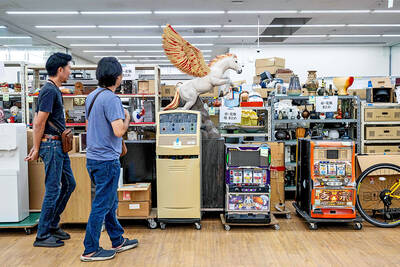
YUCK OR YUM? While it is difficult to sell second-hand goods that are more than seven years old in Japan, they are still popular in foreign markets, an executive said Under a scorching sun in a Bangkok suburb, a whistle blew, and shouts filled the air as dozens of shoppers rushed into a warehouse bearing the sign “Japanese Second-Hand Store.” From bags and bicycles to surfboards and suitcases, the Japanese second-hand market is booming, with quality-conscious buyers in other Asian countries increasingly tapping into the circular economy trend. “What is considered garbage for them can still be useful in Thailand,” said 36-year-old Lookpoo Sathitpanyapon, who runs an online store selling toy keychains. “That bag, that bag,” one shopper shouted while racing through the warehouse, filled with everything from colorful toys


 RSS
RSS