


Italian Prime Minister Giorgia Meloni on Saturday fired back at US President Donald Trump, saying his “constant, unprovoked attacks are senseless” after he escalated a diplomatic row by accusing her of repeatedly seeking a photograph with him.
The clash has opened an unusually personal rift between Trump and one of Europe’s most prominent right-wing leaders, who had sought to cast herself as a bridge between Washington and the continent during Trump’s return to power.
Trump had initially told Italian broadcaster La7 that Meloni “begged” him for a picture at last week’s G7 summit in France, saying he agreed only because he “felt sorry for her.”
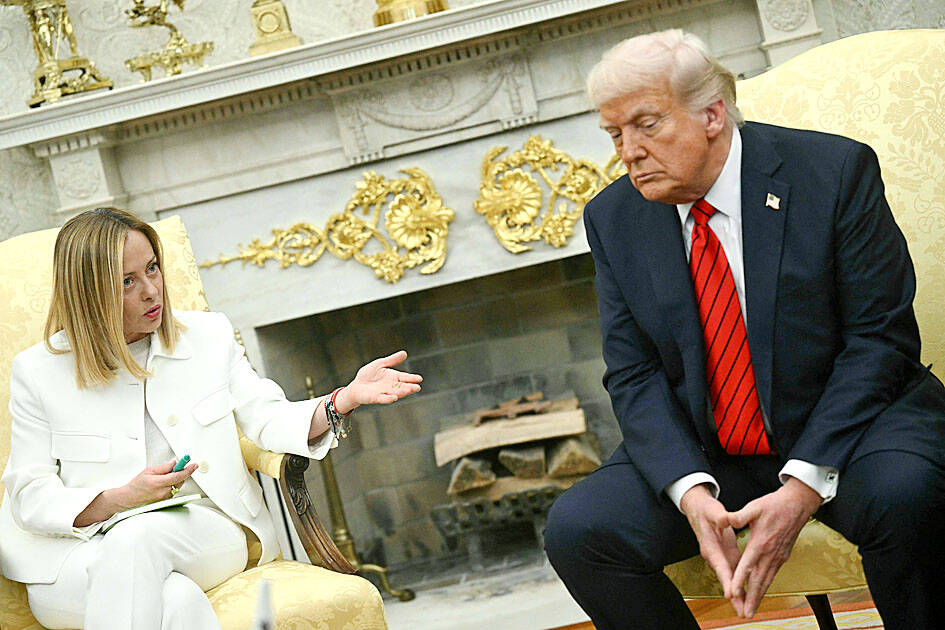
Photo: AFP
Meloni angrily denied the claim, calling it “made up,” but Trump doubled down in a post on Truth Social, saying Meloni had asked “over and over” for a photograph during the summit.
He also accused her of trying to repair relations with Washington for domestic reasons after Italy failed to support US action against Iran.
“Now, after the United States defeated Iran militarily, she wants to be friends again in order to get her ‘numbers up.’ No thanks!!!” Trump wrote.
He said Meloni was doing “poorly in Italy” and suggested this was linked to her refusal to let the US use Italian “landing strips or runways” during the conflict with Iran.
Trump also revived his long-running complaint that the US spends heavily to protect “so-called” NATO allies, saying Washington contributes hundreds of billions of dollars to defend Italy and others.
Meloni, in a blistering response on Instagram, accused Trump of “constant, unprovoked ... senseless” attacks and said her popularity did not depend on her relationship with the US president.
“Being your friend certainly has not helped it, nor does it depend on my relationship with you,” she wrote.
She rejected Trump’s criticism over the use of US military facilities in Italy, saying that they were governed by agreements that Rome had respected.
“In any case, my popularity is none of your concern. I suggest you focus on yours,” she added.
The remarks were a sharp escalation of a dispute that had already triggered anger in Rome and came at a moment when Trump has already unsettled European partners with his handling of the war in Ukraine.
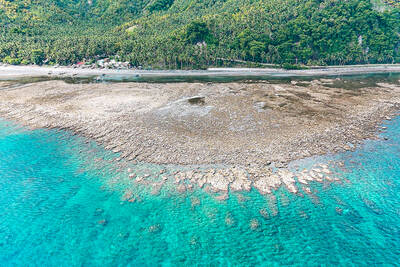
Arsenio Butil Jr fell to his knees and began to pray when last week’s deadly magnitude 7.8 earthquake began shaking his home on the coast of the southern Philippines. When he opened his eyes, he saw a once-familiar shoreline changing in real time, with swathes of previously submerged coral suddenly pushing above the waterline. The June 8 quake, driven by a shifting of the nearby Cotabato Trench, toppled buildings, triggered landslides and killed at least 76 people on the southern island of Mindanao. The tectonic forces at work also thrust chunks of the island’s coastline upward in a phenomenon known as “coastal uplift,”
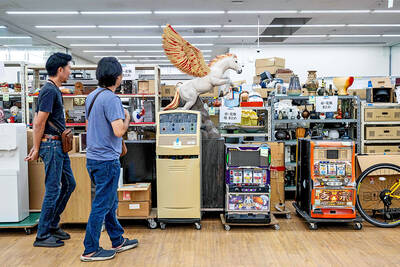
YUCK OR YUM? While it is difficult to sell second-hand goods that are more than seven years old in Japan, they are still popular in foreign markets, an executive said Under a scorching sun in a Bangkok suburb, a whistle blew, and shouts filled the air as dozens of shoppers rushed into a warehouse bearing the sign “Japanese Second-Hand Store.” From bags and bicycles to surfboards and suitcases, the Japanese second-hand market is booming, with quality-conscious buyers in other Asian countries increasingly tapping into the circular economy trend. “What is considered garbage for them can still be useful in Thailand,” said 36-year-old Lookpoo Sathitpanyapon, who runs an online store selling toy keychains. “That bag, that bag,” one shopper shouted while racing through the warehouse, filled with everything from colorful toys
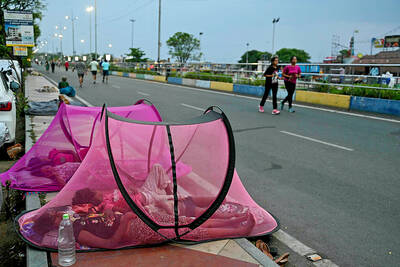
Growing up in Tahiti, Anna-Bella Failloux saw first-hand the threat posed by mosquitoes: Nearly one-third of adults on the picturesque island once had swollen limbs from elephantiasis caused by their bites. She has since dedicated her life to studying mosquitoes and the diseases they transmit — a concern that looms ever larger as climate change expands the area where the insects roam. “You have to accept being bitten by a mosquito from time to time,” the 63-year-old entomologist at France’s Pasteur Institute said. “But we have to avoid too many people getting sick and dying from the infections,” Failloux said, as she observed
Kazakhstan signed accords with the start-up Firebird Inc on computing projects involving Nvidia Corp that could bring as much as US$10 billion in investment, as the Central Asian energy producer looks to position itself as an artificial intelligence (AI) hub. The pacts include a strategic cooperation agreement on developing AI infrastructure and terms for a planned large-scale project known as Data Center Valley in the country’s northeast, the Kazakh Ministry of Artificial Intelligence and Digital Development said in a statement. The plan envisages US$5 billion in investments in phase one — including US$1 billion provided by state-run Kazakhtelecom — with commercial operations


 RSS
RSS