


In Iraq’s holy city of Najaf, the majestic shrine of Imam Ali stands quiet, its vast courtyards no longer echoing with the multilingual whispers of pilgrims from before the Middle East war.
The absence of tourists leaves nearby shopkeepers and hotel owners with little to do, their days dragging on as they hope for the crowds to return and revive their businesses.
“Iranians used to keep us busy, whether the jeweler, the fabric merchant or the taxi driver. Now there are none,” jewelry shop owner Abdel Rahim Harmoush said.
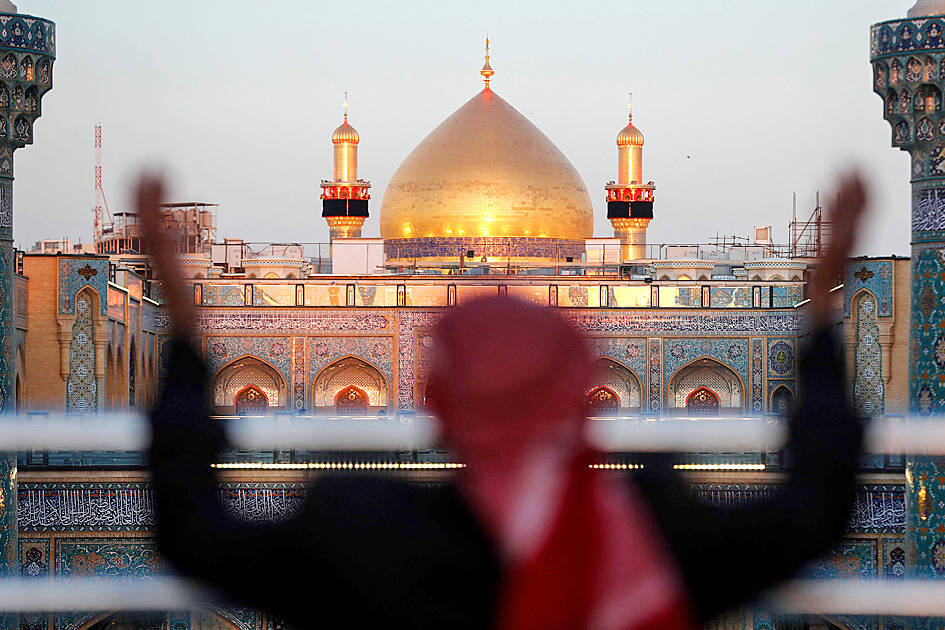
Photo: AFP
“It used to be hard even to step into the market because of foreigners... Even street vendors drew huge crowds of visitors,” the 71-year-old added.
Millions of Shiite Muslims from around the world typically flock to Najaf and fellow holy city Karbala every year. However, the regional war ignited in late February by US-Israeli strikes on Iran has stemmed the usual influx of pilgrims from the Islamic republic, Lebanon, the Gulf states, India, Afghanistan and elsewhere.
Iraq was drawn into the conflict from the onset, with strikes targeting US interests and Tehran-backed armed groups in the country.
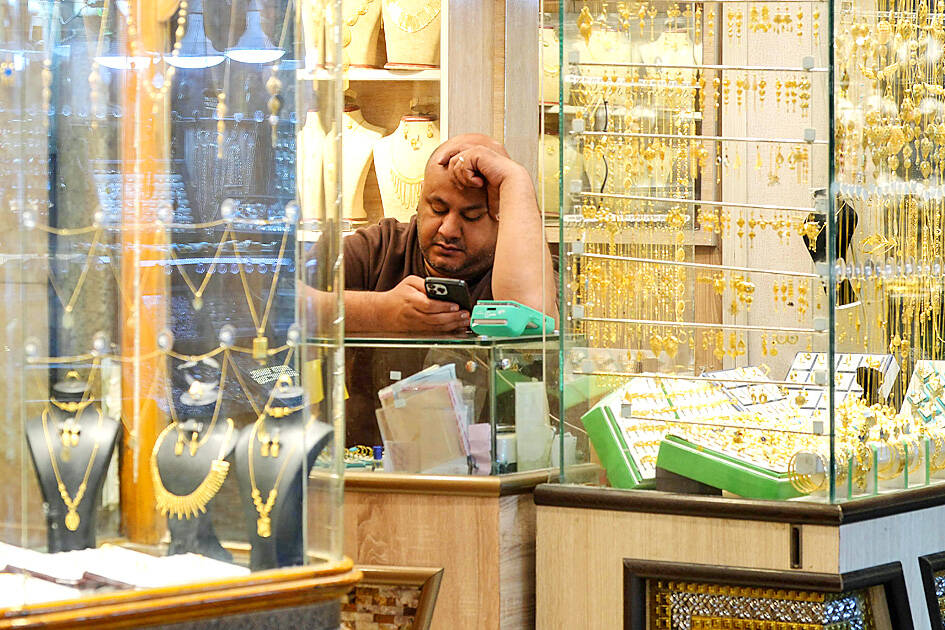
Photo: AFP
People in the holy cities “live on religious tourism,” said Harmoush, who for 38 years has worked in the old market near Najaf’s golden-domed mausoleum.
The shrine is the ornate burial place of Ali — the Prophet Mohammed’s son-in-law, the fourth Islamic caliph and the first Shiite imam.
Harmoush warned of economic ruin were the crisis to persist: Shop owners unable to pay rent and taxes, cab drivers left without passengers and laborers struggling to find work.
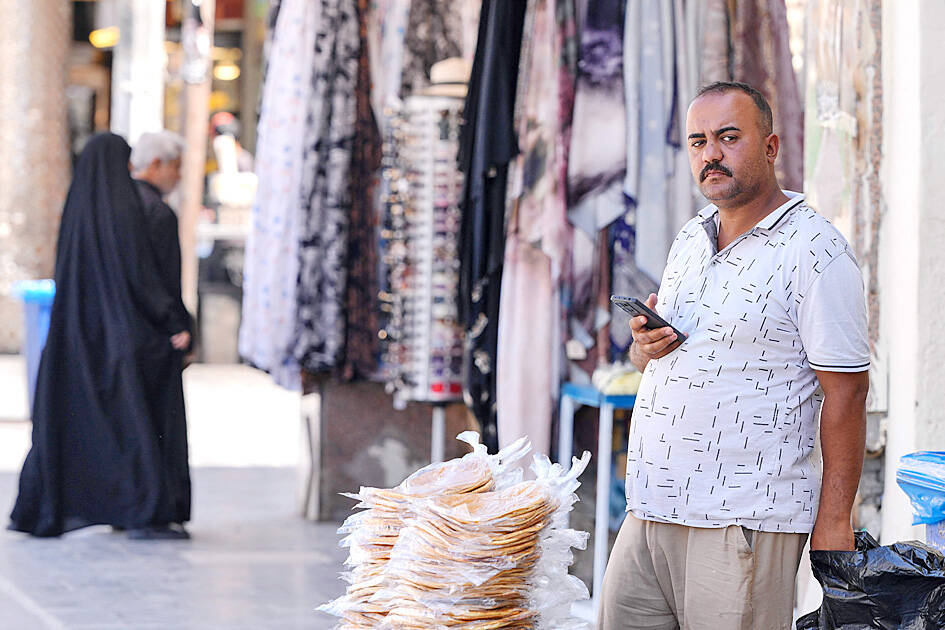
Photo: AFP
Hotel owner Abu Ali, 52, was forced to lay off five employees, leaving just one to tend to nearly 70 empty rooms.
“How can I pay salaries if there is no work?” he said.
Saeb Abu Ghneim, head of the hotel association in Najaf, said that 80 percent of the city’s 250 hotels had closed, with more than 2,000 employees laid off or on unpaid leave.

He added that most of Najaf’s religious tourism relies on Iranians, followed by Lebanese visitors — also trapped at home by war — and other nationalities.
The sector, which already weathered the closure of mosques and shrines during the COVID-19 pandemic, is a rare type of tourism in a country reeling from decades of conflicts.
Religious tourism also constitutes a significant source of revenue for Iraq’s non-oil economy.
Before the war, 28-year-old Moustafa al-Haboubi could barely manage the crowds lining up to exchange foreign currency for Iraqi dinars.
He now spends the long hours idly scrolling through his phone or chatting with neighbors.
“We barely receive one or two customers,” he said. “There are no pilgrims now, Iranian or otherwise.”
Even after a fragile ceasefire took effect on April 8 and Iraq’s airspace reopened, little has changed.
Some pilgrims trickle through during the week, while on weekends the area grows somewhat livelier as Iraqis visit the sacred sites.
The situation is no different in Karbala, which is about 80km north of Najaf and home to the shrines of the revered grandsons of Prophet Mohammed, Imam Hussein and his brother Abbas. The main corridor linking the two golden shrines and the surrounding alleyways were once alive with the murmurs of tourists walking to prayers. Today, the visitors are almost exclusively Iraqi.
“The situation is dangerous ... a catastrophe,” said Israa al-Nasrawi, head of Karbala’s tourism committee.
The war had devastated the city’s economy, slashing tourist numbers by about 95 percent and forcing hundreds of hotels to close, she said.
The city’s many pilgrim tour companies sit idle.
Akram Radi, who has worked in the sector for 16 years, said his company once helped up to 1,000 visitors a month, but is now operating at only 10 percent of capacity.
“I might have to close and look for another job,” he said.

SPEAKING OUT: After Siranudh Scott’s allegations surfaced, celebrities and public figures took to social media to share their own experiences of sexual misconduct and abuse A high-profile alleged sexual abuse case within a wealthy Thai beer brewing family has prompted a wave of painful accounts from survivors of unconnected abuse in the conservative nation. Siranudh Scott, a member of the billionaire Thai family that founded the ubiquitous Singha beer brand, posted an emotional video this month accusing his elder brother Sunit of repeatedly abusing him when he was a teenager. Sunit, who is in his 30s, later denied the allegations in a video posted online, but Singha parent Boonrawd dismissed him from his executive role with the company on Tuesday last week. “I felt I needed to speak

SEEKING ORDER: Rodrigo Paz said that ‘anyone who wants to destroy the nation will have to deal with this president and the full force of the constitution’ Bolivian President Rodrigo Paz on Wednesday said that the nation was at a “breaking point” after nearly a month of protests that have caused shortages of food, fuel and medicine. Paz, who took office six months ago amid the worst economic crisis there in four decades, is battling a groundswell of fury over his policies. The political capital, La Paz, has been besieged by low-income workers and members of the indigenous majority calling for his resignation. “The country needs order and is reaching breaking point,” the 58-year-old said at a public event in La Paz, renewing his appeal for dialogue. On Tuesday, the Bolivian

‘CROSSING THE LINE’: China’s embassy in Seoul criticized US Forces Korea Commander General Xavier Brunson, asking if his ‘hostile’ remarks were authorized by Washington South Korea and the US are in talks over recent public remarks by the commander of US Forces Korea, Seoul’s presidential office said yesterday, after the comments drew sharp criticism from China. In a recent podcast interview, US Forces Korea Commander General Xavier Brunson described South Korea as “the dagger in the heart of Asia” from China’s east coast, prompting the Chinese embassy in Seoul to say that he had “truly crossed the line.” The interview came amid growing speculation that Washington might seek to expand the role of US Forces Korea in countering the growing regional influence of China, a key

Forecasters in Europe yesterday warned of exceptional heat as record temperatures driven by a “heat dome” push temperatures well above seasonal norms across the continent. The surge follows a record-breaking Monday, with France logging its hottest day in the month of May on record, its weather agency said, and the UK also posting unprecedented highs. A so-called “heat dome” of warm air from northern Africa trapped under a high-pressure system over western Europe is behind the high temperatures not usually seen until high summer. Restrictions on outdoor work were imposed in parts of Italy, beaches in southwest France filled earlier than usual and


 RSS
RSS