


The sun was not quite up as Eric Helera unlocked the doors of his jeepney, wiped down its two long passenger benches, and checked his brake fluid before another day ferrying Manila commuters.
The makeshift minibus named Princess is part of a smoke-belching, colorfully decorated fleet that forms the backbone of a Philippine transportation sector being hammered by surging fuel prices driven by the US-Israeli war with Iran.
Like most jeepneys, Princess runs on diesel, the cost of which has hit historic highs in the archipelago nation since the partial closure of the Strait of Hormuz.

Photo: AFP
Helera, 43, is driving shorter routes, but longer days in response, routinely working 18 hours to ensure he has something left over after buying fuel and covering “the boundary,” the amount he owes the jeepney’s owner each day.
“The margins are really thin now because of the skyrocketing diesel prices,” said while sipping instant coffee from a paper cup outside his neighborhood grocery.
“Sometimes I earn less than 500 pesos [US$8.35] a day,” he said of shifts that can stretch until midnight.
Before the Middle East war, he could comfortably clear the same amount by lunchtime.
“There’s been a huge adjustment at home,” he said of life in the two-story Manila house he shares with his wife, seven children and two other families.
“My children ... need money for school projects and stuff like that, and we don’t have it now,” Helera told AFP journalists who spent part of the day traveling with him.
A “full breakfast with rice” was now a luxury to be enjoyed on only top earning days, he said.
“I need 10 passengers or more for each trip. Below that, and I don’t earn anything,” he calculated, adding that the jeepney ran at its full 16-person capacity only half a dozen times a day.
Fuel hikes he called the “most severe” he had ever seen had forced him to drop longer routes where the passenger load could not justify the cost of diesel.
Yesterday, the price jumped again by about 16 percent to 134.30 pesos per liter at some pumps, the highest in the country’s history.
Jeepney driver unions have been demanding fare increases to help cover the burden, with one last week organizing a “strike” that few drivers could afford to join.
Meanwhile, a fare hike authorized by the country’s transport regulator was quashed by Philippine President Ferdinand Marcos a day after it was announced.
“I’m on the side of the jeepney drivers,” salesclerk Trixie Brumuela said of potentially pricier rides.
“Fuel prices rose, but fares didn’t, so they’re losing money,” the 35-year-old said outside one of Manila’s ubiquitous jeepney terminals, while conceding she was struggling to make ends meet herself.
“I told myself to stop spending on anything apart from my basic needs. I resolved to stop buying other stuff,” she said.
Near another terminal, college freshman Juliana Tonelete said that while she sympathized with the plight of drivers, her own financial situation took priority.
“I think their reaction is valid given higher pump prices, but as a commuter, as a student with a limited budget, it’s difficult,” she said.
Helera said the cost of fuel had forced some fellow drivers to abandon the job entirely.
“Some went back to their home provinces, others looked for other lines of work.... I’m also considering that option, because we no longer earn anything.”
However, he worried his own options were limited.
“Maybe construction. I only went to high school,” he said.
While a government cash handout expected today — the first for embattled jeepney drivers — would be welcome, “5,000 pesos ... won’t carry you that far,” Helera said.
“It’s sad,” he added, as his jeepney slowly filled with evening commuters.
“It feels as though you want to give up, but you also know you can’t surrender because you have a family,” he said.
Helera noted with a sigh that he had yet to reach the “boundary” after nearly 11 hours on the road.
“It’s been a slow day,” he said. “I’ll need to drive into the night.”
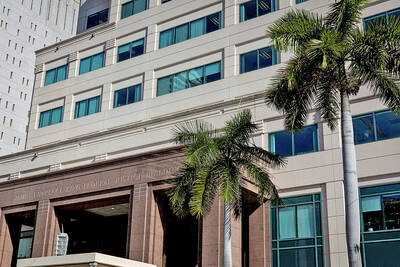
‘GROSS NEGLIGENCE?’ Despite a spleen typically being significantly smaller than a liver, the surgeon said he believed Bryan’s spleen was ‘double the size of what is normal’ A Florida surgeon who is facing criminal charges after allegedly removing a patient’s liver instead of his spleen has said he is “forever traumatized” by that person’s death. In a deposition from November last year that was recently obtained by NBC, 44-year-old Thomas Shaknovsky described the death of 70-year-old William Bryan as an “incredibly unfortunate event that I regret deeply.” Bryan died after the botched surgery; and last month, a grand jury in Tallahassee indicted Shaknovsky on a charge of manslaughter. “I’m forever traumatized by it and hurt by it,” Shaknovsky added, also saying that wrong-site surgeries can happen “during

Former Chinese ministers of national defense Wei Fenghe(魏鳳和) and Li Shangfu (李尚福) were both sentenced to death with a two-year reprieve over graft charges, state news agency Xinhua reported on Thursday, underscoring the severity of the purge in the military. The armed forces have been one of the main targets of a broad corruption crackdown ordered by Chinese President Xi Jinping (習近平) after coming to power in 2012. The purges reached the elite Rocket Force, which oversees nuclear weapons as well as conventional missiles, in 2023. Earlier this year they escalated further, resulting in the removal of the top general in
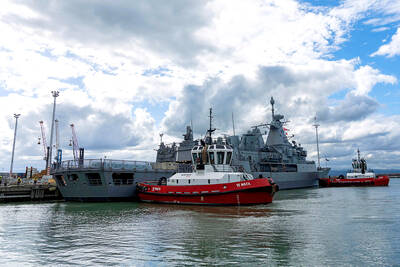
New Zealand is open to expanding its frigate fleet beyond its current two vessels, with New Zealand Minister of Defence Chris Penk saying “no options are off the table” as the government weighs buying new warships from Japan or the UK. The government yesterday said it is looking to replace its two aging Anzac-class frigates, which were both commissioned almost 30 years ago. The UK’s Type 31 and Japan’s Mogami-class warships are the options under consideration. Speaking in an interview, Penk said there is potential to increase the number of frigates the nation purchases. “We need a certain amount of capability as a

The Philippine Coast Guard yesterday said it deployed aircraft to issue radio warnings to a Chinese research ship in a disputed area of the South China Sea “swarming” with vessels from Beijing’s so-called maritime militia. The research vessel Xiang Yang Hong 33 (向陽紅33), which is capable of supporting submersible craft, was operating near a reef in the contested Spratly Islands (Nansha Islands, 南沙群島), which Taiwan also claims, the Philippine Coast Guard said. The Chinese ship was deploying a service boat toward the Spratly’s Iroquois Reef on Wednesday when it was spotted by a coast guard plane, “confirming ongoing unauthorized [marine scientific research]


 RSS
RSS