


Since 1918, the clocks in Creston, a town in eastern British Columbia, ran an hour ahead of nearby communities for half the year. For the other six months, they slipped back into sync. Not because the town changed them, but because its neighbors changed back and forth from daylight saving time.
Creston was an outlier: a community that effectively created its own time zone. But when residents in most parts of the province shifted their clocks forward on Sunday, they were doing it for the last time — and permanently joining Creston for the first time in nearly 70 years.
Last week, British Columbia announced plans to create the Pacific time zone, a decision that reflects both a broad dislike in the province of changing clocks — and an increasingly tense relationship with the US. However, the province then said that while it would create the new Pacific time zone, municipalities would be free to choose their own time zones, raising the possibility of more “time zone islands” like Creston.
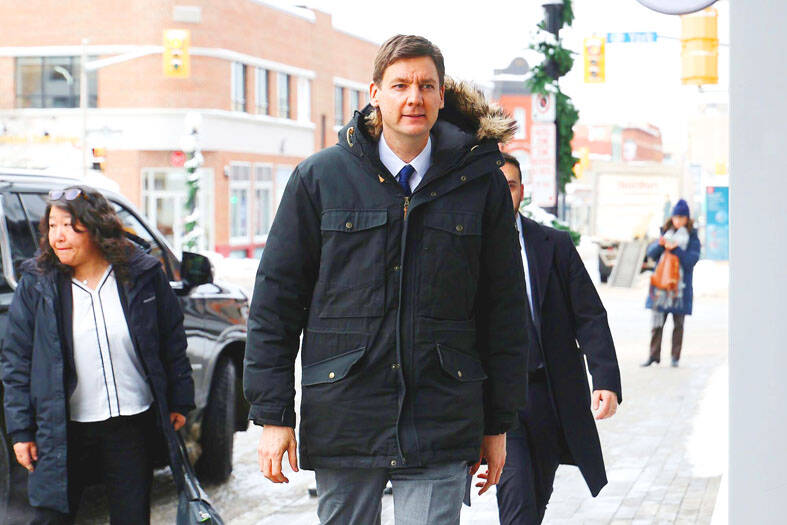
Photo: Bloomberg
“We are done waiting. British Columbia is going to change our clocks just one more time — and then never again,” British Columbia Premier David Eby told reporters, adding that he hoped “our American neighbors” would adopt a similar change. The move puts British Columbia in line with the Yukon territory to its north.
In 2019, public consultations showed that 93 percent of residents surveyed said they wanted permanent daylight saving time. However, despite that strength of feeling, the province kept switching to match the US and facilitate cross-border trade and travel.
However, in announcing the new policy, it cited “recent actions” from its southern neighbor, in what was likely a reference to the sustained trade war and threats to Canadian sovereignty from the Trump administration.
British Columbia authorities said the changes would lead to “more usable light in the evenings in winter” and a “reduced administrative burden” for swaths of the province.
The Peace region in northern British Columbia, which previously observed mountain standard time year-round, is now on the same time as most other places in the province with the new time zone. Previously, the region spent its winters aligned with Alberta and then one hour behind in the summer.
The new time zone means that other mountain communities that observe mountain time, but switch between standard and daylight saving times, would be aligned with the rest of the province during the winter months, but would be one hour ahead in the summer. However, those towns could shift — either as a group or on their own, like Creston did.
“Just as they can today, local governments will retain the power to determine what time zone they observe,” the government said. “They can choose to shift to permanent daylight time and Pacific time, along with the rest of BC, if they prefer.”
“The feedback we’ve received from the public … is [that] people want to be on the same time as the rest of British Columbia,” Cranbrook Mayor Wayne Price told CBC News.
Industry groups expressed frustration with the move.
“The unilateral change in time is an unwelcome distraction that will make it more difficult to attract and retain businesses in British Columbia,” Bridgitte Anderson, president and CEO of the Greater Vancouver Board of Trade, said in a statement. “The choice to change the time unilaterally will create an additional headache for businesses operating on both sides of the border.”
The Vancouver airport authority said it would “work with industry to better understand the potential schedule and passenger implications” of shifting time zones without neighboring jurisdictions doing the same.

Hungarian authorities temporarily detained seven Ukrainian citizens and seized two armored cars carrying tens of millions of euros in cash across Hungary on suspicion of money laundering, officials said on Friday. The Ukrainians were released on Friday, following their detention on Thursday, but Hungarian officials held onto the cash, prompting Ukraine to accuse Hungary’s Russia-friendly government of illegally seizing the money. “We will not tolerate this state banditism,” Ukrainian Minister of Foreign Affairs Andrii Sybiha said. The seven detained Ukrainians were employees of the Ukrainian state-owned Oschadbank, who were traveling in the two armored cars that were carrying the money between Austria and

Kosovar President Vjosa Osmani on Friday after dissolving the Kosovar parliament said a snap election should be held as soon as possible to avoid another prolonged political crisis in the Balkan country at a time of global turmoil. Osmani said it is important for Kosovo to wrap up the upcoming election process and form functional institutions for political stability as the war rages in the Middle East. “Precisely because the geopolitical situation is that complex, it is important to finish this electoral process which is coming up,” she said. “It is very hard now to imagine what will happen next.” Kosovo, which declared

MORE BANS: Australia last year required sites to remove accounts held by under-16s, with a few countries pushing for similar action at an EU level and India considering its own ban Indonesia on Friday said it would ban social media access for children under 16, citing threats from online pornography, cyberbullying, online fraud and Internet addiction. “Accounts belonging to children under 16 on high-risk platforms will start to be deactivated, beginning with YouTube, TikTok, Facebook, Instagram, Threads, X, Bigo Live and Roblox,” Indonesian Minister of Communications and Digital Meutya Hafid said. “The government is stepping in so that parents no longer have to fight alone against the giants of the algorithm. Implementation will begin on March 28, 2026,” she said. The social media ban would be introduced in stages “until all platforms fulfill their
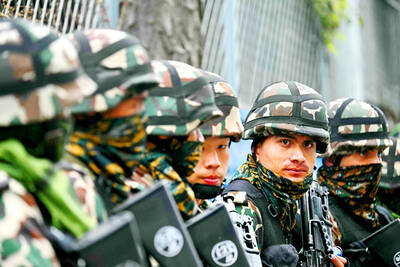
Counting was under way in Nepal yesterday, after a high-stakes parliamentary election to reshape the country’s leadership following protests last year that toppled the government. Key figures vying for power include former Nepalese prime minister K. P. Sharma Oli, rapper-turned-mayor Balendra Shah, who is bidding for the youth vote, and newly elected Nepali Congress party leader Gagan Thapa. In Kathmandu’s tea shops and city squares, people were glued to their phones, checking results as early trends flashed up — suggesting Shah’s centrist Rastriya Swatantra Party (RSP) was ahead. Nepalese Election Commission spokesman Prakash Nyupane said the counting was ongoing “in a peaceful manner”


 RSS
RSS