


Kenya next month is to resume construction of a Chinese-backed railway it abandoned almost seven years ago after funding dried up — this time without taking new loans from Beijing.
Kenya hopes to raise as much as US$4 billion by securitizing a railway levy to fund the 369km extension of the Standard Gauge Railway that halted construction in 2019 an hour outside Nairobi, Kenyan Cabinet Secretary for Roads and Transport Davis Chirchir told lawmakers on Thursday.
The project, which stalled just more than halfway through its planned route, became a symbol of how China’s Belt and Road-era push — more than US$120 billion in government-backed lending across Africa — is fading.
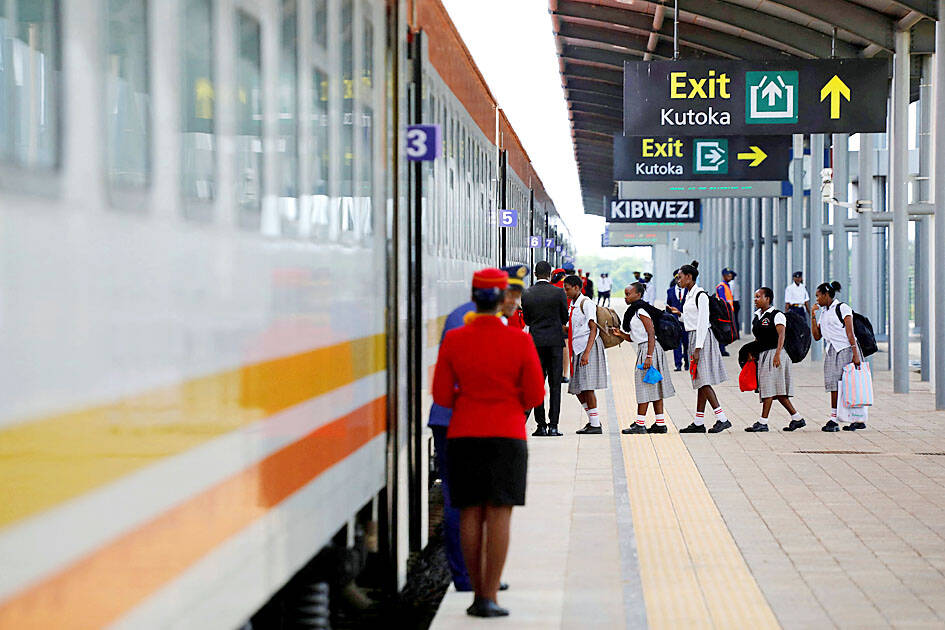
Photo: Reuters
Kenya’s decision to forgo Chinese funding reflects shifting circumstances for developing nations that once relied on Beijing.
The final leg of the railway would cost an additional US$5 billion and continue from Suswa to the lakeside city of Kisumu, and then to Malaba on the border with Uganda. The full route involved multiple branches running into South Sudan and Rwanda.
The Kenyan National Treasury expects to collect 41 billion shillings (US$317.59 million) through June from the 2 percent levy on imports, budget documents showed.
Kenya and the IMF are engaging over the latter’s concerns that such securitization plans amount to government borrowing, but Kenyan Cabinet Secretary for the National Treasury and Economic Planning John Mbadi said such plans do not add to the nation’s mountain of public debt.
Kenya is grappling with rising debt and revenue has fallen short, with the IMF warning it is at high risk of debt distress. The Kenyan government spends about US$1 billion a year servicing loans from China, its largest bilateral creditor.
The levy-backed funding plan follows Gen Z-led protests in 2024 over tax increases and economic hardship.
Kenya last year switched the railway’s dollar loans into yuan, cutting debt-servicing costs by US$215 million a year.
The yuan debt carries interest of about 3 percent and the tenor was extended to 15 years, including a four-year grace period when Kenya would pay interest only, the Kenyan treasury said.
China has raised concerns about Kenya securitizing the railway levy, saying it was contractually earmarked as a backstop for servicing the original Chinese loans, Mbadi said, but added that the government plans to move forward.
Some Chinese involvement remains.
China Road and Bridge Corp, the contractor, is willing to put US$500 million into the railway project, Mbadi said.
Construction began in 2014 between Mombasa and Nairobi on the 472km first phase, completed in 2017. A year later, the next phase started, running about 120km before the line came to an abrupt stop in a thicket near the west of Nairobi.

An American scientist convicted of lying to US authorities about payments from China while he was at Harvard University has rebuilt his research lab in Shenzhen, China, to pursue technology the Chinese government has identified as a national priority: embedding electronics into the human brain. Charles Lieber, 67, is among the world’s leading researchers in brain-computer interfaces. The technology has shown promise in treating conditions such as amyotrophic lateral sclerosis and restoring movement in paralyzed people. It also has potential military applications: Scientists at the Chinese People’s Liberation Army have investigated brain interfaces as a way to engineer super soldiers by boosting
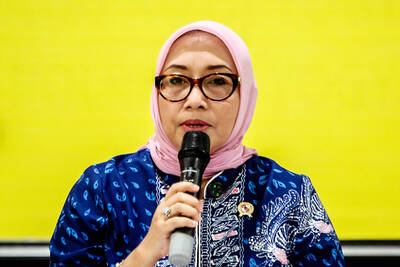
Indonesian police have arrested 13 people after shocking images of alleged abuse against small children at a daycare center went viral, sparking outrage across the nation, officials said on Monday. Police on Friday last week raided Little Aresha, a daycare center in Yogyakarta on Java island, following a report from a former employee. CCTV footage circulating on social media showed children, most younger than two, lying on the floor wearing only diapers, their hands and feet bound with rags. The police have confirmed that the footage is authentic. Police said they also found 20 children crammed into a room just 3m by 3m. “So
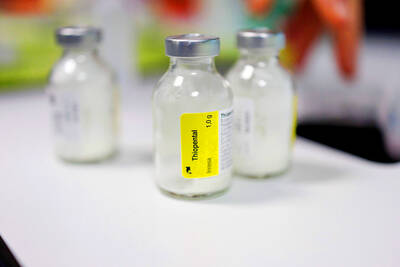
A grieving mother has ended her life at a clinic in Switzerland four years after the death of her only child. Wendy Duffy, 56, a physically healthy woman, died at the Pegasos clinic in Basel after struggling to cope with the death of her 23-year-old son, Marcus. The former care worker, from the West Midlands, England, had previously attempted to take her own life. The case comes as assisted dying would not become law in England and Wales after proposed legislation, branded “hopelessly flawed” by opponents, ran out of time. Ruedi Habegger, the founder of Pegasos, described Duffy’s death as

From post offices and parks to stations and even the summit of Mount Fuji, Japan’s vending machines are ubiquitous, but with the rapid pace of inflation cooling demand for their drinks, operators are being forced to rethink the business. Last month beverage giant DyDo Group Holdings announced it would remove about 20,000 vending machines — about 7 percent of their stock nationwide — by January next year, to “reconstruct a profitable network.” Pokka Sapporo Food & Beverage, based in Nagoya, also said last month it would sell its 40,000-machine operation to Osaka-based Lifedrink Co. “The strength of the vending machine


 RSS
RSS