

AVIATION
TransAsia sells Neihu office
TransAsia Airways Corp (復興航空) yesterday sold its office building in Taipei’s Neihu District (內湖), allowing the company to book a disposal gain of NT$20 million (US$607,903) this quarter, according to the company’s filing with the Taiwan Stock Exchange. TransAsia said its board agreed to sell the buidling, which has eight above-ground floors and three basement floors, to Taiwan Secom Co (中興保全) for NT$694 million, as the company continues working to revitalize its idle assets and strengthen its financial structure. The deal is expected to be completed by the end of this year.
COMPUTERS
Acer ‘will not exit market’
Acer Inc (宏碁) founder and former chairman Stan Shih (施振榮) yesterday said the company will not exit the global PC market, after an International Data Corp (IDC) analyst earlier this month said that Acer and its crosstown rival, Asustek Computer Inc (華碩), could be among some PC vendors to drop out of the market in the future. Shih said the company would continue to improve its operations to compete on the world stage, but he is certain that Acer’s PC operations would move to a leaner workforce. Shih said that the PC division will no longer hire new employees.
COMPONENTS
Synnex reports Q3 profit
Synnex Technology International Corp (聯強國際) yesterday reported net profit of NT$300 million for last quarter, with earnings per share (EPS) of NT$0.19, while consolidated sales for last quarter were NT$84.5 billion. The company said financial results for last quarter were generally stronger than the previous quarter, but significantly weakened from a year earlier due to the lack of new product release and the impact from currency depreciation. For this quarter, the company expects the launches of Apple Inc’s iPhone 6S and the new generation for Microsoft Corp and Apple tablets as well as the release of Intel Corp’s Skylake processor to boost the overall market demand, while allowing the company to register a substantial revenue growth from last quarter.
SOLAR ENERGY
Giga Solar might see boost
As China has raised its solar installation demand to between 7 and 8 gigawatts this quarter, Giga Solar Materials Corp (碩禾), a photovoltaic conductive paste maker, might see its fourth-quarter revenue grow 11 percent from last quarter, with EPS of NT$10.5, Yuanta Securities Investment Consulting Co (元大投顧) said in a note yesterday. The brokerage also revised upward its revenue forecasts for Giga Solar this year by 64 percent and for next year by 28 percent, citing decent solar power demand growth ahead. In the third quarter, the company reported a net income of NT$928 million, or EPS of NT$15.25, with revenue of NT$4.51 billion, beating market expectations.
ELECTRONICS
Chilisin’s income grows 14%
Power inductor maker Chilisin Electronics Corp (奇力新) on Wednesday reported better-than-expected profit for last quarter, thanks to foreign exchange gains and a lower income tax rate. The company, which competes Holy Stone Enterprise Co (禾伸堂) and Yageo Corp (國巨) in Taiwan as well as TDK Corp of Japan, said net income grew 14 percent to NT$153 million from the previous quarter, with earnings per share of NT$1.2. However, the firm’s operating income only grew 1 percent to NT$151 million from the second quarter, due to higher operating expenses.

Bankers in Hong Kong skipped the summer break as an artificial intelligence (AI)-fueled rush for capital sent share sales to a record, defying a bruising selloff in the city’s stocks. Initial public offerings (IPOs), placements and block trades raised US$47.5 billion in July to last month, the biggest haul ever for the period, data compiled by Bloomberg showed. That pushed fundraising this year above US$92 billion and within reach of the US$112.5 billion record set in 2021. AI has been at the heart of Hong Kong’s deal revival, but this summer brought a new level of intensity. Chinese companies raised ever-larger sums
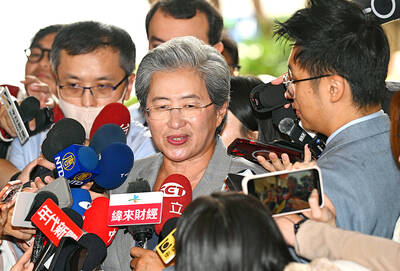
SILICON ISLAND: When asked about geopolitical tensions, Lisa Su said that ‘Taiwan is absolutely critical to the semiconductor supply chain, and very, very critical for AMD’ Advanced Micro Devices Inc (AMD) CEO Lisa Su (蘇姿丰) yesterday said the company plans to “substantially” increase manufacturing capacity next year through its Taiwanese supply chain, particularly with Taiwan Semiconductor Manufacturing Co (TSMC, 台積電), as surging demand for artificial intelligence (AI)-related processors continues to outstrip supply. “It is a very exciting time right now for all kinds of compute, and especially on the CPU [central processing unit] side,” Su said during a visit to Taiwan. “The overall market has increased a lot in 2026, and so we have also increased our own supply and capacity in 2026, but I can
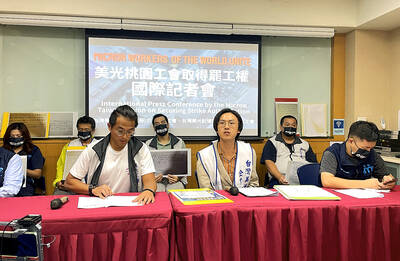
INDUSTRY STANDARD: Most global semiconductor companies have tied employee bonuses directly to corporate profits, the union said, urging Micron to do the same Micron Memory Taiwan Co’s (台灣美光) Taoyuan union secured strike authorization yesterday after a six-day vote, ramping up pressure on management to build a reasonable profit-sharing mechanism. Before the strike, the Taoyuan union “encourages” members to join a protest in Taipei on Oct. 19, union chairman Jerry Lin (林哲瑞) told a news conference in Taipei. The union did not rule out staging a snap strike, Lin said. The union has 2,258 registered members, with 88.3 percent backing the strike, he said. The vote comes as Micron’s board of directors is meeting today and tomorrow in the US. The union expects the board to respond

Sea levels in California are set to rise by as much as a foot (30cm) in the coming days as an enormous wave washes up the US West Coast. The huge surge of energy, known as a “coastal trapped wave” or a “Kelvin wave,” is part of El Nino, a months-long phenomenon in the Pacific Ocean that scientists say could generate powerful storms and floods in some parts of the world, while leaving others in drought. The Kelvin wave is not anything like a tsunami; nor does it crash on beaches. Rather it is a sustained bulge of excess water up to


 RSS
RSS