


In a faded rehearsal hall in the gritty concrete sprawl of northern Rio de Janeiro, samba dancers and drummers fine-tune their rhythms for a grassroots carnival parade few tourists have heard of.
Remnants of donated props and floats from parades past lie around the space under a viaduct that doubles as a driving school parking lot.
The scene stands in stark contrast to the glittering spectacle of the world-famous Sambodrome parade, which critics said has grown increasingly distant from the poor neighborhoods that sustain the roots of samba.
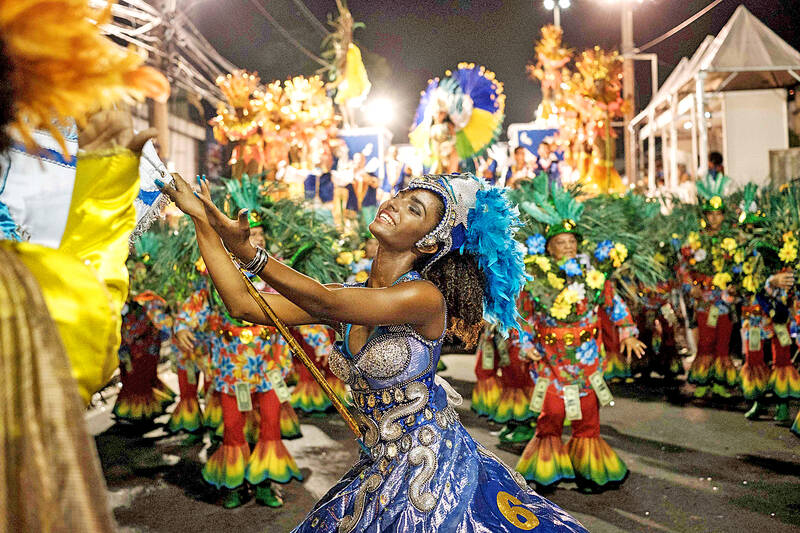
Photo: AFP
Drum master Americo Teofilo, 37, dreams of performing among the greats, but is proud to parade in a parallel event in Rio de Janeiro’s densely populated north zone, which he describes as “more for the people.”
“The one in the Sambodrome, I am not criticizing, but it is becoming more elitist. But I love both!” he said.
It has been 20 years since his storied samba school, Caprichosos de Pilares, last paraded down the Sambodrome avenue, before tumbling into the bottom division of a competition structured much like a soccer league.
Rio’s Carnival period started yesterday, with the top schools kicking off three days of glittering parades tomorrow.
Teofilo recalled how as a child, his whole family, despite being poor, could afford front-row seats at the Sambodrome. Now, tickets cost about US$300 each. This is roughly the minimum monthly wage in Brazil. The cheapest tickets in the grandstands are about US$35.
VIP boxes have multiplied along the avenue, with tickets selling for hundreds of dollars and the presence of celebrities such as soccer star Neymar or supermodel Gisele Bundchen.
Some promote big-name DJs and music stars, which have drawn complaints and fines for drowning out the sounds of samba.
“Sometimes the parade is going on and the electronic music is there, you know?” Teofilo said.
The parade along Intendente Magalhaes avenue, where dozens of schools compete to claw their way up the ranks, is free to watch and pure homegrown samba.
Samba and carnival roots are deeply tied to poor, Afro-Brazilian neighborhoods, where community organizations known as samba schools evolved and work year round to make the show happen.
Performing in the top ranks now costs millions of dollars, which schools put toward towering floats, dazzling crystal and feather-covered outfits, and the pomp that make the parade a global attraction.
Paulinha Peixoto, 39, who leads the samba dancers, known for striking outfits and dizzying footwork, said putting on a show was “a team effort.”
“We know that the costs are out of our own pockets... One fixes the other’s hair, one helps with the other’s makeup. It’s samba in our feet, samba in our veins, love in our hearts, and that’s it,” she said, adding that making it to the Sambodrome was every dancer’s dream.
“It’s dazzling, it’s enchanting. But there’s a disconnect. Nowadays it’s a luxury carnival, a carnival of feathers, sequins, VIP boxes,” Peixoto said.
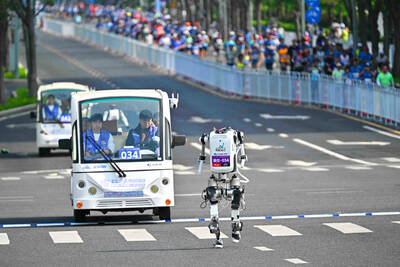
A humanoid robot that won a half-marathon race for robots in Beijing on Sunday ran faster than the human world record in a show of China’s technological leaps. The winner from Honor, a Chinese smartphone maker, completed the 21km race in 50 minutes and 26 seconds, said a WeChat post by the Beijing Economic-Technological Development Area, also known as Beijing E-Town, where the race began. That was faster than the human world record holder, Ugandan Jacob Kiplimo, who finished the same distance in about 57 minutes in March at the Lisbon road race. The performance by the robot marked a significant step forward
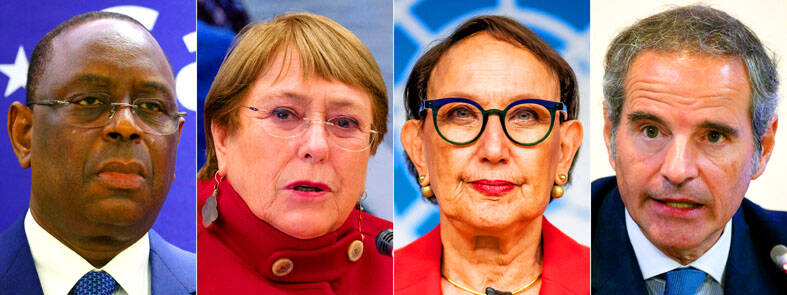
Four contenders are squaring up to succeed Antonio Guterres as secretary-general of the UN, which faces unprecedented global instability, wars and its own crushing budget crisis. Chile’s Michelle Bachelet, Argentina’s Rafael Grossi, Costa Rica’s Rebeca Grynspan and Senegal’s Macky Sall are each to face grillings by 193 member states and non-governmental organizations for three hours today and tomorrow. It is only the second time the UN has held a public question-and-answer, a format created in 2016 to boost transparency. Ultimately the five permanent members of the UN’s top body, the Security Council, hold the power, wielding vetoes over who leads the
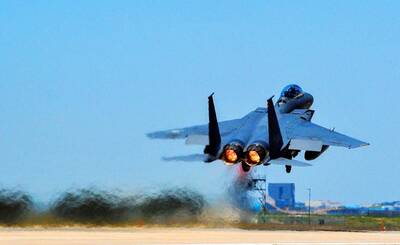
South Korea’s air force yesterday apologized for a 2021 midair collision involving two fighter jets, a day after auditors said the pilots were taking selfies and filming during the flight and held them responsible for the accident. “We sincerely apologize to the public for the concern caused by the accident that occurred in 2021,” an air force spokesman told a news conference, adding that one of the pilots involved had been suspended from flying duties, received severe disciplinary action and has since left the military. The apology followed a report released on Wednesday by the South Korean Board of Audit and Inspection,

An earthquake registering a preliminary magnitude of 7.7 off northern Japan on Monday prompted a short-lived tsunami alert and the advisory of a higher risk of a possible mega-quake for coastal areas there. The Cabinet Office and the Japan Meteorological Agency said there was a 1% chance for a mega-quake, compared to a 0.1% chance during normal times, in the next week or so following the powerful quake near the Chishima and Japan trenches. Officials said the advisory was not a quake prediction but urged residents in 182 towns along the northeastern coasts to raise their preparedness while continuing their daily lives. Prime


 RSS
RSS