


Anger is mounting in Senegal over the alleged use of expired materials in sanitary pads and diapers by a leading Chinese firm, which denies any wrongdoing or bribery.
The west African country’s pharmaceutical regulator late last year accused Softcare of possessing about 1,300kg of expired and unsuitable raw materials, including polyethylene film, for use in its products.
The Senegalese Pharmaceutical Regulatory Agency in early December asked Softcare to withdraw the goods in question from the market until the manufacturing process is “brought into compliance.”
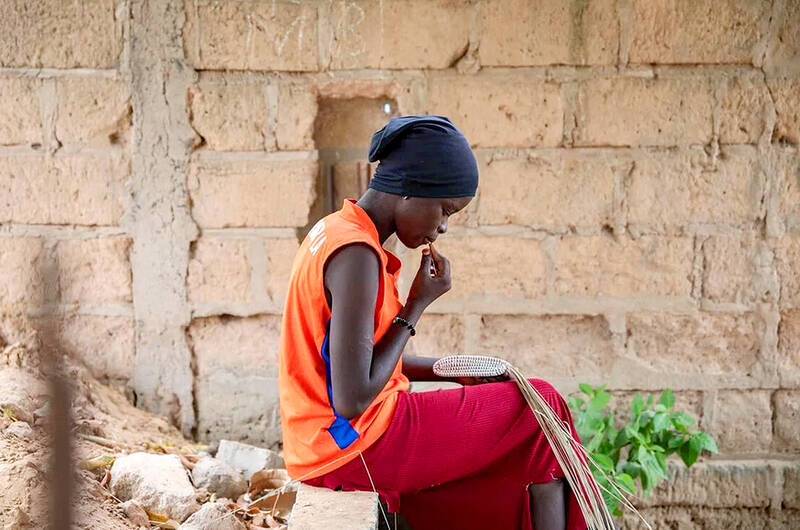
PHOTO: AFP
This followed an inspection at Softcare’s Senegalese factory.
However, eight days later, the regulator’s director said documents provided by Softcare showed “expired raw materials were not incorporated into the production process.”
The inspectors stood by their findings and reports began circulating on social media that the products were making people itch.
Softcare denies the use of expired or unsuitable materials.
At a rally last month near the Senegalese Ministry of Health and Social Action attended by several dozen people, opposition MP Guy Marius Sagna accused the health minister of not reacting to the scandal for three weeks.
“Enough is enough,” Sagna said, while those present also spoke of the “complicit” and “unacceptable” silence of the authorities.
In west and central Africa, many women and girls struggle to access quality menstrual products.
Softcare is a subsidiary of the Chinese group Sunda International, which sells products in more than 30 countries across the globe, including a dozen in Africa, where it has operated since 2009.
It has production and distribution centers in Kenya, Ghana, Ivory Coast, Senegal, Uganda, Nigeria and Cameroon among others.
Diabel Drame, a Senegalese doctors’ union leader, said that “such sensitive products, when manufactured with inappropriate materials, can cause irritation, itching, allergies or even infection.”
Pharmacist Alima Niang, who is highly active on social media and has posted about the issue, said that multiple women have reported itching after using Softcare’s sanitary pads.
A comment on a TikTok post by Niang said: “I used them twice on my niece’s recommendation, but stopped because they made me itch.”
“That was in 2024, and I’m not the only one who experienced itching after using the product,” she wrote.
Asked for comments, Softcare said the batch of materials involved in the scandal was never used “before or after” the controversy.
The material is in a disused warehouse, awaiting destruction, it said.
Moussa Diallo, the official who led the Softcare inspection mission, and two other inspectors, rejected the Senegal pharmaceutical regulator’s U-turn.
Diallo said on social media that he declined bribery attempts by Softcare agents who came to his office “on four occasions, carrying suitcases full of money and gifts.”
Softcare officials in Senegal called the accusations “unfounded,” “defamatory” and “slanderous.”
The firm said its business is operating at reduced capacity due to the mistrust surrounding the case.
Early last month, Senegal’s health ministry said a “joint investigative mission” would provide “precise” conclusions.
A parliamentary fact-finding mission announced in the middle of last month the launch of hearings over the decision to withdraw and then reinstate the products.
Souleymane Gueye, a member of the FRAPP citizen movement, said the authorities were “dragging their feet” and promised further protests.
The Softcare affair revived criticism on social media from Cameroonian consumers, where the brand had sparked controversy in September, with some reporting itching and burning sensations from the products.
Sunda International’s Cameroonian subsidiary responded by citing the circulation of counterfeit products.
Concerns about the quality of menstrual pads in Africa are not isolated to Softcare.
In Kenya, a survey last year of 9,500 people by global women’s rights group Nguvu Collective highlighted significant quality disparities between brands and often insufficient adherence to hygiene standards in several African markets.

VAGUE: The criteria of the amnesty remain unclear, but it would cover political violence from 1999 to today, and those convicted of murder or drug trafficking would not qualify Venezuelan Acting President Delcy Rodriguez on Friday announced an amnesty bill that could lead to the release of hundreds of prisoners, including opposition leaders, journalists and human rights activists detained for political reasons. The measure had long been sought by the US-backed opposition. It is the latest concession Rodriguez has made since taking the reins of the country on Jan. 3 after the brazen seizure of then-Venezuelan president Nicolas Maduro. Rodriguez told a gathering of justices, magistrates, ministers, military brass and other government leaders that the ruling party-controlled Venezuelan National Assembly would take up the bill with urgency. Rodriguez also announced the shutdown

Civil society leaders and members of a left-wing coalition yesterday filed impeachment complaints against Philippine Vice President Sara Duterte, restarting a process sidelined by the Supreme Court last year. Both cases accuse Duterte of misusing public funds during her term as education secretary, while one revives allegations that she threatened to assassinate former ally Philippine President Ferdinand Marcos Jr. The filings come on the same day that a committee in the House of Representatives was to begin hearings into impeachment complaints against Marcos, accused of corruption tied to a spiraling scandal over bogus flood control projects. Under the constitution, an impeachment by the

Exiled Tibetans began a unique global election yesterday for a government representing a homeland many have never seen, as part of a democratic exercise voters say carries great weight. From red-robed Buddhist monks in the snowy Himalayas, to political exiles in megacities across South Asia, to refugees in Australia, Europe and North America, voting takes place in 27 countries — but not China. “Elections ... show that the struggle for Tibet’s freedom and independence continues from generation to generation,” said candidate Gyaltsen Chokye, 33, who is based in the Indian hill-town of Dharamsala, headquarters of the government-in-exile, the Central Tibetan Administration (CTA). It

China executed 11 people linked to Myanmar criminal gangs, including “key members” of telecom scam operations, state media reported yesterday, as Beijing toughens its response to the sprawling, transnational industry. Fraud compounds where scammers lure Internet users into fake romantic relationships and cryptocurrency investments have flourished across Southeast Asia, including in Myanmar. Initially largely targeting Chinese speakers, the criminal groups behind the compounds have expanded operations into multiple languages to steal from victims around the world. Those conducting the scams are sometimes willing con artists, and other times trafficked foreign nationals forced to work. In the past few years, Beijing has stepped up cooperation


 RSS
RSS