


The Alaska Airlines pilot who has been universally praised as a hero for safely landing a jet after a door plug panel flew off shortly after takeoff is suing Boeing because he believes the plane maker wrongly tried to blame him and the rest of the crew.
Captain Brandon Fisher was commended by the heads of the US National Transportation Safety Board, the US Federal Aviation Administration and Boeing executives for helping ensure that none of the 177 people aboard Flight 1282 were killed when the blowout happened in January 2024.
However, Fisher’s lawyers said that Boeing’s attempts to deflect liability in past lawsuits, despite what the board’s investigation, found, led to the pilot being sued by some passengers and caused him great distress.
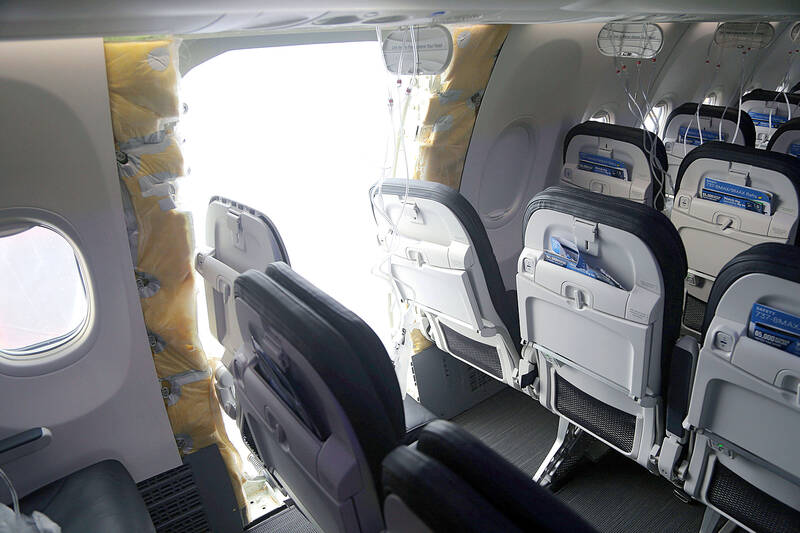
Photo: AP
Four flight attendants previously sued Boeing over the incident last summer.
Fisher’s lawsuit says that Boeing suggested it was not responsible because the plane was “improperly maintained or misused” by others.
“It was clear Boeing’s words were directed at Captain Fisher in attempt to paint him as the scapegoat for Boeing’s numerous failures,” Fisher’s lawyers, William Walsh and Richard Mummolo, wrote in the lawsuit filed in an Oregon court on Tuesday.
The investigation of the blowout found that four bolts securing what is known as the door plug panel were removed and never replaced during a repair as the Boeing 737 Max 9 aircraft was being assembled.
Boeing and key supplier Spirit Aerosystems, which has since been acquired by Boeing, were both implicated.
The bolts are hidden behind interior panels in the plane, so they are not something that could have been easily checked in a preflight inspection by the pilot or anyone else from the airline.
Investigators said that the door plug was gradually moving upward over the 154 flights prior to the incident before it ultimately flew off.
“Boeing’s lie infuriated Captain Fisher as well, as he was being castigated for his actions as opposed to being lauded,” Fisher’s lawyers wrote. “Because he had flown Boeing aircraft for the entirety of his employment with Alaska Airlines, Boeing’s attempts to blame him felt like a deep, personal betrayal by a company that claimed to hold pilots in the highest regard.”
The board said that the incident was caused by a manufacturing issue and the crew’s actions were exemplary.
John Cox, who is chief executive officer of the Safety Operating Systems aviation safety consulting firm, said the crew did a remarkable job considering what they were dealing with and no one has faulted the crew.
“I think the Boeing lawyers were kind of grasping at straws,” Cox said.
The blowout occurred minutes after the flight took off from Portland, Oregon, and created a roaring air vacuum.
Seven passengers and one flight attendant sustained minor injuries, but the plane landed safely.
The 61cm-by-122cm piece of fuselage covering an unused emergency exit behind the left wing had blown out. Only seven seats on the flight were unoccupied, including the two seats closest to the opening.
Boeing factory workers told investigators they felt pressured to work too fast and were asked to perform jobs they were not qualified for.
Fisher’s lawsuit describes how he and the first officer acted quickly after losing cabin pressure when the panel blew out to fly the plane safely back to Portland while decreasing altitude and working with air traffic controllers to avoid any other planes in the area.
The airline did not answer a question about whether Fisher is still flying for it, and the lawsuit described him as a citizen and well-respected member of the aviation community.
It was not clear on Tuesday whether he is still working as a pilot.
The head of the commercial airplane unit at Boeing at the time, Stan Deal, commended the Alaska Airlines crew for safely landing the plane in a memo to employees after the incident.
Boeing did not comment directly on the new lawsuit.
However, Kelly Ortberg, the company’s chief executive officer, has made improving safety a top priority ever since he took over the top job at Boeing in August 2024.
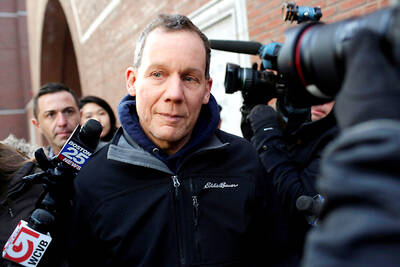
An American scientist convicted of lying to US authorities about payments from China while he was at Harvard University has rebuilt his research lab in Shenzhen, China, to pursue technology the Chinese government has identified as a national priority: embedding electronics into the human brain. Charles Lieber, 67, is among the world’s leading researchers in brain-computer interfaces. The technology has shown promise in treating conditions such as amyotrophic lateral sclerosis and restoring movement in paralyzed people. It also has potential military applications: Scientists at the Chinese People’s Liberation Army have investigated brain interfaces as a way to engineer super soldiers by boosting
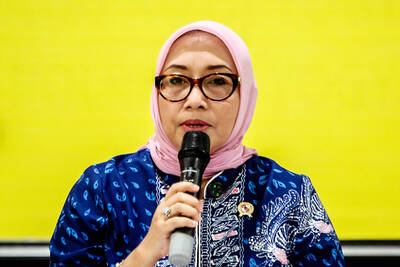
Indonesian police have arrested 13 people after shocking images of alleged abuse against small children at a daycare center went viral, sparking outrage across the nation, officials said on Monday. Police on Friday last week raided Little Aresha, a daycare center in Yogyakarta on Java island, following a report from a former employee. CCTV footage circulating on social media showed children, most younger than two, lying on the floor wearing only diapers, their hands and feet bound with rags. The police have confirmed that the footage is authentic. Police said they also found 20 children crammed into a room just 3m by 3m. “So
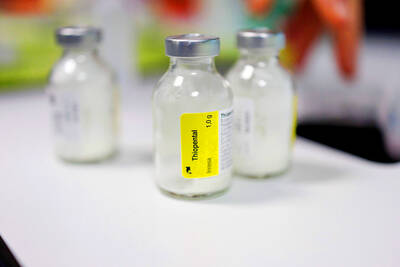
A grieving mother has ended her life at a clinic in Switzerland four years after the death of her only child. Wendy Duffy, 56, a physically healthy woman, died at the Pegasos clinic in Basel after struggling to cope with the death of her 23-year-old son, Marcus. The former care worker, from the West Midlands, England, had previously attempted to take her own life. The case comes as assisted dying would not become law in England and Wales after proposed legislation, branded “hopelessly flawed” by opponents, ran out of time. Ruedi Habegger, the founder of Pegasos, described Duffy’s death as
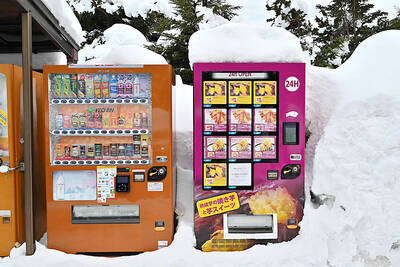
From post offices and parks to stations and even the summit of Mount Fuji, Japan’s vending machines are ubiquitous, but with the rapid pace of inflation cooling demand for their drinks, operators are being forced to rethink the business. Last month beverage giant DyDo Group Holdings announced it would remove about 20,000 vending machines — about 7 percent of their stock nationwide — by January next year, to “reconstruct a profitable network.” Pokka Sapporo Food & Beverage, based in Nagoya, also said last month it would sell its 40,000-machine operation to Osaka-based Lifedrink Co. “The strength of the vending machine


 RSS
RSS