


Bulgaria yesterday became the 21st country to switch to the euro as it entered the new year, a milestone met with cheers and fears, nearly 20 years after the Balkan nation joined the EU.
At midnight, Bulgaria gave up the lev currency, which has been in use since the late 19th century, and Bulgarian euro coins were projected onto the central bank’s building.
Successive governments in the country of 6.4 million people have advocated joining the euro, hoping that it would boost the economy of the EU’s poorest member, reinforce ties to the West and protect against Russia’s influence.
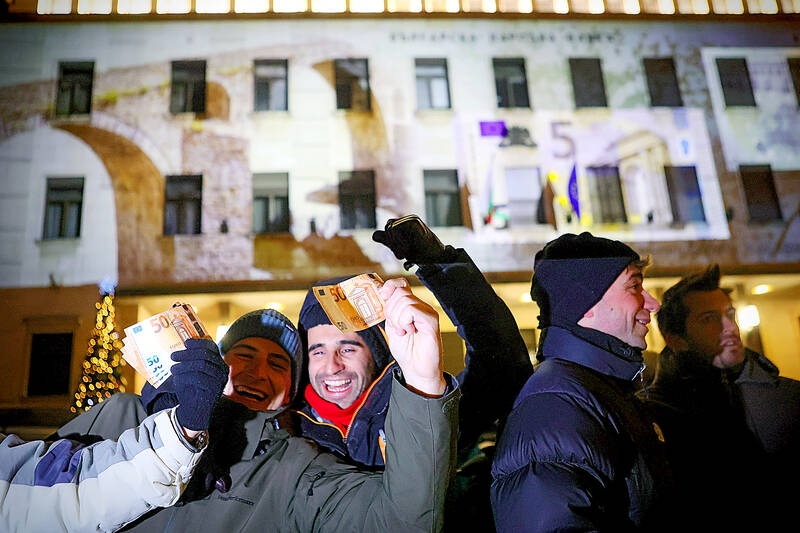
Photo: AP
Bulgarians have long been divided over the switch, with many worrying the introduction could usher in higher prices and add to the political instability rattling the country.
In a speech broadcast shortly before midnight, Bulgarian President Rumen Radev hailed the euro adoption as the “final step” in Bulgaria’s EU integration, as thousands of people braved subzero temperatures in the capital, Sofia, to celebrate the new year.
However, Radev voiced regret that Bulgarians had not been consulted by referendum on the adoption.
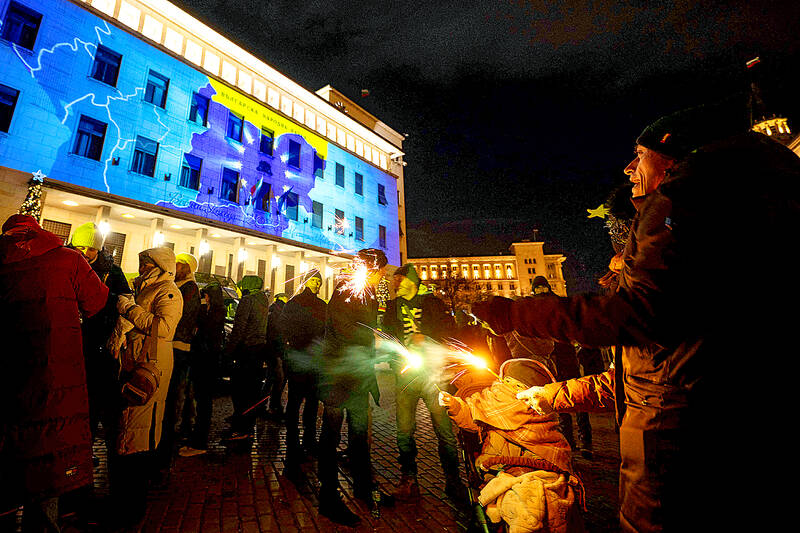
Photo: AFP
“This refusal was one of the dramatic symptoms of the deep divide between the political class and the people, confirmed by mass demonstrations across the country,” he said.
Anti-corruption protests swept a conservative-led government from office in the middle of last month, leaving a country anxious about inflation on the verge of its eighth election in five years.
“People are afraid that prices will rise, while salaries will remain the same,” said a woman in her 40s in Sofia who declined to give her name.
At one of the city’s largest markets, stalls displayed prices of everything from groceries to New Year’s Eve essentials such as sparklers in levs and euros.
“The whole of Europe has managed with the euro, we’ll manage, too,” retiree Vlad said.
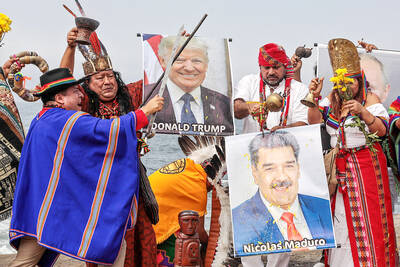
Shamans in Peru on Monday gathered for an annual New Year’s ritual where they made predictions for the year to come, including illness for US President Donald Trump and the downfall of Venezuelan President Nicolas Maduro. “The United States should prepare itself because Donald Trump will fall seriously ill,” Juan de Dios Garcia proclaimed as he gathered with other shamans on a beach in southern Lima, dressed in traditional Andean ponchos and headdresses, and sprinkling flowers on the sand. The shamans carried large posters of world leaders, over which they crossed swords and burned incense, some of which they stomped on. In this
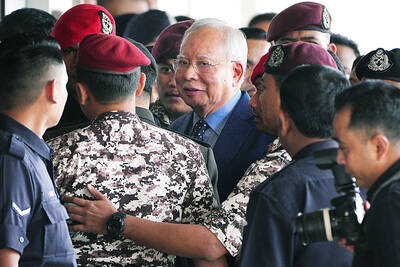
‘NO COUNTRY BUMPKIN’: The judge rejected arguments that former prime minister Najib Razak was an unwitting victim, saying Najib took steps to protect his position Imprisoned former Malaysian prime minister Najib Razak was yesterday convicted, following a corruption trial tied to multibillion-dollar looting of the 1Malaysia Development Berhad (1MDB) state investment fund. The nation’s high court found Najib, 72, guilty on four counts of abuse of power and 21 charges of money laundering related to more than US$700 million channeled into his personal bank accounts from the 1MDB fund. Najib denied any wrongdoing, and maintained the funds were a political donation from Saudi Arabia and that he had been misled by rogue financiers led by businessman Low Taek Jho. Low, thought to be the scandal’s mastermind, remains
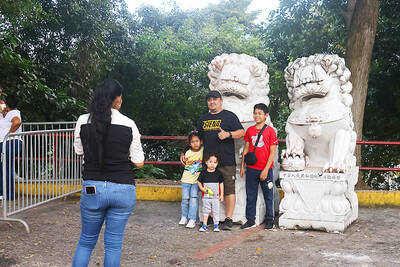
Near the entrance to the Panama Canal, a monument to China’s contributions to the interoceanic waterway was torn down on Saturday night by order of local authorities. The move comes as US President Donald Trump has made threats in the past few months to retake control of the canal, claiming Beijing has too much influence in its operations. In a surprising move that has been criticized by leaders in Panama and China, the mayor’s office of the locality of Arraijan ordered the demolition of the monument built in 2004 to symbolize friendship between the countries. The mayor’s office said in
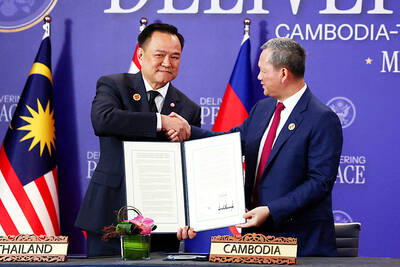
FIGHTING CONTINUES: Thai military dropped 40 bombs on border areas, Cambodia said, while Bangkok said Phnom Penh launched heavy attacks and damaged homes Cambodia yesterday accused Thailand of intensifying its bombardment of disputed border areas, even as officials from the two countries attend a multi-day meeting aimed at negotiating an end to deadly clashes. The neighbors’ long-standing border conflict reignited this month, shattering an earlier truce and killing more than 40 people, according to official counts. About 1 million people have also been displaced. Cambodian and Thai officials were in their third day of talks at a border checkpoint, with ministers of defense from the two countries scheduled to meet today. However, the Cambodian Ministry of National Defense said Thailand’s military carried out a heavy


 RSS
RSS