


The Brazilian Supreme Court on Thursday sentenced firebrand former president Jair Bolsonaro to 27 years in prison for coup plotting at the end of a landmark trial that divided the nation and drew the fury of US President Donald Trump.
The sentence could see the 70-year-old far-right leader spend the rest of his days in jail.
Judges voted 4-1 to convict Bolsonaro of plotting to overthrow Brazilian President Luiz Inacio Lula da Silva following his October 2022 election defeat by the left-winger.

Photo: AP
Prosecutors said the plan failed only due to a lack of support from military top brass.
Bolsonaro’s defense team called the sentence “incredibly excessive” and announced he would appeal, “including at the international level.”
Washington was quick to respond to the conviction of the man dubbed “the Trump of the tropics” after his election in 2019.
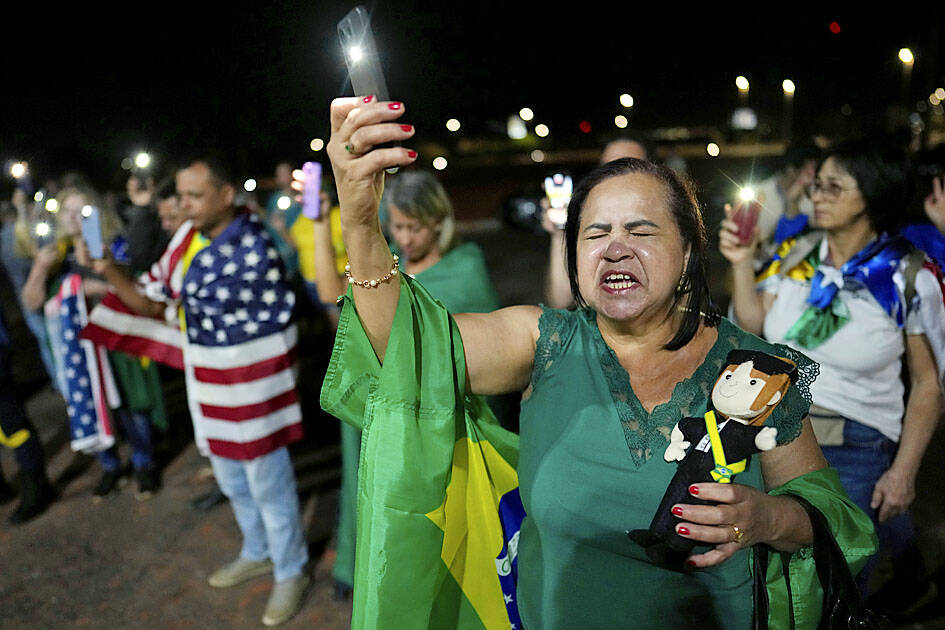
Photo: AP
US Secretary of State Marco Rubio said the United States “will respond accordingly” to what he called a politically motivated “witch hunt.”
The Brazilian Ministry of Foreign Affairs hit back, saying it would not be intimidated by Rubio’s “threats.”
A ‘GOOD MAN’
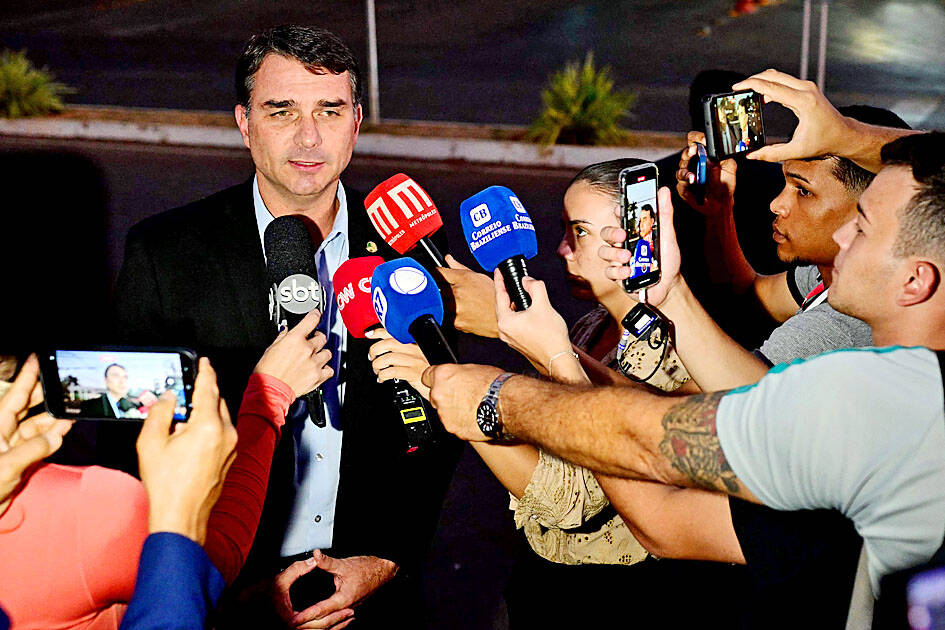
Photo: AFP
Trump, who levied steep tariffs on Brazil as punishment over Bolsonaro’s prosecution, labeled the verdict “very surprising.”
He praised Bolsonaro as a “good president” and “good man” and said his legal woes were “very much like they tried to do with me.”
While the Brazilian Supreme Court had already garnered the simple majority of three votes needed for his conviction after the fourth vote, it only became final after the last of the five judges issued his decision.
“An armed criminal organization was formed by the defendants, who must be convicted based on the factual circumstances I consider proven,” said the fifth judge, Cristiano Zanin, Lula’s former lawyer.
Bolsonaro’s seven coaccused, including former ministers and military chiefs, were also convicted.
The former army captain, who served a single term from 2019 to 2022, says he is the victim of political persecution.
Speaking outside his father’s home in Brasilia, Bolsonaro’s lawmaker son Flavio Bolsonaro said the politician was “holding his head high in the face of this persecution, because history will show that we are on the right side.”
He added that his father’s allies would act with “all their might” to secure the Brazilian Congress’s support for an amnesty bill.
ASSASSINATION PLOT
Bolsonaro’s conviction came after one of the biggest and most divisive trials in Brazil’s recent history, which ended with a nail-biting vote that stretched over four days.
Apart from heading a “criminal organization,” the former Brazilian senator was charged with knowing of a plan to assassinate Lula, Brazilian Vice President Geraldo Alckmin and Supreme Court Justice Alexandre Moraes.
Bolsonaro was also found guilty of inciting the violent 2023 storming of the Brazilian Supreme Court, presidential palace and Congress in Brasilia by hundreds of his supporters, a week after Lula was inaugurated as his successor.
He himself did not attend the verdict hearings in the capital, Brasilia, instead following the proceedings from his residence, where he is under house arrest.
Across the nation, Brazilians were glued to the proceedings on TV and social media.
In one Brasilia bar, patrons watching the trial on a giant screen burst into applause after he was convicted.
“After so much waiting, this despicable individual is being sent to jail,” said translator Virgilio Soares, 46.
However, Germano Cavalcante, a 60-year-old civil engineer, called the trial “unfair.”
The case drove a deep wedge through Brazilian society, between those primarily on the left who saw it as a vital test of the country’s democracy, and those mainly on the right who viewed it as a political show trial.
It also led to an unprecedented crisis in relations between the US and longtime partner Brazil. Besides the tariffs punishment, Washington has also sanctioned Moraes and other Supreme Court judges.
Bolsonaro is the fourth former Brazilian president to be convicted since the return to democracy in 1985 after a two-decade military dictatorship.
Lula spent 19 months in prison in 2018 and 2019 on corruption charges that were later overturned.
The 79-year-old, whose popularity had plummeted before Bolsonaro’s trial, has been boosted by the standoff with the US.
He has styled himself as the guardian of Brazil’s sovereignty in the face of alleged US meddling in its affairs and indicated he would run for reelection next year.

SPEAKING OUT: After Siranudh Scott’s allegations surfaced, celebrities and public figures took to social media to share their own experiences of sexual misconduct and abuse A high-profile alleged sexual abuse case within a wealthy Thai beer brewing family has prompted a wave of painful accounts from survivors of unconnected abuse in the conservative nation. Siranudh Scott, a member of the billionaire Thai family that founded the ubiquitous Singha beer brand, posted an emotional video this month accusing his elder brother Sunit of repeatedly abusing him when he was a teenager. Sunit, who is in his 30s, later denied the allegations in a video posted online, but Singha parent Boonrawd dismissed him from his executive role with the company on Tuesday last week. “I felt I needed to speak

SEEKING ORDER: Rodrigo Paz said that ‘anyone who wants to destroy the nation will have to deal with this president and the full force of the constitution’ Bolivian President Rodrigo Paz on Wednesday said that the nation was at a “breaking point” after nearly a month of protests that have caused shortages of food, fuel and medicine. Paz, who took office six months ago amid the worst economic crisis there in four decades, is battling a groundswell of fury over his policies. The political capital, La Paz, has been besieged by low-income workers and members of the indigenous majority calling for his resignation. “The country needs order and is reaching breaking point,” the 58-year-old said at a public event in La Paz, renewing his appeal for dialogue. On Tuesday, the Bolivian
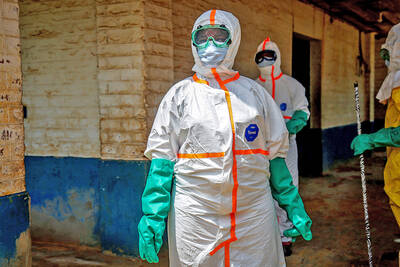
COMMUNITY CONFLICT: Concerns about disease spread from corpses has run up against friends and families’ desire to bury their dead as infection spreads in the area Angry residents of a town at the epicenter of the Ebola outbreak in the Democratic Republic of the Congo (DR Congo) attacked and burned a tent that was part of a health center where people are being treated for the virus, the staff there said Saturday. It was the second such attack in the region in a week. No one was hurt in the attack, according to reports but as patients ran out to escape the fire, 18 people with suspected Ebola infections fled the facility and are unaccounted for, a hospital director said. Angry residents arrived at the clinic in the

Forecasters in Europe yesterday warned of exceptional heat as record temperatures driven by a “heat dome” push temperatures well above seasonal norms across the continent. The surge follows a record-breaking Monday, with France logging its hottest day in the month of May on record, its weather agency said, and the UK also posting unprecedented highs. A so-called “heat dome” of warm air from northern Africa trapped under a high-pressure system over western Europe is behind the high temperatures not usually seen until high summer. Restrictions on outdoor work were imposed in parts of Italy, beaches in southwest France filled earlier than usual and


 RSS
RSS