


A former Hong Kong politician and prominent democracy campaigner has accused British police of asking her to “self-censor” and “retreat from public life” after officers asked her to agree to avoid public gatherings.
The request, outlined in a signed “memorandum of understanding”, has alarmed exiled dissidents who fear it would embolden attempts to silence criticism of Chinese and Hong Kong officials worldwide.
Carmen Lau (劉珈汶), who moved to the UK in 2021, was asked to sign the formal agreement in March by Thames Valley police in South East England after her neighbors received letters offering a £100,000 bounty (US$131,947) for information on her movements or for her being taken to authorities.

Photo: AFP
Thames Valley police requested that Lau “cease any activity that is likely to put you at risk” and “avoid attending public gatherings” such as protests.
Lau is wanted by Hong Kong authorities for allegedly contravening the territory’s National Security Law, which grants sweeping extraterritorial powers to prosecute acts or comments made anywhere in the world that it deems criminal.
She also works with the Hong Kong Democracy Council, a Washington-based organization dedicated to “raising international support for the advancement of its democracy and human rights.”
Tony Chung (鍾翰林), a democracy activist who was jailed under Hong Kong’s national security law, but now lives in the UK, was also the subject of near-identical letters requesting that British citizens inform on him.
While Hong Kong authorities have denied sending the letters, the UK foreign and home secretaries believe they are an example of “transnational repression” and have called on “Chinese and Hong Kong authorities to end the deliberate targeting of opposition voices.”
On Friday last week, British Secretary of State for Foreign, Commonwealth and Development Affairs David Lammy and British Home Secretary Yvette Cooper vowed to protect the “rights and freedoms” of exiled activists in the UK.
However, Lau believes detailed instructions from Thames Valley police in March, days after the letters were discovered, only amplified foreign attempts to silence her.
The bounty letter, which is cited in the memorandum of understanding, states that Lau is wanted due to the political content of her speeches and social media posts that have criticized Hong Kong authorities.
Lau regularly gives speeches criticizing the Chinese government’s targeting of dissidents, including at demonstrations in London.
The police “essentially told me to self-censor,” she said, adding that she felt she had no option but to agree to the request when uniformed officers came to her house, but has not stopped campaigning.
“It is alarming that, instead of safeguarding my right to speak and gather freely in the UK, the response shifts responsibility on to me to limit my basic freedoms in the face of China’s transnational repression,” Lau said.
“In effect, this mirrors the very outcome the Chinese and Hong Kong authorities are seeking: silencing dissent through fear and isolation. A truly democratic response should center on protecting the rights of those targeted, not advising them to retreat from public life,” she said.
Thames Valley police said: “We would never confirm or deny details of individuals that we may or may not be safeguarding, nor would we confirm or deny safeguarding tactics that we may or may not use, as this would undermine any such protection.”
Melbourne-based lawyer Kevin Yam (任建峰), who was the subject of almost identical bounty letters and is also wanted for his criticism of Hong Kong authorities, said the request was starkly different to the approach taken by Australian police, which “always treated me as the victim in the situation.”
“I am dismayed by the UK authorities’ tepid responses to the letter dropping campaign against Carmen Lau and Tony Chung, to the point that I believe it has emboldened the perpetrators to try their luck in another country, namely Australia,” Yam said.
The bounty letters are being separately investigated by the Metropolitan Police’s counter-terrorism unit.
In Australia, letters targeting Yam and another former Hong Kong politician, Ted Hui (許智?), are being investigated by the Australian Counter Foreign Interference Taskforce, led by the Australian Security Intelligence Organisation and police force.
Hui said the memorandum of understanding was “deeply concerning” and “makes it sound as if Carmen is the troublemaker and that the responsibility for her rests solely on her own self-censorship”.
On Saturday last week, Hong Kong’s national security police issued arrest warrants for 19 activists based overseas, accusing them of breaching its national security law. The activists are also subject to bounties.
Lammy and Cooper’s criticism of the warrants as “transnational repression” was dismissed by the Chinese embassy in the UK, which said the remarks constituted a “gross interference” in China’s internal affairs and the rule of law in Hong Kong.
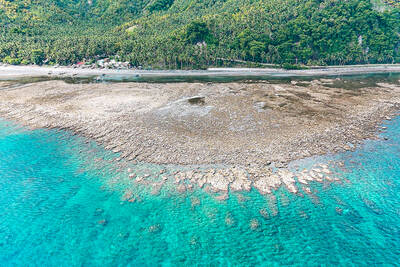
Arsenio Butil Jr fell to his knees and began to pray when last week’s deadly magnitude 7.8 earthquake began shaking his home on the coast of the southern Philippines. When he opened his eyes, he saw a once-familiar shoreline changing in real time, with swathes of previously submerged coral suddenly pushing above the waterline. The June 8 quake, driven by a shifting of the nearby Cotabato Trench, toppled buildings, triggered landslides and killed at least 76 people on the southern island of Mindanao. The tectonic forces at work also thrust chunks of the island’s coastline upward in a phenomenon known as “coastal uplift,”
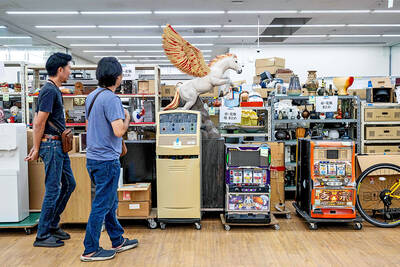
YUCK OR YUM? While it is difficult to sell second-hand goods that are more than seven years old in Japan, they are still popular in foreign markets, an executive said Under a scorching sun in a Bangkok suburb, a whistle blew, and shouts filled the air as dozens of shoppers rushed into a warehouse bearing the sign “Japanese Second-Hand Store.” From bags and bicycles to surfboards and suitcases, the Japanese second-hand market is booming, with quality-conscious buyers in other Asian countries increasingly tapping into the circular economy trend. “What is considered garbage for them can still be useful in Thailand,” said 36-year-old Lookpoo Sathitpanyapon, who runs an online store selling toy keychains. “That bag, that bag,” one shopper shouted while racing through the warehouse, filled with everything from colorful toys
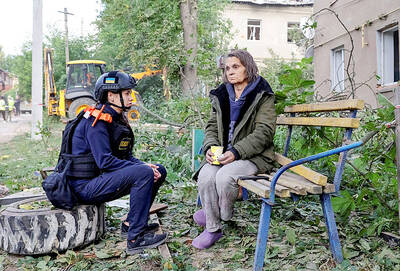
President Volodymyr Zelenskiy on Saturday said that Russian forces were preparing an impending massive attack on Ukraine and warned residents to take special care as Russian strikes in different regions killed at least six people. “Tonight and in the coming hours, it is especially important to pay close attention to air raid warnings,” Zelenskiy said in his nightly video address. “The Russians have prepared for a massive attack. Please take care of yourselves.” Russian forces have staged a series of heavy attacks on Kyiv in the past few weeks and in other major cities. Strikes on Monday last week killed
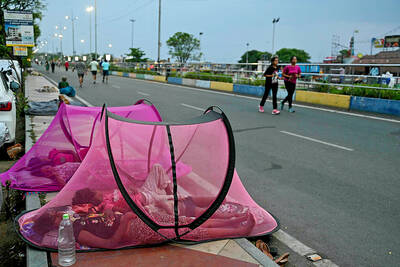
Growing up in Tahiti, Anna-Bella Failloux saw first-hand the threat posed by mosquitoes: Nearly one-third of adults on the picturesque island once had swollen limbs from elephantiasis caused by their bites. She has since dedicated her life to studying mosquitoes and the diseases they transmit — a concern that looms ever larger as climate change expands the area where the insects roam. “You have to accept being bitten by a mosquito from time to time,” the 63-year-old entomologist at France’s Pasteur Institute said. “But we have to avoid too many people getting sick and dying from the infections,” Failloux said, as she observed


 RSS
RSS