


The proportion of people being diagnosed with lung cancer who have never smoked is increasing, with air pollution an “important factor,” the WHO’s cancer agency said.
Lung cancer in people who have never smoked cigarettes or tobacco is now estimated to be the fifth-highest cause of cancer deaths worldwide, the International Agency for Research on Cancer (IARC) said.
Lung cancer in never-smokers is also occurring almost exclusively as adenocarcinoma, which has become the most dominant of the four main subtypes of the disease in men and women globally, the agency said.

Photo: AFP
About 200,000 cases of adenocarcinoma were associated with exposure to air pollution in 2022, a IARC study published in the Lancet Respiratory Medicine journal said.
The largest burden of adenocarcinoma attributable to air pollution was found in east Asia, particularly China, the study found.
In an interview with the Guardian, Freddie Bray, the study’s lead author and head of the IARC’s cancer surveillance branch, said the findings underscored the need for urgent monitoring of the changing risk of lung cancer.
Further studies to identify possible causal factors, such as air pollution, in populations where smoking was not considered the main cause of lung cancer were also required, he added.
“With declines in smoking prevalence — as seen in the UK and US — the proportion of lung cancers diagnosed among those who have never smoked tends to increase,” Bray said. “Whether the global proportion of adenocarcinomas attributable to ambient air pollution will increase depends on the relative success of future strategies to curtail tobacco use and air pollution worldwide,” he said.
Lung cancer remains the leading cause of cancer incidence and mortality worldwide. In 2022, about 2.5 million people were diagnosed with the disease. However, the patterns of incidence by subtype have changed dramatically in recent decades.
Of the four main subtypes of lung cancer (adenocarcinoma, squamous cell carcinoma, small-cell carcinoma and large-cell carcinoma), adenocarcinoma has become the dominant subtype among both men and women, the agency said.
Adenocarcinoma accounted for 45.6 percent of global lung cancer cases among men and 59.7 percent of global lung cancer cases among women in 2022. The respective figures were 39.0 percent and 57.1 percent in 2020.
Adenocarcinoma accounts for as much as 70 percent of lung cancer cases among never-smokers, the agency said.
While lung cancer incidence rates for men have generally dropped in most countries over the past 40 years, rates among women have tended to continue to rise.
Current trends suggest that while men still make up most lung cancer cases (about 1.6 million in 2022), the gap between lung cancer incidences in males and females is narrowing, with about 900,000 women diagnosed with lung cancer in 2022.
In 2023, the Guardian reported how the number of women diagnosed with lung cancer in the UK was overtaking men for the first time, prompting calls for women to be as vigilant about it as they are about breast cancer.
Cancer experts said the figures reflected historical differences in smoking prevalence, specifically that smoking rates peaked much earlier in men than women. Women should now be as alert to potential lung cancer signs as they were about checking for lumps in their breasts, they said.
It is not known what proportion of global lung cancer cases are in never-smokers, only that evidence suggests it is rising. Scientists are racing to learn more about what else is causing lung cancer, beyond smoking.
“Air pollution can be considered an important factor that partly explains the emerging predominance of adenocarcinoma that accounts for 53 percent to 70 percent of cases of lung cancer among people who have never smoked worldwide,” the study said.
Bray said the study provided important insights as to how both lung cancer and the underlying risk factors were evolving, “offering clues as to how we can optimally prevent lung cancer worldwide”.
He added: “Changes in smoking patterns and exposure to air pollution are among the main determinants of the changing risk profile of lung cancer incidence by subtype that we see today.
“The diverging trends by sex in recent generations offer insights to cancer prevention specialists and policymakers seeking to develop and implement tobacco and air pollution control strategies tailored to high-risk populations.”

JAN. 1 CLAUSE: As military service is voluntary, applications for permission to stay abroad for over three months for men up to age 45 must, in principle, be granted A little-noticed clause in sweeping changes to Germany’s military service policy has triggered an uproar after it emerged that the law requires men aged up to 45 to get permission from the armed forces before any significant stay abroad, even in peacetime. The legislation, which went into effect on Jan. 1 aims to bolster the military and demands all 18-year-old men fill out a questionnaire to gauge their suitability to serve in the armed forces, but stops short of conscription. If the “modernized” model fails to pull in enough recruits, parliament will be compelled to discuss the reintroduction of compulsory service, German

PHISHING: The con might appear convincing, as the scam e-mails can coincide with genuine messages from Apple saying you have run out of storage For a while you have been getting messages from Apple saying “your iCloud storage is full.” They say you have exceeded your storage plan, so documents are no longer being backed up, and photos you take are not being uploaded. You have been resisting Apple’s efforts to get you to pay a minimum of £0.99 (US$1.33) a month for more storage, but it seems that you cannot keep putting off the inevitable: You have received an e-mail which says your iCloud account has been blocked, and your photos and videos would be deleted very soon. To keep them you need

For two decades, researchers observed members of the Ngogo chimpanzee group of Kibale National Park in Uganda spend their days eating fruits and leaves, resting, traveling and grooming in their tropical rainforest abode, but this stable community then fractured and descended into years of deadly violence. The researchers are now describing the first clearly documented example of a group of wild chimpanzees splitting into two separate factions, with one launching a series of coordinated attacks against the other. Adult males and infants were targeted, with 28 deaths. “Biting, pounding the victim with their hands, dragging them, kicking them — mostly adult males,
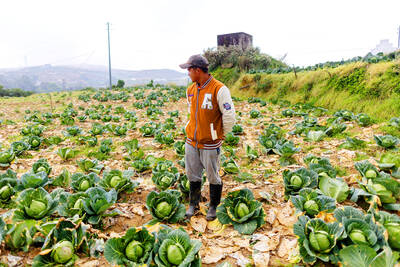
Filipino farmers like Romeo Wagayan have been left with little choice but to let their vegetables rot in the field rather than sell them at a loss, as rising oil prices linked to the Iran war drive up the cost of harvesting, labor and transport. “There’s nothing we can do,” said Wagayan, a 57-year old vegetable farmer in the northern Philippine province of Benguet. “If we harvest it, our losses only increase because of labor, transportation and packing costs. We don’t earn anything from it. That’s why we decided not to harvest at all,” he said. Soaring costs caused by the Middle East


 RSS
RSS