


Tokyo plans to make daycare free for all preschool children starting in September next year, the city governor announced as part of efforts to boost Japan’s low birthrate.
The move aims to reduce the financial burden on families by expanding a policy of free daycare for second-born and subsequent children to first-borns as well.
While many developed countries are struggling with low birthrates, the problem is particularly acute in Japan, where the population has been declining for years.
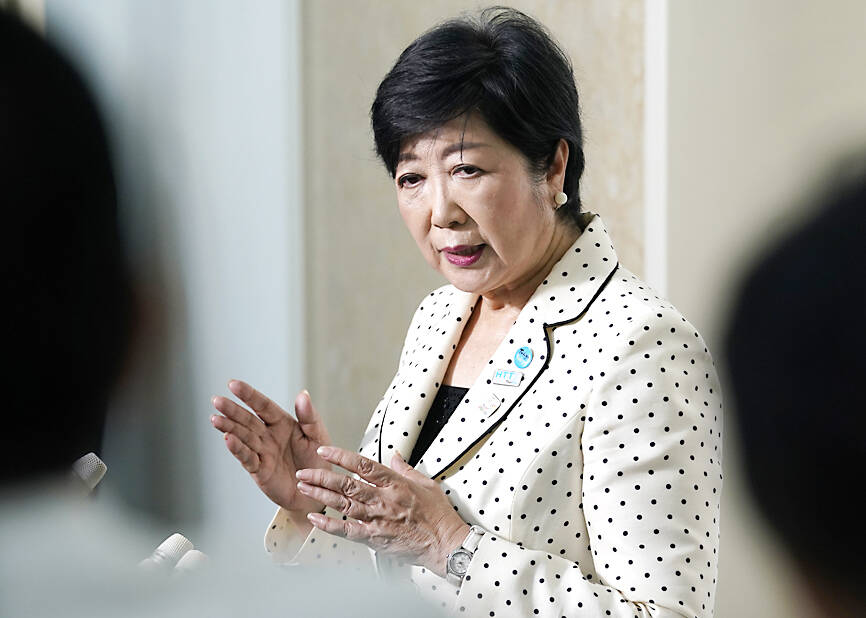
Photo: EPA-EFE
“Japan is facing the crisis of a declining number of children, which isn’t going away,” Tokyo Governor Yuriko Koike said as she announced the plan this week.
“There is no time to spare” to address the problem, Koike added, echoing warnings from the prime minister and other officials of a looming demographic crisis.
Japanese media said the policy in Tokyo, one of the world’s biggest cities with a population of 14 million, is the first initiative of its kind at a regional level in Japan.
Public daycare is available to working parents in Japan, but the national government is planning to widen access to all households.
Koike also said earlier this month that she wants to introduce a four-day workweek option for government staff in Tokyo as part of a nationwide push to encourage parenthood.
Japan has the world’s second-oldest population after Monaco and the country’s immigration rules mean it faces growing labor shortages.
Koike, a former minister and television anchor who has governed Tokyo since 2016, won a third term in July on vows to boost social welfare benefits while acknowledging challenges facing residents, such as inflation.
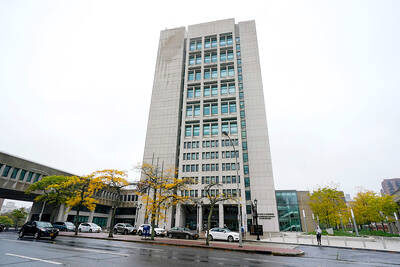
A coalition of civil rights groups on Tuesday asked a New York State judge to order one of its largest suburban counties to stop its deployment of nearly 600 license plate readers, calling it a warrantless and “indiscriminate surveillance system” that violates the state constitution. The class action lawsuit also alleged that Westchester County never got proper authorization to launch the program, which has amassed a database of 1.6 billion plate scans that has been shared with more than 50 outside law enforcement agencies. The complaint said the network “records the long-term travel patterns, daily habits, and intimate information of millions of
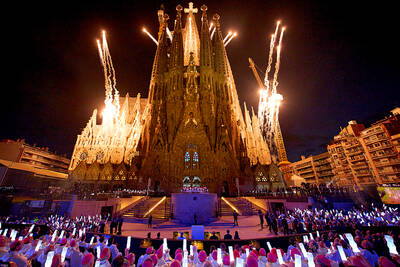
Pope Leo XIV on Wednesday blessed a giant new tower at Barcelona’s famed Sagrada Familia Basilica after celebrating mass inside what is now the world’s tallest church. A fireworks and light show illuminated the exterior of the temple at the end of the ceremony, bathing the unfinished basilica in shifting colours that highlighted its towering spires. A choir of 600 singers performed at the service which lasted around 90 minutes and was attended by Spanish Prime Minister Pedro Sanchez as well as King Felipe VI and Queen Letizia. The stained-glass windows in various colours shone brightly in between the tree-like

Scientists have discovered communities of marine life — including jellyfish, tubeworms and brittle stars — thriving on a whale graveyard. The graveyards form when whale carcasses fall to the sea floor, becoming a sustaining snack for nearby critters. This one, which is up to 7km below the surface of the southeastern Indian Ocean, spans the largest area, and is so far the deepest found. A whale’s sheer size and the unique chemistry of its bones are the keys to forming these unique underwater neighborhoods, said Song Xikun (宋希坤), a biologist with the Chinese Academy of Sciences’ Institute of Deep-sea Science and Engineering
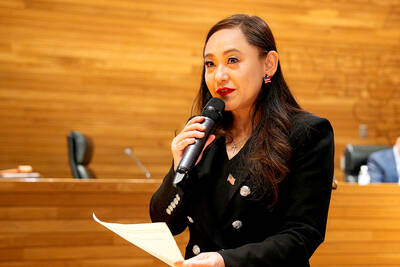
IMAGE ‘DAMAGED’? Ted Tseng, who emigrated to the US from Taiwan, was concerned the espionage case would deepen animosity against Asian Americans In 2024, voters in the Southern California city of Arcadia elected the first all-Asian city council in the city’s history. Now, one of those politicians has pleaded guilty to being an illegal agent of the Chinese government. Former Arcadia mayor Eileen Wang’s (王愛琳) plea, entered in federal court on Friday last year, continues a saga that some residents of the area worry could bring unfair scrutiny on the broader Chinese and Asian American community. Arcadia has gone under rapid demographic change in the past two decades as immigrants from Taiwan, China and Hong Kong flocked to the San Gabriel Valley


 RSS
RSS