


North Korean leader Kim Jong-un renewed his call for a “limitless” expansion of his military nuclear program to counter US-led threats in comments reported yesterday that were his first direct criticism toward Washington since US president-elect Donald Trump’s electoral victory on Oct. 6.
At a conference with army officials on Friday, Kim condemned the US for updating its nuclear deterrence strategies with South Korea and solidifying three-way military cooperation involving Japan, which he portrayed as an “Asian NATO” that was escalating tensions and instability in the region.
Kim also criticized the US over its support of Ukraine against a prolonged Russian invasion. He insisted that Washington and its Western allies were using Ukraine as their “shock troops” to wage a war against Moscow and expand the scope of US military influence, the North’s official Korean Central News Agency (KCNA) said.
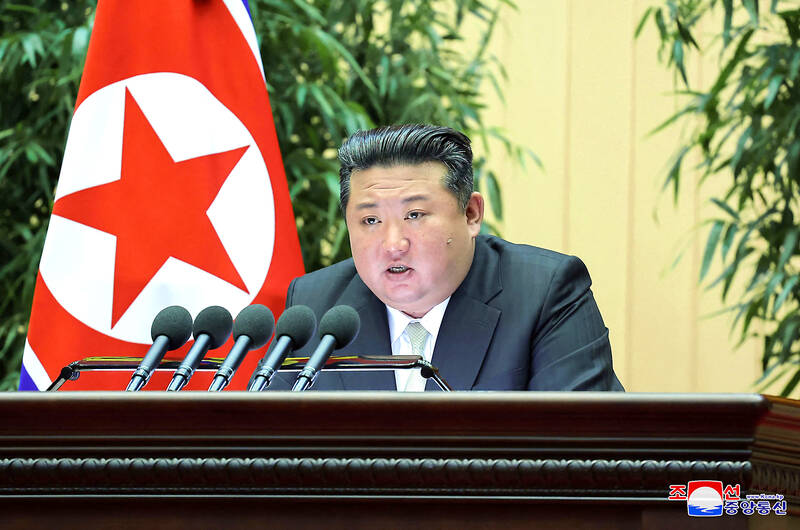
Photo: AFP
Kim has prioritized his country’s ties to Russia in recent months, embracing the idea of a “new Cold War” and displaying a united front in Russian President Vladimir Putin’s broader conflicts with the West.
He has used Russia’s war on Ukraine as a distraction to accelerate the development of his nuclear-armed military, which now has various nuclear-capable systems targeting South Korea and intercontinental ballistic missiles that can potentially reach the US mainland.
Kim has yet to directly acknowledge that he has been providing military equipment and troops to Russia to support its war against Ukraine and the KCNA’s report did not mention whether Kim made any comments toward Trump, whose election win has yet to be reported in the North’s state media.
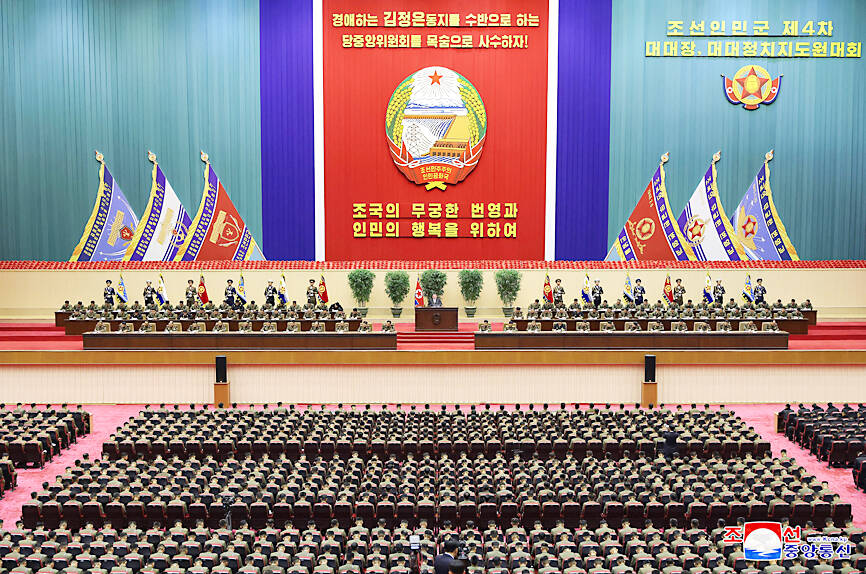
Photo: AFP
Kim met Trump three times in 2018 and 2019 during Trump’s first presidency, but their diplomacy quickly collapsed over disagreements in exchanging the release of US-led sanctions and North Korean steps to wind down its nuclear and missile program.
North Korea has since suspended any meaningful talks with Washington and Seoul as Kim ramped up his testing activity and military demonstrations in the face of what he portrayed as “gangster-like US threats.”
There is concern in Seoul that Kim in exchange for his military support of Russia would receive Russian technology in return to further develop his arsenal.
Trump’s election win has touched off speculation about a resumption of summit-driven diplomacy with Kim, but some experts say a quick return to 2018 is highly unlikely, as too much has changed about the regional security situation and broader geopolitics since then.
While the North Korean nuclear problem was relatively an independent issue during Trump’s first term, it is now connected with broader challenges created by Russia’s war on Ukraine and further complicated by weakened sanctions enforcement against Pyongyang, said Hwang Ildo, a professor at South Korea’s National Diplomatic Academy.
North Korea’s nuclear and missile program is now much more advanced, which would increase Kim’s perception of his bargaining powers. Kim’s efforts to boost North Korea’s presence in a united front against Washington could also gain strength if Trump spikes tariffs and rekindles a trade war with China, the North’s main ally and economic lifeline, he added.
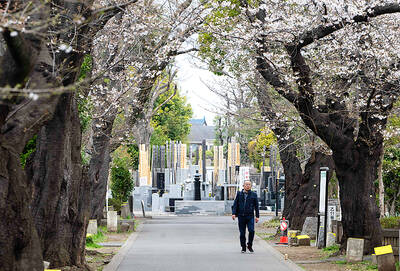
ROCKY RELATIONS: The figures on residents come as Chinese tourist numbers drop following Beijing’s warnings to avoid traveling to Japan The number of Chinese residents in Japan has continued to rise, even as ties between the two countries have become increasingly fractious, data released on Friday showed. As of the end of December last year, the number of Chinese residents had increased by 6.5 percent from the previous year to 930,428. Chinese people accounted for 22.6 percent of all foreign residents in Japan, making them by far the largest group, Japanese Ministry of Justice data showed. Beijing has criticized Tokyo in increasingly strident terms since Japanese Prime Minister Sanae Takaichi last year suggested that a military conflict around Taiwan could
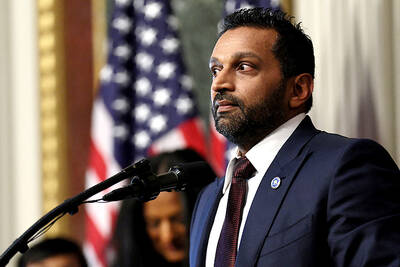
A pro-Iran hacking group claimed to breach FBI Director Kash Patel’s personal e-mail inbox and posted some of the contents online. The e-mails provided by the hacking group include travel details, correspondence with leasing agents in Washington and global entry, and loyalty account numbers. The e-mail address the hackers claim to have compromised has been previously tied to Patel’s personal details, and the leaked e-mails contain photos of Patel and others, in addition to correspondence with family members and colleagues. “The FBI is aware of malicious actors targeting Director Patel’s personal email information,” the agency said in a statement on
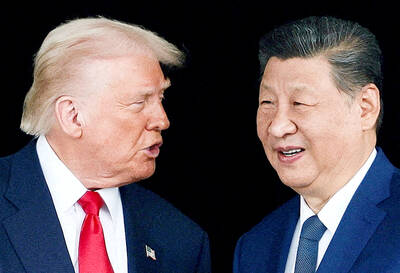
RIVALRY: ‘We know that these are merely symbolic investigations initiated by China, which is in fact the world’s most profligate disrupter of supply chains,’ a US official said China has started a pair of investigations into US trade practices, retaliating against similar probes by US President Donald Trump’s administration as the superpowers stake out positions before an expected presidential summit in May. The move, announced by the Chinese Ministry of Commerce on Friday, is a direct mirror of steps Trump took to revive his tariff agenda after the US Supreme Court last month struck down some of his duties. “China expresses its strong dissatisfaction and firm opposition to these actions,” a ministry spokesperson said in a statement, referring to the so-called Section 301 investigations initiated on March 11.

When a hiker fell from a 55m waterfall in wild New Zealand bush, rescuers were forced to evacuate the badly hurt woman without her dog, which could not be found. After strangers raised thousands of dollars for a search, border collie Molly was flown to safety by a helicopter pilot who was determined to reunite the pet and the owner. A week earlier, an emergency rescue helicopter found the woman with bruises and lacerations after a fall at a rocky spot at the waterfall on the South Island’s West Coast. She was airlifted on March 24, but they were forced to


 RSS
RSS