


After fleeing Iran and making the perilous journey across the Mediterranean, Kurdish activist Maysoon Majidi did not expect to be jailed in Italy for people smuggling.
However, the day after arriving on a boat in December last year, she was arrested and held for 10 months — a victim, her supporters say, of a migration clampdown by Italian Prime Minister Giorgia Meloni’s government.
“I tried to say who I was, that I am a political refugee, that I have done nothing wrong,” the 28-year-old said during a phone call from Calabria, Italy, where she was recently released.

“None of us would want to leave our own country and face all these dangers to get here,” she added, speaking in Farsi through a translator. “I had to leave Iran not just to stay alive, but also to be able to continue my work as an activist.”
Majidi arrived in Calabria on Dec. 31 last year one of almost 80 migrants on a boat from Turkey — among the last of about 158,000 people who landed on Italy’s shores that year.
The next day, she was arrested for aiding illegal immigration, a crime that risks six to 16 years in prison.
She spent the next 10 months in prison, held on the basis of testimonies from two fellow migrants that were later withdrawn.
Amnesty International is among those who have taken up her cause, joining a local campaign group and Riace Mayor Domenico Lucano.
Lucano, now a member of the European Parliament, was himself convicted for his help for refugees. He made Majidi an honorary citizen.
She was finally released on Oct. 22 after others on board — including the captain, currently facing prosecution — testified in her favor.
She is awaiting a dismissal of her case on Nov. 27, after which she hopes to join her brother in Germany and continue her life.
Born in 1996 in the Iranian province of Kurdistan, Majidi studied theater and sociology at university.
She wrote several articles under a pseudonym denouncing misogyny in society and made a short film with Kurds who risk their lives transporting goods in the mountains between Iran and Iraq. The non-governmental organization (NGO) Hana, which documents human rights abuses in Majidi’s region, confirmed she was one of its active members.
“I was always under observation when I was at university,” she said. “In 2019, they arrested me and then released me, but I knew that they were following me and that they released me to have access to my contacts.”
She and her brother went into exile.
Taking refuge in Irbil, in the autonomous Kurdistan region of Iraq, she became a journalist and helped organize demonstrations in the wake of the 2022 death in Iranian police custody of Mahsa Amini, a 22-year-old Iranian Kurd.
New threats pushed her to flee to Turkey, from where she managed to raise the money needed to get a boat to Italy.
During Majidi’s time in prison, she staged several hunger strikes against her detention, and to ask for an interpreter.
Parisa Nazari, an Iranian feminist activist living in Italy, supported her during that time.
“I could feel her ribs as I held her in my arms. She kept asking me: ‘What am I doing here?’” Nazari said at a screening in Rome last month of Majidi’s film.
For NGOs and groups backing her, Majidi is a victim of a clampdown on irregular migration by Meloni’s hard-right government.
Meloni, whose far-right Brothers of Italy party won 2022 national elections, has vowed to stop the boat arrivals, including taking a tough line on the traffickers who organize crossings from North Africa.
Amnesty International Italia spokesman Riccardo Noury told AFP that “too often, there is an impression that people on board migrant boats are arrested to show that the fight against so-called illegal immigration works.”

Four contenders are squaring up to succeed Antonio Guterres as secretary-general of the UN, which faces unprecedented global instability, wars and its own crushing budget crisis. Chile’s Michelle Bachelet, Argentina’s Rafael Grossi, Costa Rica’s Rebeca Grynspan and Senegal’s Macky Sall are each to face grillings by 193 member states and non-governmental organizations for three hours today and tomorrow. It is only the second time the UN has held a public question-and-answer, a format created in 2016 to boost transparency. Ultimately the five permanent members of the UN’s top body, the Security Council, hold the power, wielding vetoes over who leads the

A humanoid robot that won a half-marathon race for robots in Beijing on Sunday ran faster than the human world record in a show of China’s technological leaps. The winner from Honor, a Chinese smartphone maker, completed the 21km race in 50 minutes and 26 seconds, said a WeChat post by the Beijing Economic-Technological Development Area, also known as Beijing E-Town, where the race began. That was faster than the human world record holder, Ugandan Jacob Kiplimo, who finished the same distance in about 57 minutes in March at the Lisbon road race. The performance by the robot marked a significant step forward

An earthquake registering a preliminary magnitude of 7.7 off northern Japan on Monday prompted a short-lived tsunami alert and the advisory of a higher risk of a possible mega-quake for coastal areas there. The Cabinet Office and the Japan Meteorological Agency said there was a 1% chance for a mega-quake, compared to a 0.1% chance during normal times, in the next week or so following the powerful quake near the Chishima and Japan trenches. Officials said the advisory was not a quake prediction but urged residents in 182 towns along the northeastern coasts to raise their preparedness while continuing their daily lives. Prime
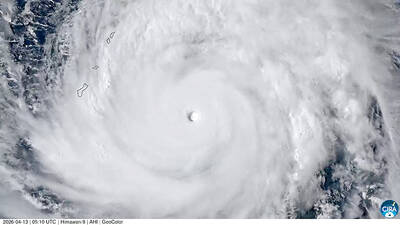
HAZARDOUS CONDITION: The typhoon’s sheer size, with winds extending 443km from its center, slowed down the ability of responders to help communities, an official said The US Coast Guard was searching for six people after losing contact with their disabled boat off the coast of Guam following Typhoon Sinlaku. The crew of the 44m dry cargo vessel, the US-registered Mariana, on Wednesday notified the coast guard that the boat had lost its starboard engine and needed assistance, Petty Officer 3rd Class Avery Tibbets said yesterday. The coast guard set up a one-hour communication schedule with the vessel, but lost contact on Thursday. A Coast Guard HC-130 Hercules aircraft was launched to search for the six people on board, but it had to return to Guam because of


 RSS
RSS