


President Joe Biden unveiled sweeping tariff hikes on a range of Chinese imports, in an election-year bid to bolster domestic manufacturing in critical industries.
The US president cast the move as a necessary action to protect US workers and businesses from companies that he accused of stealing, cheating and dumping underpriced goods into international markets.?
Biden is raising levies on semiconductors, batteries, solar cells, and critical minerals, in addition to previously reported increases on steel, aluminum and electric vehicles. The changes are projected to affect around $18 billion in current annual imports, the White House said.
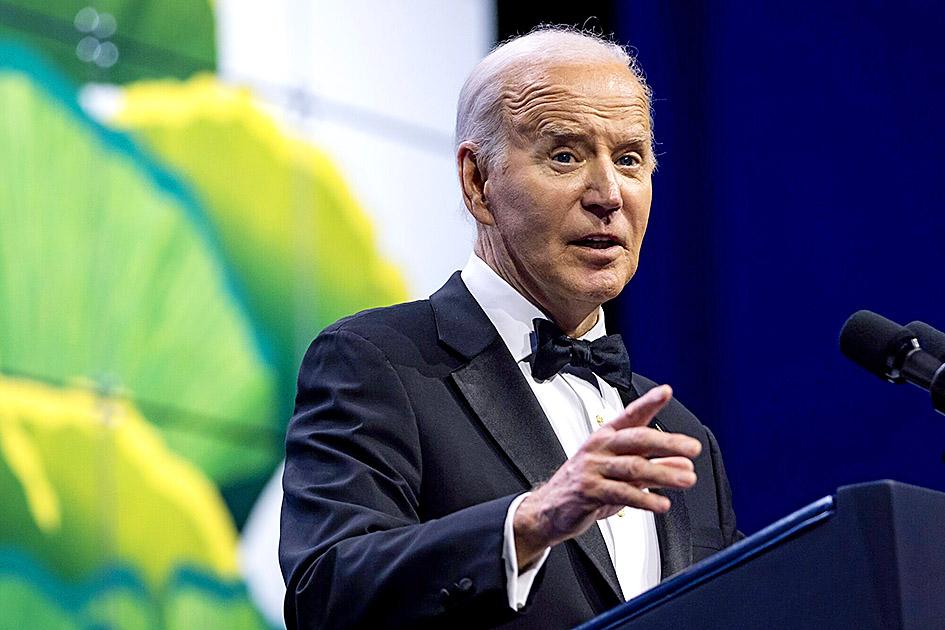
Photo: Bloomberg
“When you make tactics like this, you’re not competing, it’s not competition, it’s cheating. And we’ve seen damage here in America,” Biden said Tuesday at a White House Rose Garden event.
The moves represent Biden’s most comprehensive update to China tariffs first imposed by his predecessor, former President Donald Trump, and a recognition that a hawkish approach to trade with Beijing remains popular with US voters. None of Trump’s tariffs will be reduced. Biden will ratchet up rates on goods the US struggled to import during the coronavirus pandemic, and for industries, like chips and green energy, that he’s sought to bolster since he took office.
“The Chinese government has poured state money into Chinese companies,” Biden said. “China heavily subsidized all these products, pushing Chinese companies to produce far more than the world can absorb and then dumping excess products on the market at unfairly low prices.”
Biden must strike a careful balance. Additional tariffs risk increasing prices for consumers already hurting from inflation, and inspiring the ire of China.
Biden insisted he did not want conflict with China, just “fair competition.” He looked to assuage concerns for US consumers, saying his tariff regime wouldn’t restrict the ability of the public to buy the vehicles they want. And he argued his approach was preferable to Trump’s call for across-the-board tariffs on China, which Biden said would drive up costs for American families by $1,500.
Biden’s changes are staggered to take effect from 2024 to 2026, and are more targeted than the 60% flat tariff Trump has proposed. The biggest jump is for EVs, with the tariff rate quadrupling, while other imports are seeing levies doubled or imposed for the first time. In some cases, the levies apply to areas where China has only a small segment of the US market, but are intended to head off a potential deluge of imports.
Trump, speaking to reporters before entering his criminal trial at a Manhattan courthouse, said Biden needed to expand the additional tariffs to include other products, including conventional cars.
“China is eating our lunch right now and they went away from what I was doing,” Trump said, adding that Biden had been “playing games” with Beijing.
Asked about the lunch comment Tuesday, Biden said Trump had been “feeding them for a long time.”
“It’s a smart approach,” Biden said. “Compare that to what the prior administration did.”
China blasted the move, urging the US to cancel the new tariffs in a statement from Beijing’s Ministry of Commerce. It vowed to take “resolute measures to safeguard its own rights and interests” but without providing specifics.?
The tariff rate on semiconductors doubles from 25% to 50% by 2025, targeting an industry Biden has made a centerpiece of his manufacturing agenda through billions in subsidies to bolster US production. The levies aim to counter China’s rush into so-called legacy chips, older-generation components still essential to the global economy.
Certain critical minerals will see a new 25% tariff this year, while natural graphite and permanent magnets will be hit with that rate in 2026. Ship-to-shore cranes also face a new 25% tariff this year.
The electric vehicle tariff takes effect this year, with a final tariff rate of 102.5%, up from 27.5% now. And tariffs on certain steel and aluminum from China — currently facing a 0% or 7.5% tariff — will rise to 25% this year.?
Biden’s tariffs will make it easier for the European Union to move to impose import duties on Chinese EVs, according to an analysis from Wolfe Research released Tuesday.
Tariffs on lithium-ion batteries for electric vehicles, as well as battery parts, will rise to 25% from 7.5% this year, while non-EV lithium-ion batteries make the same jump in 2026.?
Although tariffs on solar cells and modules from China will double, Biden is creating a process that could lead to exclusions for key machinery used to manufacture solar components, a move seen as helping nurture a domestic supply chain for the industry.
The US will also impose a new 50% tariff on Chinese syringes and needles this year, while tariffs on personal protective equipment, such as respirators and face masks, rise to 25% from either 0% or 7.5% now. Tariffs on rubber medical and surgical gloves will jump to 25% from 7.5% in 2026.?
It’s unclear whether the moves will trigger retaliatory tariffs by China, but the tariff regime proposed under Trump already applies to about $226 billion worth of goods, according to an administration estimate, based on 2023 data.
“Hopefully we will not see a significant Chinese response — but that’s always a possibility,” Treasury Secretary Janet Yellen said in an interview with Bloomberg Television on Monday.
Tuesday’s announcement is the culmination of a mandatory review of Trump’s tariffs that stretched for over a year under the shadow cast by the upcoming election. Both candidates have sought to portray themselves as tough on Beijing with Trump pledging across-the-board tariffs on China.
Biden’s changes do not include any offsetting reductions. An official who briefed reporters ahead of the announcement on condition of anonymity said the US had not seen improvements in many unfair Chinese trade practices, such as forced technology transfers, since the tariffs were first imposed, making reductions unwarranted.
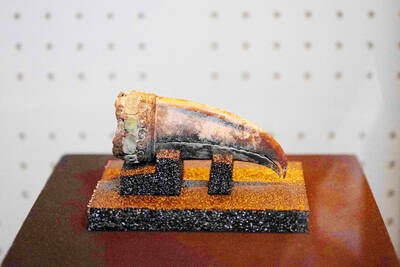
Archeologists in Peru on Thursday said they found the 5,000-year-old remains of a noblewoman at the sacred city of Caral, revealing the important role played by women in the oldest center of civilization in the Americas. “What has been discovered corresponds to a woman who apparently had elevated status, an elite woman,” archeologist David Palomino said. The mummy was found in Aspero, a sacred site within the city of Caral that was a garbage dump for more than 30 years until becoming an archeological site in the 1990s. Palomino said the carefully preserved remains, dating to 3,000BC, contained skin, part of the

TRUMP EFFECT: The win capped one of the most dramatic turnarounds in Canadian political history after the Conservatives had led the Liberals by more than 20 points Canadian Prime Minister Mark Carney yesterday pledged to win US President Donald Trump’s trade war after winning Canada’s election and leading his Liberal Party to another term in power. Following a campaign dominated by Trump’s tariffs and annexation threats, Carney promised to chart “a new path forward” in a world “fundamentally changed” by a US that is newly hostile to free trade. “We are over the shock of the American betrayal, but we should never forget the lessons,” said Carney, who led the central banks of Canada and the UK before entering politics earlier this year. “We will win this trade war and

‘BODIES EVERYWHERE’: The incident occurred at a Filipino festival celebrating an anti-colonial leader, with the driver described as a ‘lone suspect’ known to police Canadian police arrested a man on Saturday after a car plowed into a street party in the western Canadian city of Vancouver, killing a number of people. Authorities said the incident happened shortly after 8pm in Vancouver’s Sunset on Fraser neighborhood as members of the Filipino community gathered to celebrate Lapu Lapu Day. The festival, which commemorates a Filipino anti-colonial leader from the 16th century, falls this year on the weekend before Canada’s election. A 30-year-old local man was arrested at the scene, Vancouver police wrote on X. The driver was a “lone suspect” known to police, a police spokesperson told journalists at the
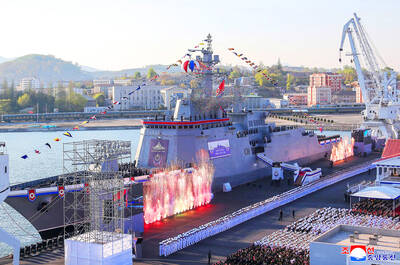
North Korean leader Kim Jong-un has unveiled a new naval destroyer, claiming it as a significant advancement toward his goal of expanding the operational range and preemptive strike capabilities of his nuclear-armed military, state media said yesterday. North Korea’s state-run Korean Central News Agency (KCNA) said Kim attended the launching ceremony for the 5,000-tonne warship on Friday at the western port of Nampo. Kim framed the arms buildup as a response to perceived threats from the US and its allies in Asia, who have been expanding joint military exercises amid rising tensions over the North’s nuclear program. He added that the acquisition


 RSS
RSS