


North Korea yesterday said that Japanese Prime Minister Fumio Kishida offered to meet with North Korean leader Kim Jong-un “as soon as possible,” but stressed that prospects for the first summit in about 20 years would depend on Tokyo tolerating its weapons program and ignoring its past abductions of Japanese.
In a parliamentary session, Kishida said that a meeting with Kim is “crucial” to resolve the abduction issue, a major sticking point in bilateral ties, and that his government has been using various channels to hold the summit.
Kim’s sister and senior official, Kim Yo-jong, said in a statement that Kishida used an unspecified channel to convey his position that he wants to meet Kim Jong-un in person “as soon as possible.”
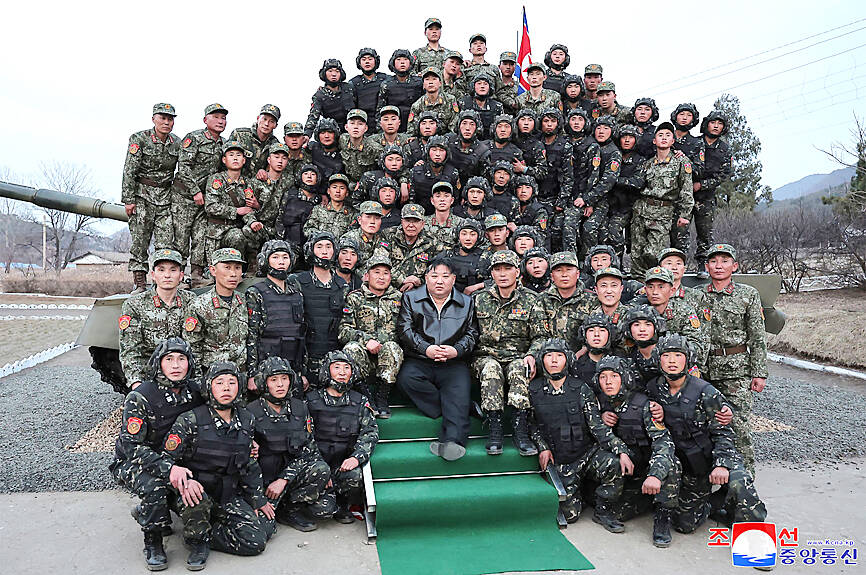
Photo: AFP / KCNA VIA KNS
She said there would be no breakthrough in North Korea-Japan relations as long as Kishida’s government is engrossed in the abduction issue and interferes in North Korea’s “exercise of our sovereign right,” apparently referring to weapons testing.
“The history of DPRK [Democratic People’s Republic of Korea]-Japan relations gives a lesson that it is impossible to improve the bilateral relations full of distrust and misunderstanding, only with an idea to set out on a summit meeting,” Kim Yo-jong said.
“If Japan truly wants to improve bilateral relations, and contribute to ensuring regional peace and stability as a close neighbor of the DPRK, it is necessary for it to make a political decision for strategic option conformed to its overall interests,” she said.
Kim Yo-jong last month issued a similar statement on bilateral ties, saying North Korea was open to an improved relationship with Japan and even inviting Kishida to Pyongyang, but she said those would be possible only if Tokyo stops taking issue with North Korea’s legitimate right to self-defense and the abduction issue.
Some experts say North Korea is seeking to improve ties with Japan as a way to weaken a trilateral Tokyo-Seoul-Washington security partnership, while Kishida also wants to use possible progress in the abduction issue to increase his declining approval rating at home.
North Korea’s advancing nuclear and missile arsenals pose a major security threat to Japan, as well as South Korea and the US. The three nations have expanded their trilateral training exercises in response to North Korea’s provocative run of weapons tests since 2022.
Japan and South Korea together host about 80,000 US troops in their territories.
North Korea and Japan do not have diplomatic ties, and their relations have been overshadowed by North Korea’s nuclear program, the abduction issue and Japan’s 1910 to 1945 colonization of the Korean Peninsula.
After years of denial, North Korea acknowledged in an unprecedented 2002 summit between then-North Korean leader Kim Jong-il and then-Japanese prime minister Junichiro Koizumi that its agents had kidnapped 13 Japanese, mainly to train spies in Japanese language and culture. It allowed five of them to return to Japan that year, but said the others had died. Japan thinks at least some of them might still be alive, and believes hundreds more might also have been abducted.
Koizumi in 2004 made a second visit to North Korea and met Kim Jong-il again. That was the last summit between the leaders of the two nations.
North Korea and Japan had been scheduled to play a FIFA World Cup qualifier today in Pyongyang, but soccer’s governing body on Saturday said that it canceled the match.
North Korea had said that it could not host Japan and requested a neutral venue “due to unavoidable circumstances,” the Asian Football Confederation said.
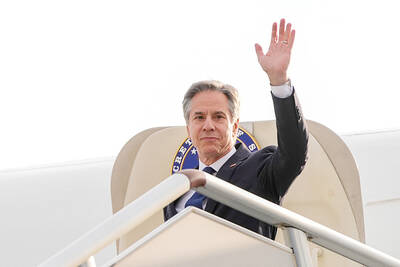
‘IN A DIFFERENT PLACE’: The envoy first visited Shanghai, where he attended a Chinese basketball playoff match, and is to meet top officials in Beijing tomorrow US Secretary of State Antony Blinken yesterday arrived in China on his second visit in a year as the US ramps up pressure on its rival over its support for Russia while also seeking to manage tensions with Beijing. The US diplomat tomorrow is to meet China’s top brass in Beijing, where he is also expected to plead for restraint as Taiwan inaugurates president-elect William Lai (賴清德), and to raise US concerns on Chinese trade practices. However, Blinken is also seeking to stabilize ties, with tensions between the world’s two largest economies easing since his previous visit in June last year. At the

UNSETTLING IMAGES: The scene took place in front of TV crews covering the Trump trial, with a CNN anchor calling it an ‘emotional and unbelievably disturbing moment’ A man who doused himself in an accelerant and set himself on fire outside the courthouse where former US president Donald Trump is on trial has died, police said yesterday. The New York City Police Department (NYPD) said the man was declared dead by staff at an area hospital. The man was in Collect Pond Park at about 1:30pm on Friday when he took out pamphlets espousing conspiracy theories, tossed them around, then doused himself in an accelerant and set himself on fire, officials and witnesses said. A large number of police officers were nearby when it happened. Some officers and bystanders rushed
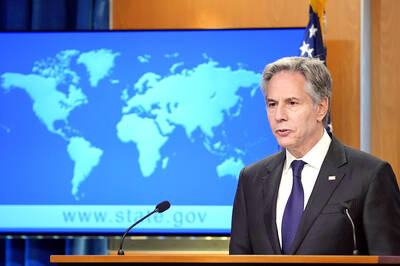
Beijing is continuing to commit genocide and crimes against humanity against Uyghurs and other Muslim minorities in its western Xinjiang province, U.S. Secretary of State Antony Blinken said in a report published on Monday, ahead of his planned visit to China this week. The State Department’s annual human rights report, which documents abuses recorded all over the world during the previous calendar year, repeated language from previous years on the treatment of Muslims in Xinjiang, but the publication raises the issue ahead of delicate talks, including on the war in Ukraine and global trade, between the top U.S. diplomat and Chinese
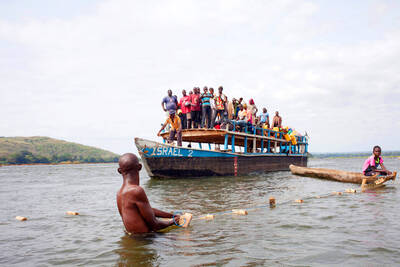
RIVER TRAGEDY: Local fishers and residents helped rescue people after the vessel capsized, while motorbike taxis evacuated some of the injured At least 58 people going to a funeral died after their overloaded river boat capsized in the Central African Republic’s (CAR) capital, Bangui, the head of civil protection said on Saturday. “We were able to extract 58 lifeless bodies,” Thomas Djimasse told Radio Guira. “We don’t know the total number of people who are underwater. According to witnesses and videos on social media, the wooden boat was carrying more than 300 people — some standing and others perched on wooden structures — when it sank on the Mpoko River on Friday. The vessel was heading to the funeral of a village chief in


 RSS
RSS