

Giant Christmas trees adorned with lights, tinsel and gift boxes greet shoppers at glittering malls in big Chinese cities like Shanghai and Chongqing, but in many parts of the country, extending season’s greetings is out of the question.
In southwest Yunnan Province, a property management company issued a notice to shopping mall tenants urging them not to sell Christmas cards and presents and to even refrain from hanging decorations, saying foreign traditions should not be “blindly” followed, and one should be confident in one’s own culture.
Schools in some cities from Dongguan in the south to Harbin in the northeast similarly called on students and parents not to follow foreign traditions and culture without thinking.
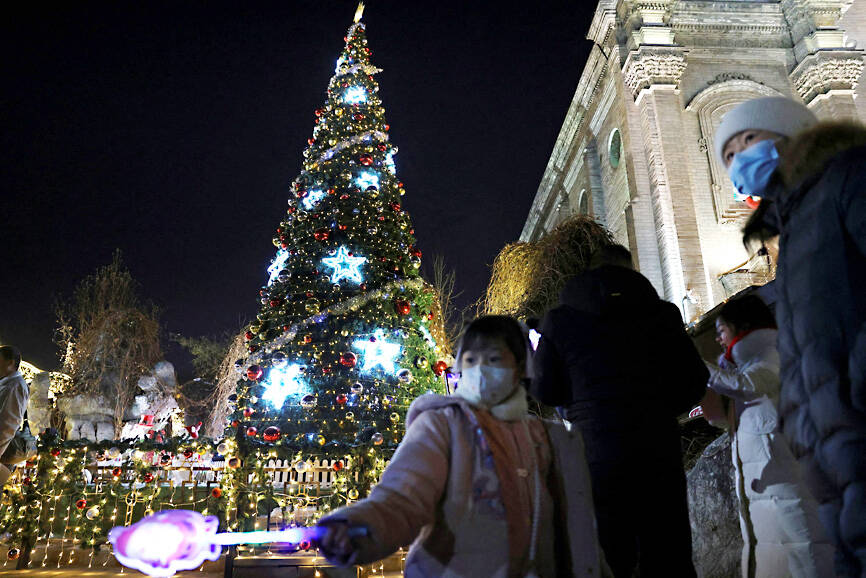
Photo: Reuters
In Gansu Province in China’s northwest, a local branch of the Communist Youth League told its members to instead celebrate The Battle at Lake Changjin, a 2021 Chinese film depicting a fierce fight between the Chinese People’s Volunteer Army and US forces during the Korean War.
China does not ban Christianity or forbid Christian worship, but like all permitted religions, it must be strictly managed and governed amid concern about “foreign influences.”
Christmas Day is not a public holiday in mainland China, where Buddhism and Taoism are the major religions, with ancestral worship also a common practice. The Chinese Communist Party (CCP) is officially atheist.
Wang Huning (王滬寧), the fourth-ranked member of the powerful CCP Politburo Standing Committee led by Chinese President Xi Jinping (習近平), told Christian groups last week to “adhere to the direction of the sinicization of Christianity.”
We must “interpret the doctrines and rules in line with the requirements of contemporary China’s development and progress, core socialist values and excellent Chinese traditions and culture,” said Wang, according to a report by the official Xinhua news agency on Saturday.
Over the years, the Vatican has sparred with Beijing over China’s unilateral appointment of bishops in a country that has about 12 million Catholics.
On Sunday, in Langfang, a city in Hebei Province just south of Beijing, a post on X, formerly Twitter, showed a cluster of police officers standing by a tall Christmas tree outside a church in a small county.
“So scary,” the post said.
In 2018, Langfang banned public displays for Christmas and the sale of items related to the holiday to “maintain social stability.”
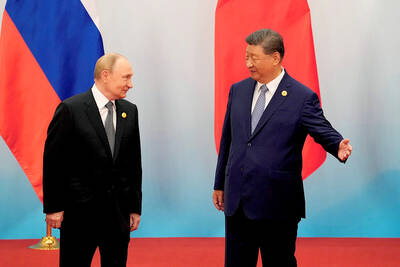
PLENARY SESSION: Although the SCO says it is ‘not an alliance directed against other states,’ Putin and Xi have repeatedly made anti-Western speeches during its summits Russian President Vladimir Putin and Chinese President Xi Jinping (習近平) are expected tomorrow in Kyrgyzstan for a two-day summit, also attended by Iran’s and India’s leaders, of a regional bloc seeking to be a counter-influence to the West. Around a dozen heads of states would head to the Kyrgyz capital, Bishkek, to mark 25 years of the Shanghai Cooperation Group (SCO). The group brings together Russia, China, India, Pakistan, Iran, four Central Asian countries and Moscow-allied Belarus. Putin and Xi have previously used SCO summits to promote their vision of a multipolar world and present a united front against the

A swarm of about 700 artificial intelligence (AI) agents created by OpenAI carried out last month’s hack of the open-source platform Hugging Face and in many cases tried to cover their tracks, a pair of reports into the breach said on Wednesday. The coordinated activity by AI agents — programs that run with minimal human supervision — and their attempts to hide it raise questions about how closely AI companies are monitoring tests of increasingly powerful models, and could add fuel to calls for tighter oversight. While some of the rogue behavior has been disclosed or alluded to previously, the two reports
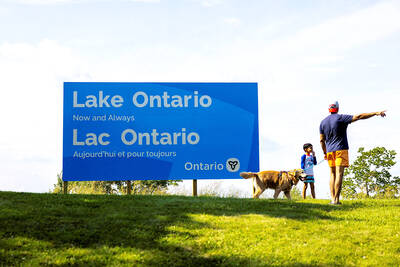
Ontario Premier Doug Ford on Saturday answered US President Donald Trump’s “Lake America” decree with a billboard-sized message on the Canadian shoreline — “Lake Ontario. Now and Always” — as Canadian leaders met Trump’s move with ridicule rather than outrage. Wearing a Canada national soccer team jersey, Ford unveiled the sign near Grimsby and posed for photographs. The message is repeated in French. The display followed Trump’s executive order directing US federal agencies to call Lake Ontario “Lake America.” After months of tariffs, threats to make Canada the 51st US state and personal attacks on its leaders, the reaction in

Dozens of Israeli settlers on Saturday attacked the Palestinian village of Qusra in the northern occupied West Bank after nearly three weeks of tension in the area, drawing rare condemnation from Israeli Prime Minister Benjamin Netanyahu. Earlier this month, a group of settlers began blocking supplies from entering Palestinian houses on the outskirts of the village near Nablus, trapping residents inside and drawing unusually strong criticism from the US ambassador. Weeks later, Israeli forces continue to operate in the area while settlers still roam the surrounding hills. On Saturday, Qusra residents and dozens of settlers had descended on the village,


 RSS
RSS