


After attending the coronation of King Charles III in London, Brazilian President Luiz Inacio Lula da Silva denounced the lack of concerted efforts to free WikiLeaks editor-in-chief Julian Assange, who has spent four years in Britain’s Belmarsh Prison.
“It is an embarrassment that a journalist who denounced trickery by one state against another is arrested, condemned to die in jail and we do nothing to free him. It’s a crazy thing,” Lula told reporters. “We talk about freedom of expression; the guy is in prison because he denounced wrongdoing. And the press doesn’t do anything in defense of this journalist. I can’t understand it.”
Lula offered the remarks in response to a question about Assange, who is a native Australian.
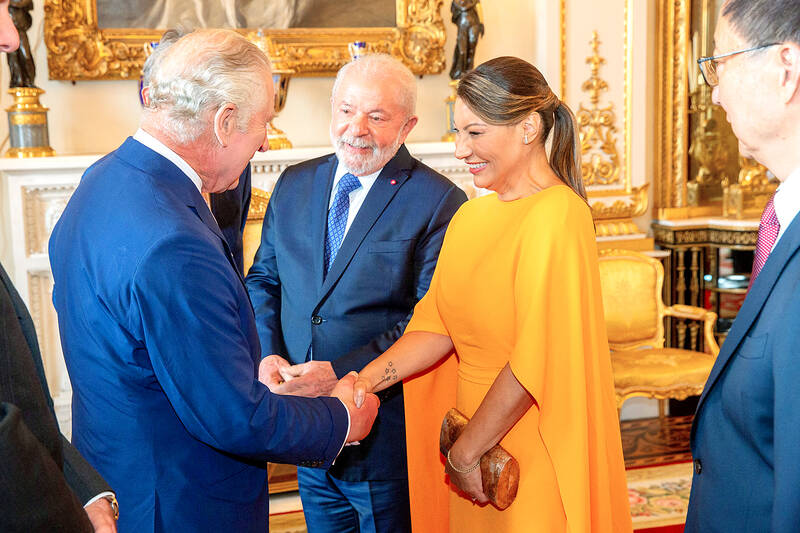
Photo: Reuters / British Foreign, Commonwealth and Development Office
Lula said he had forgotten to discuss the matter with British Prime Minister Rishi Sunak, but that he would write to him upon returning to Brazil.
Assange has been fighting extradition to the US, and Lula’s comments come at a moment that he has shown little reluctance to voice his differences of opinion with Washington regarding geopolitical matters, particularly in his opposition to providing arms to Ukraine for its efforts to fight off Russia’s invasion, and accusing the US and Europe of encouraging the fighting.
His stance and repeated statements have drawn sharp rebukes from the White House and Europe.
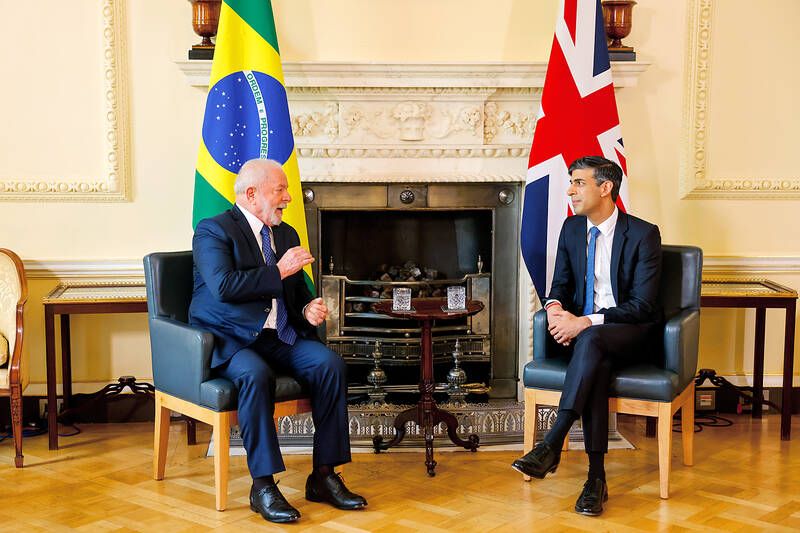
Photo: EPA-EFE
For its part, Australia has been stepping up diplomatic pressure on the US government to call off its prosecution of Assange.
Australian Prime Minister Albanese on Friday told the Australian Broadcasting Corp in an interview that “enough is enough. There is nothing to be served by his ongoing incarceration.”
Albanese in November last year told parliament that his “position is clear and has been made clear to the US administration: That it is time that this matter be brought to a close.”
Assange has battled in British courts for years to avoid being sent to the US, where he faces 17 charges of espionage and one charge of computer misuse that stem from WikiLeaks’ publication of a huge trove of classified documents in 2010.
US prosecutors accuse Assange of helping former US Army intelligence analyst Chelsea Manning steal classified diplomatic cables and military files that WikiLeaks later published, putting lives at risk.
To his supporters, Assange is a secrecy-busting journalist who exposed US military wrongdoing in Iraq and Afghanistan.
“I think there must be a movement of world press in his defense. Not in regard to his person, but to defend the right to denounce,” Lula told reporters. “The guy didn’t denounce anything vulgar. He denounced that a state was spying on others, and that became a crime against the journalist. The press, which defends freedom of the press, does nothing to free this citizen.”
“It’s sad, but it’s true,” he added.
Assange’s father, John Shipton, last year sought to convince Mexican President Andres Manuel Lopez Obrador to address the issue of his son’s prosecution with the US’ top diplomat, and to get Albanese to raise the issue with US President Joe Biden at Queen Elizabeth II’s funeral.
In his comments to reporters on Saturday, Lula also said that Charles III asked him to take care of the Amazon rainforest, and that he responded he needs resources to do so.
Sunak on Friday pledged to contribute £80 million (US$101.1 million) to Brazil’s Amazon Fund that aims to stop deforestation, adding to contributions from Norway and Germany, as well as a recent promise from Biden to seek congressional approval for US$500 million.
Howecer, Lula told reporters that the amount pledged by Britain “is not sufficient.”

‘CROSSING THE LINE’: China’s embassy in Seoul criticized US Forces Korea Commander General Xavier Brunson, asking if his ‘hostile’ remarks were authorized by Washington South Korea and the US are in talks over recent public remarks by the commander of US Forces Korea, Seoul’s presidential office said yesterday, after the comments drew sharp criticism from China. In a recent podcast interview, US Forces Korea Commander General Xavier Brunson described South Korea as “the dagger in the heart of Asia” from China’s east coast, prompting the Chinese embassy in Seoul to say that he had “truly crossed the line.” The interview came amid growing speculation that Washington might seek to expand the role of US Forces Korea in countering the growing regional influence of China, a key

Through the noise of rushing papers and whirring belts at a print factory in Kyoto, two creators watch their photo essay come to life in broadsheet form — part of an effort to win new audiences in the age of artificial intelligence (AI). Despite the decline of the publishing industry, self-publication and handmade “zine” magazines are growing in popularity in Japan, reflecting the nation’s enduring love of paper in the digital era. While speaking to Agence France-Presse at the plant, his hands black with ink, one of the creators, Kazuma Obara, said: “I think [paper] is a medium that engages all five

Australian researchers have trained lab-grown brain cells on a silicon computer chip to play the 1990s shooter game Doom and said they are just scratching the surface of what the neurons could be capable of doing. It is the science-fiction work of biotech boffins at Cortical Labs, who researched and developed the technology that harnesses the workings of the brain’s networking system. Each so-called “biological computer” contains about 200,000 living human brain cells, grown from stem cells that were harvested from blood donations. Having mastered the simple computer game Pong, where a paddle is moved up and down to send a ball
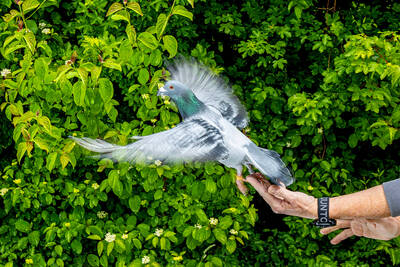
A surprising gut feeling may help pigeons find their way home. Animals use various techniques to navigate, including following the stars and remembering key landmarks. Birds, fish and turtles orient themselves using Earth’s magnetic field as a compass, but it is not yet clear how exactly they do this. Pigeons are a well-known group of frequent flyers that can traverse hundreds of kilometers in a single day. For thousands of years, humans have used them to carry news, notes and military messages. Scientists have long tried to untangle how pigeons travel without getting lost. Some think the birds detect magnetic cues using light-sensitive


 RSS
RSS