


As he sits in detention in Bulgaria, Saudi Arabian dissident Abdulrahman al-Rahman al-Khalidi dreads one thing more than any other: being flown back to his home country.
“In the event of deportation, I will be subjected to torture and long imprisonment, as I have worked with the opposition for years,” al-Khalidi, a failed asylum seeker, said at a detention center in Sofia.
For al-Khalidi, 29, and other dissidents who fled after criticizing the Saudi Arabian monarchy, such fears assumed new urgency following the extradition last month of their compatriot Hassan al-Rabie, who had sought temporary refuge in Morocco.

Photo: AFP via Abdulrahman al-Rahman al-Khalidi
Al-Rabie, who comes from a family of prominent dissidents and stands accused of crimes including “collaboration with terrorists,” has not been heard from since. Human rights groups have said he faces “serious rights abuses” on Saudi Arabian soil.
The case highlights the vulnerability of Saudi Arabian exiles amid a widening crackdown on dissent under Saudi Arabian Crown Prince Mohammed bin Salman, the oil-rich country’s de facto ruler.
Critics accuse the 37-year-old of reducing political space as he pursues an ambitious reform agenda involving massive investments in sports and entertainment, along with an expansion of some rights for women.
People without political asylum or dual citizenship are “always at risk of deportation,” European-Saudi Organisation for Human Rights director Taha al-Hajji said.
Al-Khalidi’s activism predates Saudi Arabian King Salman bin Abdulaziz Al Saud’s ascent to the throne in 2015 and the appointment of Prince Mohammed as heir two years later.
In 2011, he was active during rare demonstrations in eastern Saudi Arabia, where the Shiite minority is concentrated, following the Middle East’s Arab Spring uprisings.
He fled to Turkey in 2013 and watched as the long arm of the Saudi Arabian state tracked down prominent activists who were also abroad.
That group included Loujain al-Hathloul, a women’s rights campaigner who was arrested in the United Arab Emirates in March 2018 and forced back to Saudi Arabia, where she spent more than two years in prison.
In October 2018, Saudi Arabian agents killed and dismembered journalist and critic Jamal Khashoggi inside the kingdom’s Istanbul consulate — an operation US intelligence officials believe was “approved” by Prince Mohammed, despite Saudi Arabian denials.
Beyond these high-profile cases, notorious Saudi Arabian online surveillance operations — which a US court found last year have included enlisting Saudi Arabian Twitter employees to unmask critics — have also put exiles on edge.
When al-Khalidi’s passport expired in 2021, he sought protection in the EU, fleeing on foot into Bulgaria.
His bid for asylum was unsuccessful, with authorities concluding in May last year that he had not adequately demonstrated he would face persecution back home, said a Bulgarian lawyer who worked on the case and spoke on condition of anonymity.
A decision on al-Khalidi’s status could come at any time.
There are no comprehensive figures for Saudi Arabian dissidents living abroad, but activists and lawyers have said popular destinations included the US, the UK, Germany and Canada.
In the EU, the number of Saudi Arabian asylum seekers has increased dramatically during King Salman’s reign.
The bloc recorded 15 Saudi Arabian asylum seekers in 2013 and 40 in 2014, jumping to 130 in 2017 and last year, European Union Agency for Asylum data showed.
Even those who obtain asylum have said their fear never fully goes away.
Abdul Hakim al-Dakhil, a Saudi Arabian dissident who was arrested in 2010 after calling online for political reform, fled the kingdom in 2017, eventually ending up in France, where he was granted asylum in 2020.
“Before that, I was afraid that I would be deported, as I would be tried on fabricated charges, and I would never see the sun again,” he said.
He is still worried for his safety.
“I prefer being in public places, and I am still afraid to go to certain places on my own,” al-Dakhil said.
Several Saudi Arabian dissidents and activists residing abroad said they refuse to transit through Arab countries to avoid being extradited, as happened to al-Rabie.
“No one dares to pass” through the region, European-Saudi Organisation for Human Rights vice president Adel al-Saeed said.
Saudi Arabian activists consistently turn down invitations to human rights conferences in countries such as Lebanon and Tunisia for this reason, he added.
Lina al-Hathloul, Loujain’s sister and head of monitoring for the London-based rights group ALQST, said that asylum or dual nationality can offer a “layer of protection” for dissidents, but that there are limits.
“Taking into account the influence of Saudi Arabia on some countries, it is not a guaranteed protection,” she said.
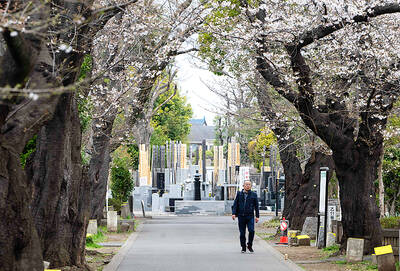
ROCKY RELATIONS: The figures on residents come as Chinese tourist numbers drop following Beijing’s warnings to avoid traveling to Japan The number of Chinese residents in Japan has continued to rise, even as ties between the two countries have become increasingly fractious, data released on Friday showed. As of the end of December last year, the number of Chinese residents had increased by 6.5 percent from the previous year to 930,428. Chinese people accounted for 22.6 percent of all foreign residents in Japan, making them by far the largest group, Japanese Ministry of Justice data showed. Beijing has criticized Tokyo in increasingly strident terms since Japanese Prime Minister Sanae Takaichi last year suggested that a military conflict around Taiwan could
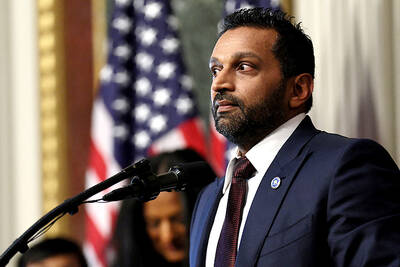
A pro-Iran hacking group claimed to breach FBI Director Kash Patel’s personal e-mail inbox and posted some of the contents online. The e-mails provided by the hacking group include travel details, correspondence with leasing agents in Washington and global entry, and loyalty account numbers. The e-mail address the hackers claim to have compromised has been previously tied to Patel’s personal details, and the leaked e-mails contain photos of Patel and others, in addition to correspondence with family members and colleagues. “The FBI is aware of malicious actors targeting Director Patel’s personal email information,” the agency said in a statement on
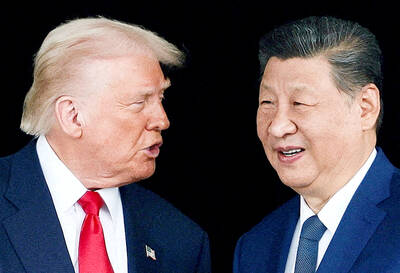
RIVALRY: ‘We know that these are merely symbolic investigations initiated by China, which is in fact the world’s most profligate disrupter of supply chains,’ a US official said China has started a pair of investigations into US trade practices, retaliating against similar probes by US President Donald Trump’s administration as the superpowers stake out positions before an expected presidential summit in May. The move, announced by the Chinese Ministry of Commerce on Friday, is a direct mirror of steps Trump took to revive his tariff agenda after the US Supreme Court last month struck down some of his duties. “China expresses its strong dissatisfaction and firm opposition to these actions,” a ministry spokesperson said in a statement, referring to the so-called Section 301 investigations initiated on March 11.

When a hiker fell from a 55m waterfall in wild New Zealand bush, rescuers were forced to evacuate the badly hurt woman without her dog, which could not be found. After strangers raised thousands of dollars for a search, border collie Molly was flown to safety by a helicopter pilot who was determined to reunite the pet and the owner. A week earlier, an emergency rescue helicopter found the woman with bruises and lacerations after a fall at a rocky spot at the waterfall on the South Island’s West Coast. She was airlifted on March 24, but they were forced to


 RSS
RSS